
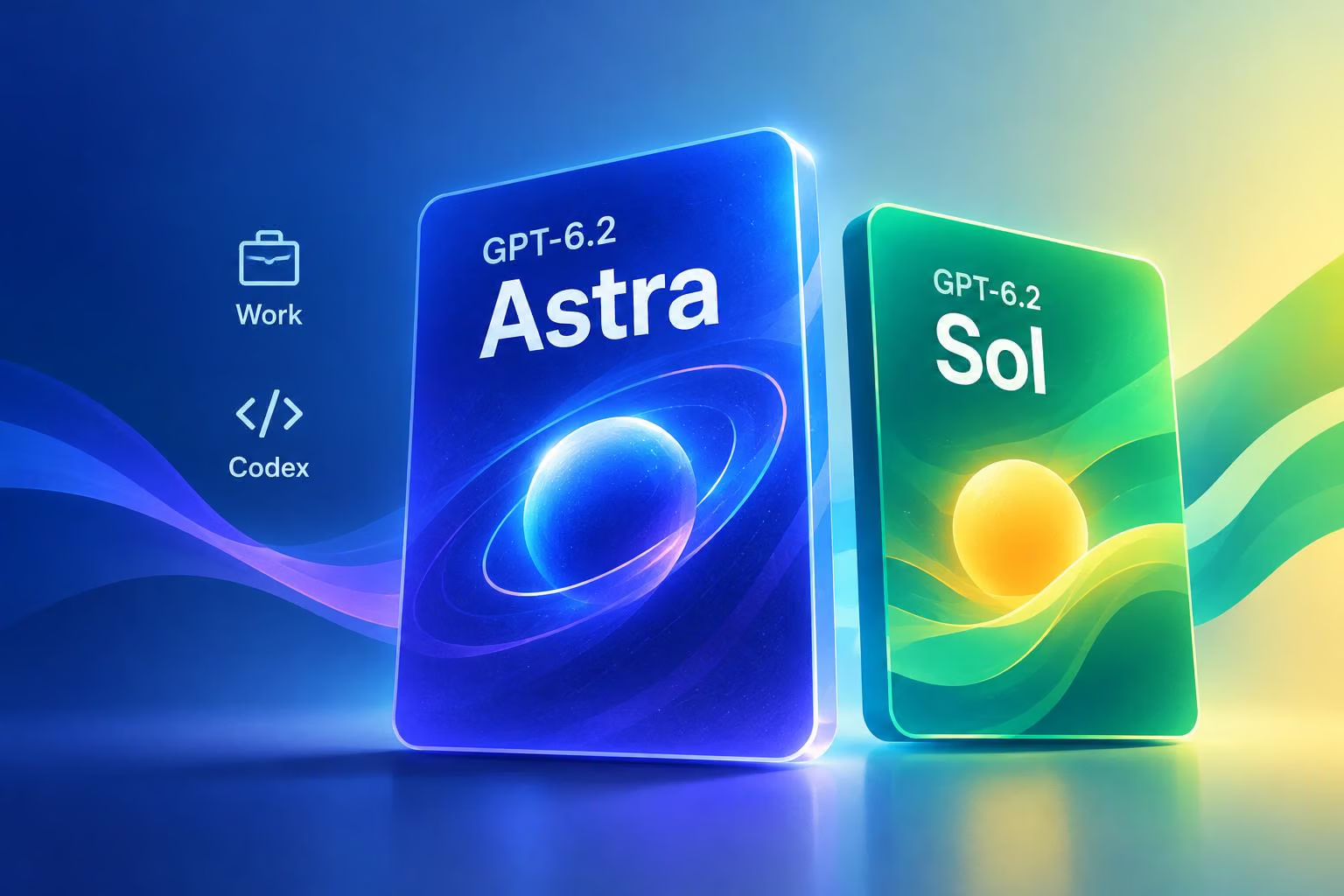
OpenAI has released GPT-6.2 Astra and Sol, and both are available now. Astra is the company's top model for demanding professional and scientific work, while Sol is the cheaper pick for routine coding, writing and agent tasks. Both are live in ChatGPT Work and Codex for paid plans, and developers can call them through the OpenAI API.
The launch is built around efficiency. The launch post on X says Astra costs less than a third per task of GPT-6 Astra. The company also says both models reach better results with fewer output tokens, as TipRanks reports. The figures below are OpenAI's own, so this article separates what the launch materials say from what third parties report and from what the numbers actually mean.
GPT-6.2 Astra and Sol at a glance
Astra: the frontier model for the hardest projects, per OpenAI's launch page.
Sol: the efficient, versatile model for everyday work. It keeps GPT-6.1 Sol's API token prices.
Where: ChatGPT Work and Codex for Plus, Pro, Enterprise and Edu users, plus the API.
API model IDs: gpt-6.2-astra and gpt-6.2-sol.
API prices: RuntimeWire reports $8 input and $40 output per million tokens for Astra, and $2 and $10 for Sol. Read the pricing section before relying on these.
Ultrafast: Pro 500 subscribers can use it with either model. Pro 200 subscribers gain access for the first time, starting with Sol.
Cyber: tighter safeguards for higher-risk security help, with a later route for approved defenders through Daybreak.
What Astra is built to do
OpenAI points to slideshows, websites and 3D designs as places where users should see the difference. For engineering work, the company claims more accurate output and stronger visual reasoning for web layouts, imagery and interface design. 9to5Mac describes one example OpenAI gives: a screenshot supplied as a template, which Astra can reproduce in layout, colour and type size.
On the coding side, OpenAI says Astra is better at changing and testing an existing project. Early testers, as quoted by 9to5Mac, described cleaner code and more focused tests that needed fewer revision rounds.
The useful question is whether these gains appear in your own multistep work. The examples above were chosen by OpenAI, so run the same complex task through Astra and Sol and count the revision rounds each one needs.
What Sol is built to do
OpenAI pitches Sol at multistep agent workflows and at clear, natural writing. The company adds that many of its own employees use Sol as their default for technical and non-technical work. On LifeVal, a recently released test of challenging everyday tasks, OpenAI reports that Sol edges past GPT-6 Astra for roughly 14% of the price. Measured against GPT-6.1 Sol, the company says Sol has improved by 5.3 points.
The closest comparison is a coding test run at maximum reasoning effort. There, Sol came within half a point of Astra at roughly a fifth of the cost, according to 9to5Mac.
For high-volume routine work, that gap makes Sol the model to test first. Astra earns its higher price when a difficult problem leaves no room for rework.
Who can use GPT-6.2 and on which plan
Access began on November 17, 2026, in ChatGPT Work and Codex for Plus, Pro, Enterprise and Edu accounts, according to the launch post. OpenAI's launch page lists the same plans. Neither mentions free-tier access, so the models should be treated as paid-only.
Ultrafast is the most plan-dependent feature. Pro 500 subscribers can use it with either model, and Pro 200 subscribers receive it starting with Sol. In the API, OpenAI's developer documentation calls Ultrafast the fastest service tier and recommends it where speed justifies the extra cost. That page was written for GPT-6 Astra and GPT-6.1 Sol, so check that it covers the 6.2 models.
To start, pick the model from the selector in ChatGPT Work or Codex. Developers can call gpt-6.2-astra or gpt-6.2-sol directly.
What GPT-6.2 costs in the API and in ChatGPT
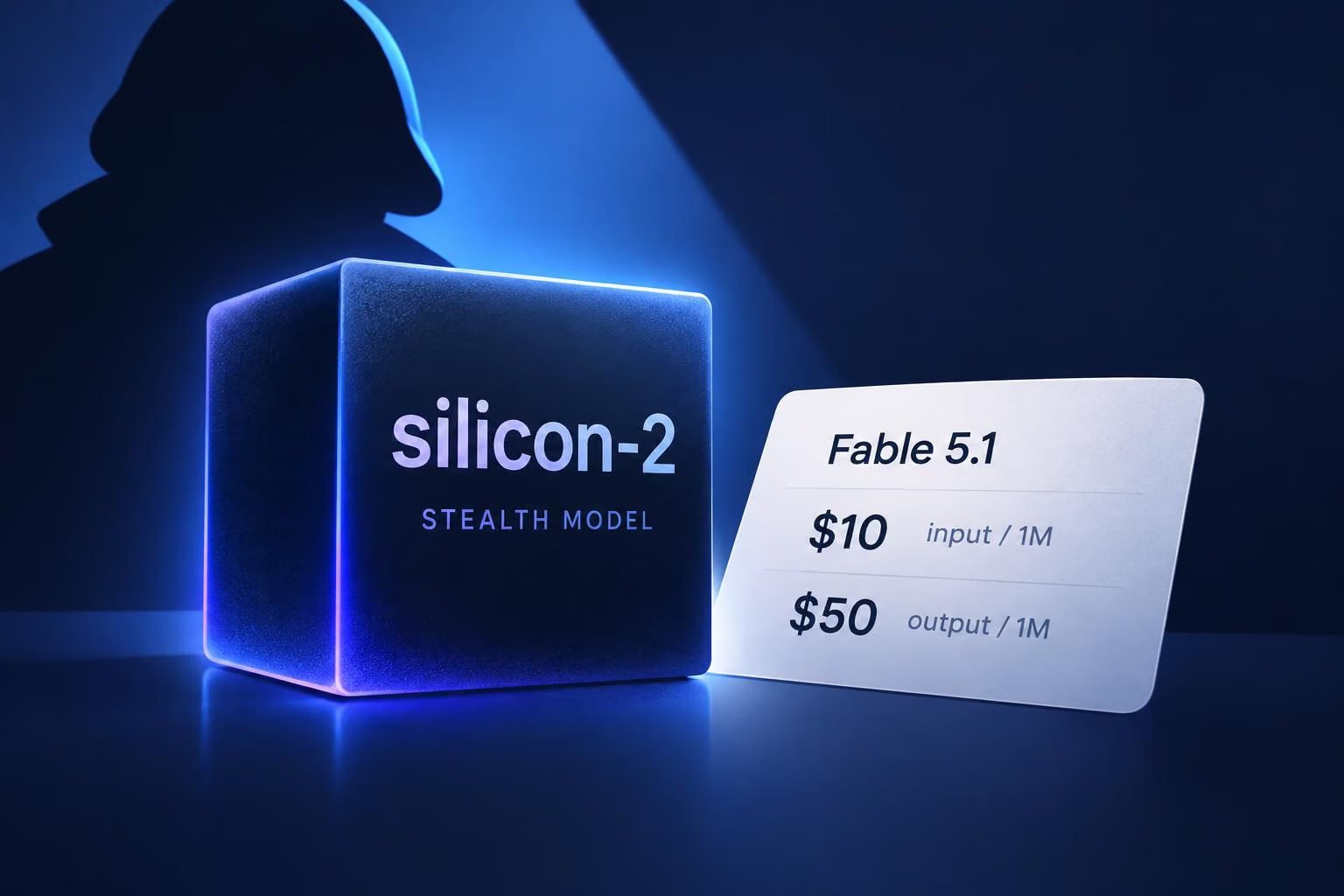
For Astra, the starting point is GPT-6 Astra's list price. OpenRouter lists it at $10 per million input tokens and $50 per million output tokens. 9to5Mac reports that Astra's standard prices are 20% lower than GPT-6 Astra's. Applying that cut gives $8 and $40, which matches RuntimeWire's figures.
Sol is simpler. OpenAI says Sol keeps GPT-6.1 Sol's API token prices. RuntimeWire lists Sol at $2 input and $10 output, but the same article notes that OpenAI's API catalog and changelog still showed GPT-6 Astra and GPT-6.1 Sol when it was written. Check OpenAI's pricing page before budgeting.
In ChatGPT, the usage cost is different from the token price. Mixed News reports that for GPT-6 Astra and GPT-6.1 Sol, OpenAI's pricing page bills Ultrafast at 8x the Standard rate against included usage, and 6x against purchased credits. The launch materials do not say whether GPT-6.2 uses the same multipliers.
Per-token price is also only part of the bill. In OpenAI's agent evaluations, Astra used 62% fewer tokens than GPT-6.1 Sol on complex legal-agent tasks, so the cost of a finished task can fall further than the price list suggests.
How the benchmarks compare with GPT-6 and Claude
Every chart below comes from OpenAI's launch post. The charts do not say what each point along a line represents, so compare top scores and costs rather than individual dots.
Agents' Last Exam: OpenAI says Astra scores 5.2 points above GPT-6 Astra at under a third of the cost, and 5.5 points above Claude Fable 5.2 at about 5% of its cost. The chart plots Fable 5.2 near $60 and Astra's best score around 78%.
Terminal-Bench-Science 0.1: Astra's best point is roughly 77%, above Claude Fable 5.2 (run in a mini-swe-agent harness) and Claude Opus 5.5, at a lower cost.
Harvey-LAB-AA v1.1: this chart measures a hallucination-gated all-pass rate. Astra peaks near 15%, against roughly 7% for Fable 5.2's best point. Even the leader passes only about one task in seven.
BenchCAD 2.1 Core: Astra tops out near 83%. Sol reaches the low 70s at much lower cost, while Fable 5.2 matches that level only at around $50.
Elo ranking: OpenAI's launch page places Astra first at 1,318, ahead of Claude Fable 5.2 at 1,271 and Sol at 1,259.
The pattern is consistent: GPT-6.2 points sit higher and further left than GPT-6 and the Claude models shown. Vendor-picked benchmarks are best read as a direction, not a final ranking. The sources available for this article contain no independent evaluation of these results.
How GPT-6.2 differs from GPT-6 Astra and GPT-6.1 Sol
The GPT-6 generation started in September. AGTP's summary gives GPT-6 Astra's stable public release as September 4 and says GPT-6.1 Sol followed on September 29.
The clearest change is on Astra's side. Its standard API prices are 20% lower than GPT-6 Astra's, and OpenAI says its cost per task falls to under a third. Sol's list prices stay where GPT-6.1 Sol left them, but it gets better, so the upgrade comes without a price change. For Ultrafast, Pro 200 access is new.
Before launch, model names had surfaced in Google Cloud listings and in Codex usage data. The same AGTP post reported that a release could come as soon as Friday, November 7, but OpenAI had not announced either model at that point. The launch came on November 17 instead.
Cyber safeguards and access for security teams
OpenAI calls Astra its most capable model yet for cyber and says it scores 22 points higher than GPT-6 Astra on ExploitBench Internal Port. Under OpenAI's Preparedness Framework, both models reach the Critical level for cybersecurity and the High level for biological and chemical capabilities. That is why the launch carries tighter safeguards for higher-risk security help.
OpenAI says it is working to bring the models to Daybreak, where approved defenders would see fewer refusals. The launch post gives no date. OpenAI describes Daybreak access as limited to approved users doing authorized work, with safeguards matched to the activity.
When Astra first launched in September, The Register reported that Daybreak Blue and Red participants would not get it on day one. That earlier pattern suggests a similar lag, though this is an inference, not a stated plan. For everyday users, security-related requests are likely to be handled more cautiously than before.
Key takeaways
Astra is the top model for hard professional and scientific work; Sol is the efficient, cheaper choice for routine work. Both are live now.
Plus, Pro, Enterprise and Edu users get both in ChatGPT Work and Codex, and developers can use them through the API.
Astra's standard API prices are reported as 20% below GPT-6 Astra's, and Sol keeps GPT-6.1 Sol's prices; confirm the figures on OpenAI's pricing page.
OpenAI's charts show higher scores at lower cost, but they are vendor-selected and not independently verified.
Cyber requests face tighter safeguards, and approved defenders may get fewer refusals through Daybreak once that route opens.
Frequently asked questions
Is GPT-6.2 Astra available now?
Yes. The launch post says both models are available from November 17, 2026, in ChatGPT Work and Codex, and developers can call gpt-6.2-astra and gpt-6.2-sol through the API.
Which plans include GPT-6.2 Astra and Sol?
Plus, Pro, Enterprise and Edu users have access in ChatGPT Work and Codex. Pro 500 subscribers can use Ultrafast with either model, and Pro 200 subscribers can use it with Sol. The launch materials do not mention a free tier.
How much does GPT-6.2 cost through the API?
OpenAI says Sol keeps GPT-6.1 Sol's token prices and that Astra's standard prices are 20% lower than GPT-6 Astra's. RuntimeWire reports $8 and $40 per million tokens for Astra and $2 and $10 for Sol. Confirm these on OpenAI's pricing page, since RuntimeWire's own article notes the catalog still showed the older models when it was written.
What is Ultrafast?
Ultrafast is OpenAI's fastest API service tier, intended for work where speed justifies a higher cost, according to its developer documentation. Reports on GPT-6 Astra say that in ChatGPT it uses up usage allowances faster than Standard mode. The launch materials do not say whether GPT-6.2 uses the same multipliers.
Should I use Astra or Sol?
Use Sol for everyday coding, writing and agent work, where OpenAI reports close results at much lower cost. Choose Astra for the hardest engineering, scientific or professional tasks, and test both on your own work before committing, because the benchmarks are OpenAI's own.
0 comments
No approved comments yet. You can start the conversation.
Leave a comment