
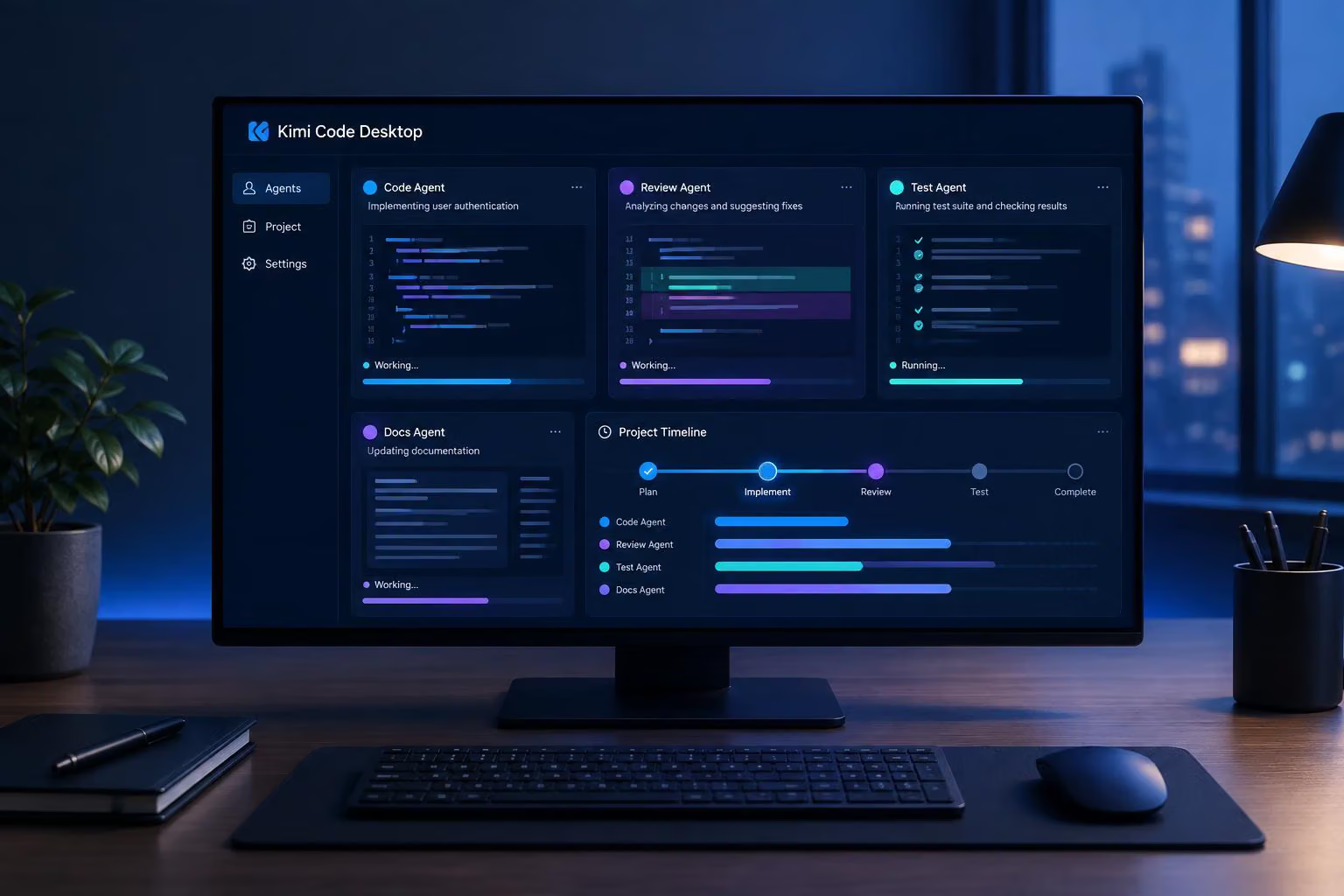
Kimi has introduced Kimi Code Desktop, describing it as a focused workspace for managing multiple coding agents, running programming tasks in parallel and staying coordinated during longer-running work. The announcement does not specify the app’s supported platforms, pricing, setup process or complete availability details.
In a post on X, @KimiDevs says the desktop product is designed to fit into an existing development workflow and deliver “faster” and “more reliable” results, with programming tasks completed in “record time.” Those are promotional descriptions, not benchmark results or independently verified performance measurements.
What Kimi Code Desktop is
The announcement presents Kimi Code Desktop as a desktop workspace for coding-agent sessions. Its stated purpose is to give developers one focused place to manage multiple agents rather than treating each programming task as an isolated interaction.
The supplied promotional image shows a Kimi Code interface with a folder selector, a message field, a model selector labelled “K3 max” and a sidebar containing several session names. These visible interface elements establish how Kimi presents the product, but they do not document the app’s supported operating systems, model options or underlying workflow behavior.
Managing multiple coding agents
Kimi says the workspace can manage multiple agents in one place. In practical terms, that points to a workflow in which developers keep several agent sessions available while working across different programming tasks or parts of a project.
The announcement does not explain how those agents share context, divide work, communicate with one another or access the same project state. It therefore supports describing the product as a multi-agent workspace, but not claiming that the agents automatically collaborate or remain synchronized through a particular technical mechanism.
Running programming tasks in parallel
The post also says users can run tasks in parallel. That could be useful when a development workflow contains several activities that can proceed at the same time—for example, working on separate tasks rather than waiting for one agent interaction to finish before starting another.
However, Kimi provides no concrete example, task limits, timing data or explanation of how parallel execution works. The announcement supports describing parallel-task functionality as a stated product capability, not a measured claim that it makes development faster.
Staying coordinated during long-horizon work
Kimi further describes the desktop workspace as a way to stay in sync with agents during “long-horizon” work. That phrase refers to programming tasks that continue over an extended sequence of steps rather than ending after a single request and response.
The source does not say what coordination looks like in the product. It does not describe how progress is tracked, how context is retained, how agents recover from interruptions or how developers review changes over time. Those implementation details remain unspecified in the announcement.
What the announcement leaves unanswered
The post does not provide enough information to evaluate the product’s performance or recommend it for a particular development environment. It leaves practical questions about supported platforms, pricing, account requirements, setup steps, compatibility, model availability and limits on concurrent tasks unanswered.
The source also includes no benchmarks, test results or concrete demonstrations. “Faster,” “more reliable” and “record time” should therefore be read as Kimi’s promotional wording rather than established performance results.

0 comments
No approved comments yet. You can start the conversation.
Leave a comment