
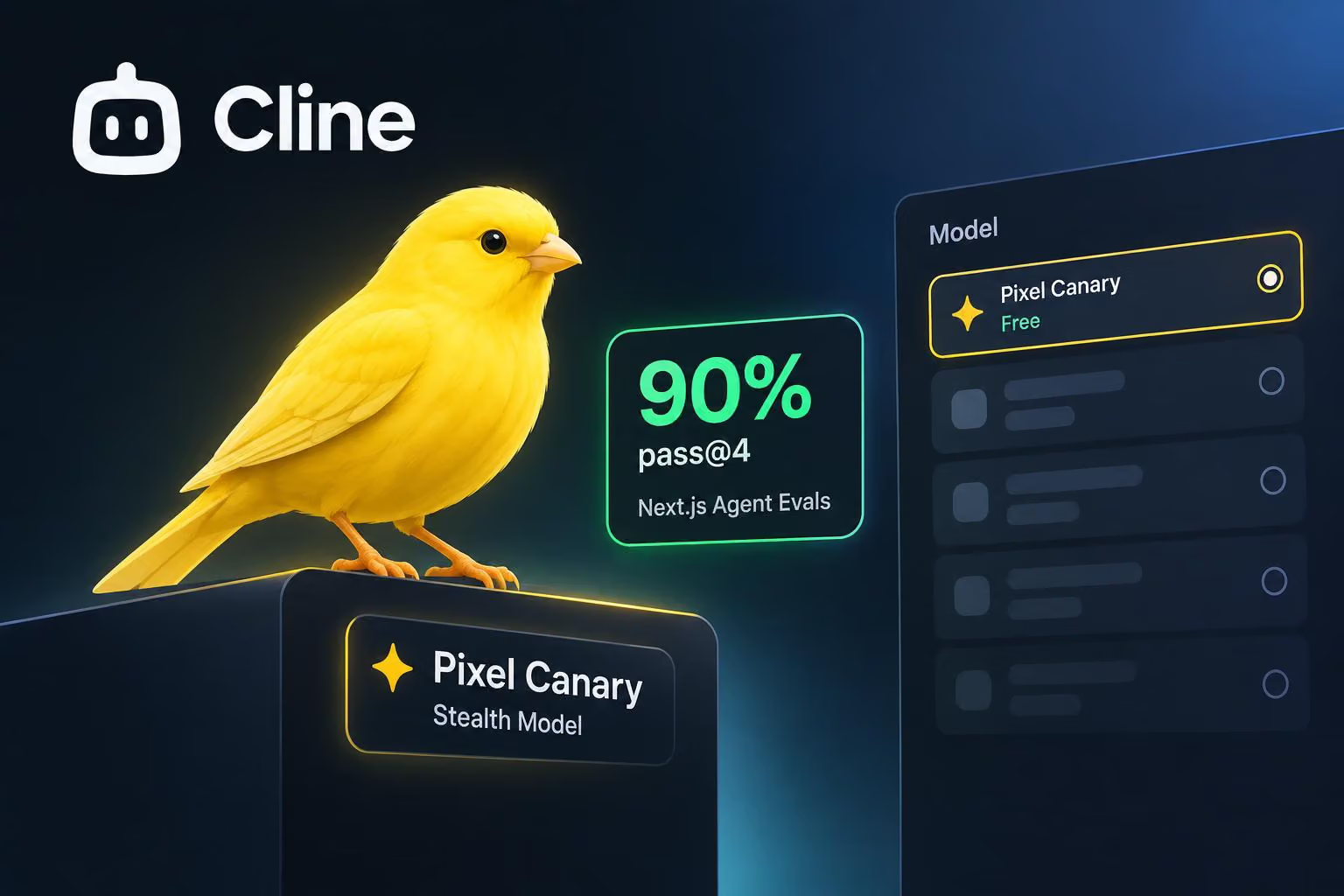
Cline says Pixel Canary, a newly released “stealth model,” is available for free in Cline. The company also reports that it reached a 90% success rate on Next.js Agent Evals, tying GPT 6 Astra (high) and ranking above Kimi K3 in the comparison supplied with the announcement.
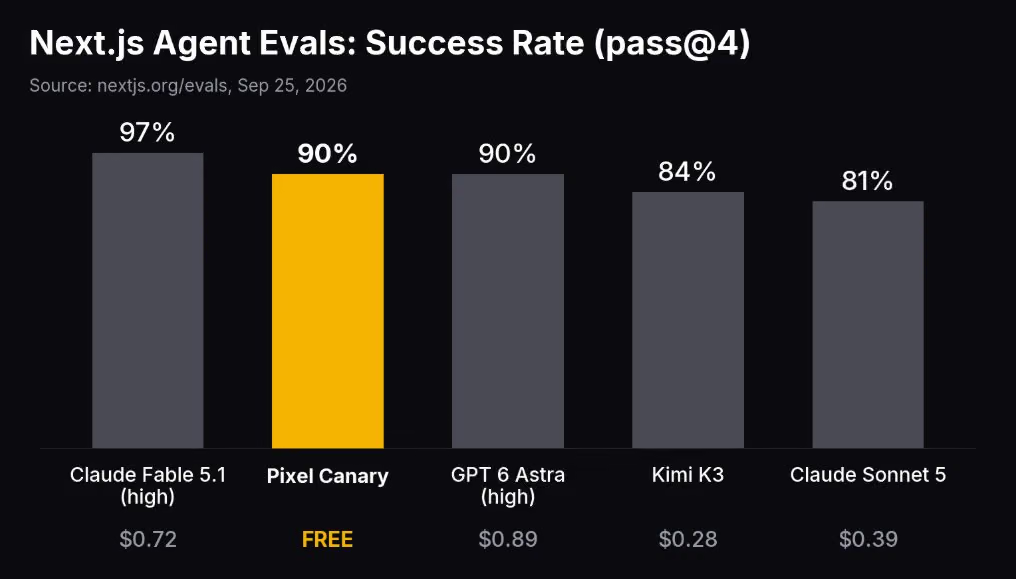
Image credit: @cline on X
The announcement does not identify Pixel Canary’s provider, architecture, context window, API access, or availability outside Cline.
Cline announces Pixel Canary as a free model
In a post on X, @cline describes Pixel Canary as a stealth model that has just been released and is free in Cline. The announcement presents it as a model for the stated Next.js evaluation, while the supplied model-picker screenshot describes it as having “strong coding capabilities.” It does not explain what the model is built on or who provides it.
The announcement also points readers toward Cline’s new desktop app, where the company says Pixel Canary runs quickly. That wording presents the desktop app as a place to try the model; it does not establish that the free listing is permanent, available to every Cline user, or offered through other clients or services.
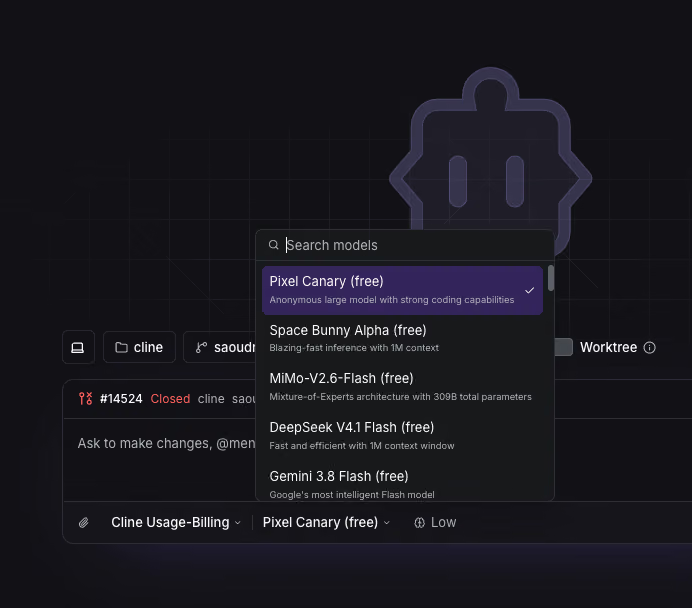
Image credit: @cline on X
The supplied model-picker screenshot shows “Pixel Canary (free)” selected. It describes the entry as an “Anonymous large model with strong coding capabilities” and shows other free entries in the same picker. Those labels indicate how the model is presented in the displayed Cline interface, not a fuller technical specification.
What Cline reports on Next.js Agent Evals
Cline’s supplied benchmark graphic lists Pixel Canary at a 90% success rate using the pass@4 measure on Next.js Agent Evals. The post describes the benchmark as covering real Next.js tasks for web and mobile development.
In benchmark terminology, pass@4 generally measures whether at least one of up to four generated attempts succeeds on a task. The supplied graphic does not specify the task count, sampling procedure, or other test conditions, so it cannot establish how the 90% figure was produced.
In the same graphic, Pixel Canary is tied with GPT 6 Astra (high) at 90%. It is shown above Kimi K3 at 84% and Claude Sonnet 5 at 81%, while Claude Fable 5.1 (high) appears at 97%. The graphic also labels Pixel Canary “FREE,” while displaying prices for the other entries.
Image credit: @cline on X
The 90% figure is therefore a result reported by Cline for the displayed comparison, not an independently verified measurement or a general ranking of coding-model quality.
What the evidence establishes about access
The post and screenshot support a narrower conclusion: Cline presents Pixel Canary as free in its model picker and invites readers to try it in the new Cline desktop app. They do not establish permanent free access, usage limits, availability in every Cline client, or access through an API.
The announcement also mentions free promotions for DeepSeek V4.1 Flash and Gemini 3.8 Flash. It does not provide enough information here to compare those models with Pixel Canary or determine whether the same access conditions apply.
Image credit: @cline on X
What remains unknown about Pixel Canary
Cline does not disclose the model’s provider or underlying model in the supplied post. The evidence also does not describe its architecture, training, context window, pricing outside the displayed Cline listing, or broader availability.
The benchmark graphic provides a snapshot of the result Cline chose to highlight, but not enough detail to reproduce or independently assess it. Readers should therefore treat Pixel Canary’s 90% pass@4 result as a reported comparison for the stated evaluation, rather than proof that it will outperform other models on every Next.js or software-development task.


0 comments
No approved comments yet. You can start the conversation.
Leave a comment