
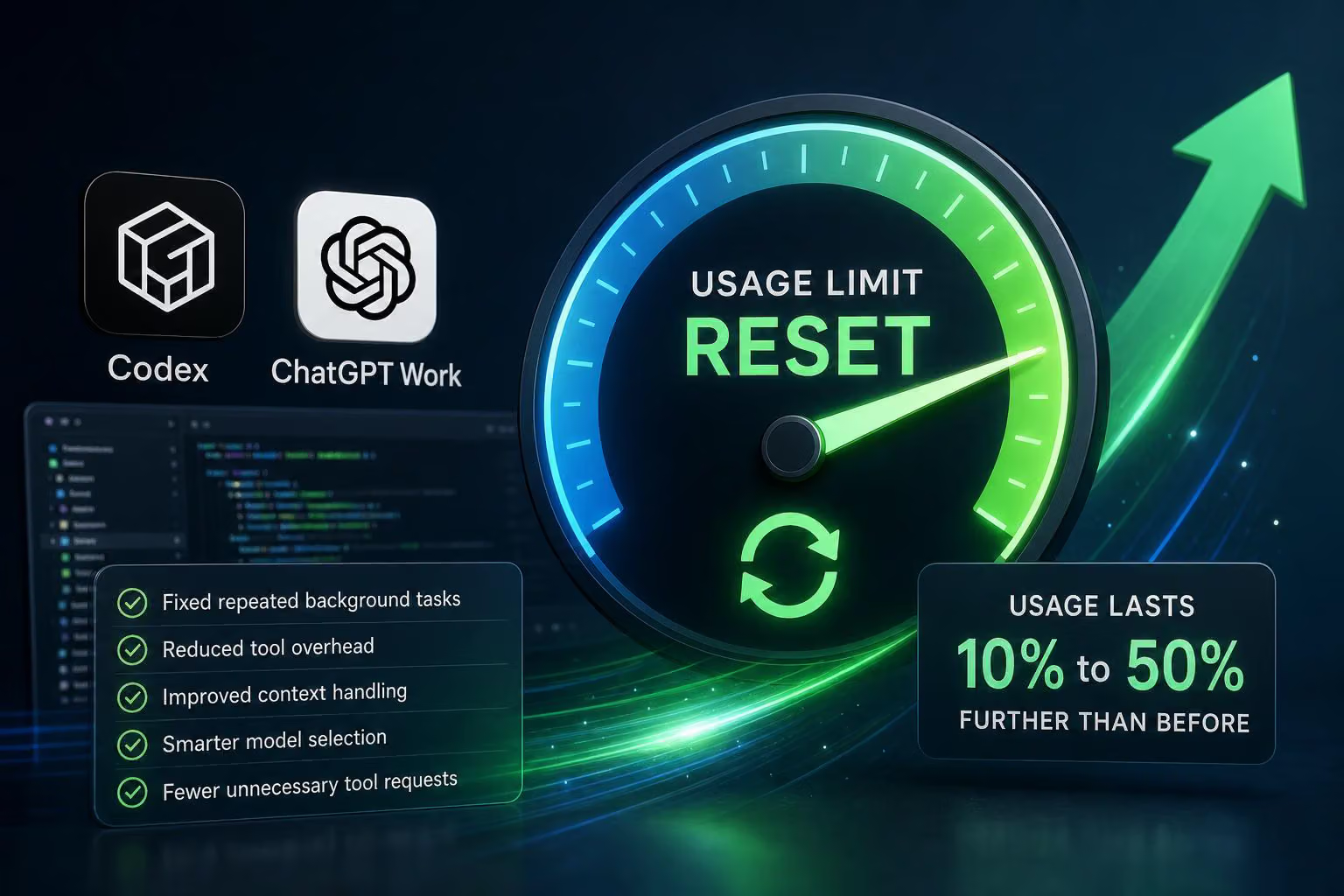
Paid users of Codex and ChatGPT Work are receiving a usage-limit reset after an engineering review identified several ways background work and tool handling were consuming allowance unnecessarily, according to an Aug. 29 post on X by @thsottiaux. The post says users should see their Codex usage go 10% to 50% further than before, although the result depends on how each user works.
Where the usage gains came from
The reported improvement comes from a collection of fixes rather than one universal quota increase. The team reviewed thousands of reports and found problems across context management, background workers, automation, model selection, and tool requests.
**Context and history handling:** During compaction, older images could remain in the context and make another compaction more likely. The post says fixing this reduced usage by about 10% for people who made heavy use of images. An older Computer History implementation could also repeatedly summarize overlapping activity; in some cases, that consumed up to one-fifth of a weekly allowance in a week.
**Background work and stopping conditions:** Memory workers could inherit Stop hooks and continue running when the hook prevented them from finishing. The announcement describes one example that checked whether it could stop 15,000 times. Goal-based tasks could also continue beyond their intended stopping point or repeatedly retry broken tools, with some examples consuming 15% to 70% of a weekly allowance.
**Schedules and subagent selection:** Some custom automations ran more frequently than configured. The post also says smaller models could select more capable helper models without being asked, while non-`/fast` orchestrators could unexpectedly request that subagents run in `/fast` mode.
**Extra request and tool overhead:** Ordinary turns were triggering additional rolling task summaries, adding about 1% to token usage; that behavior has been disabled. The team also fixed cases in which MCP tool results were encoded twice or truncated tool instructions had to be fetched again.
What paid users should expect
The reset applies to the paid user base covered by the announcement, but the expected improvement is not a flat 10% or 50% increase for everyone. Users whose workflows triggered the affected behaviors may see a larger difference than users who did not rely on those features. The post presents the range as dependent on usage patterns.
The team says it has also made architectural changes intended to prevent the same problems from returning, with monitoring that will alert the relevant teams if they do. Separately, it is working on usage reporting inside the app so users can see where their allowance is being spent instead of having to infer the cause from unexpectedly fast consumption.


0 comments
No approved comments yet. You can start the conversation.
Leave a comment