

A listing named “muse-spark-1.4-contributor” has appeared on OpenCode’s data page, according to a post by @kimmonismus. The post connects the identifier with Meta’s reported tease of its next major model during a keynote, but the listing does not establish that it is Meta’s teased model or that Muse Spark 1.4 has been released.
The listing is therefore an early, unconfirmed signal. It does not include a model card—a document describing a model’s capabilities and limitations—benchmark results, API documentation, pricing, access instructions or a direct official Meta announcement.
What was reported about Muse Spark 1.4
The post says Meta described its next major model as coming soon during a keynote. It then points to the appearance of “muse-spark-1.4-contributor” on OpenCode’s data page and suggests that Muse Spark 1.4 could be close to release.
That wording describes a possibility, not a confirmed launch. The supplied post does not establish that Meta used the name “Muse Spark 1.4” in an official announcement, nor that “contributor” is part of a public product name rather than an internal, test or directory identifier.
What the OpenCode listing actually shows
The supplied screenshot places the identifier under a Meta directory. It marks context, output, knowledge cutoff, publication and inputs as unknown. In other words, the page provides a name-like identifier but no practical information about what the model can do, how it was trained, when it might be available or how users could access it.
The screenshot also shows 0% of observed OpenCode volume against a displayed 2M volume, along with 0 tokens for the shown period. It includes a date range, but the supplied evidence does not explain what that range represents or how OpenCode calculates the displayed measurements. These figures do not establish that the model has launched, failed to launch or is publicly accessible.
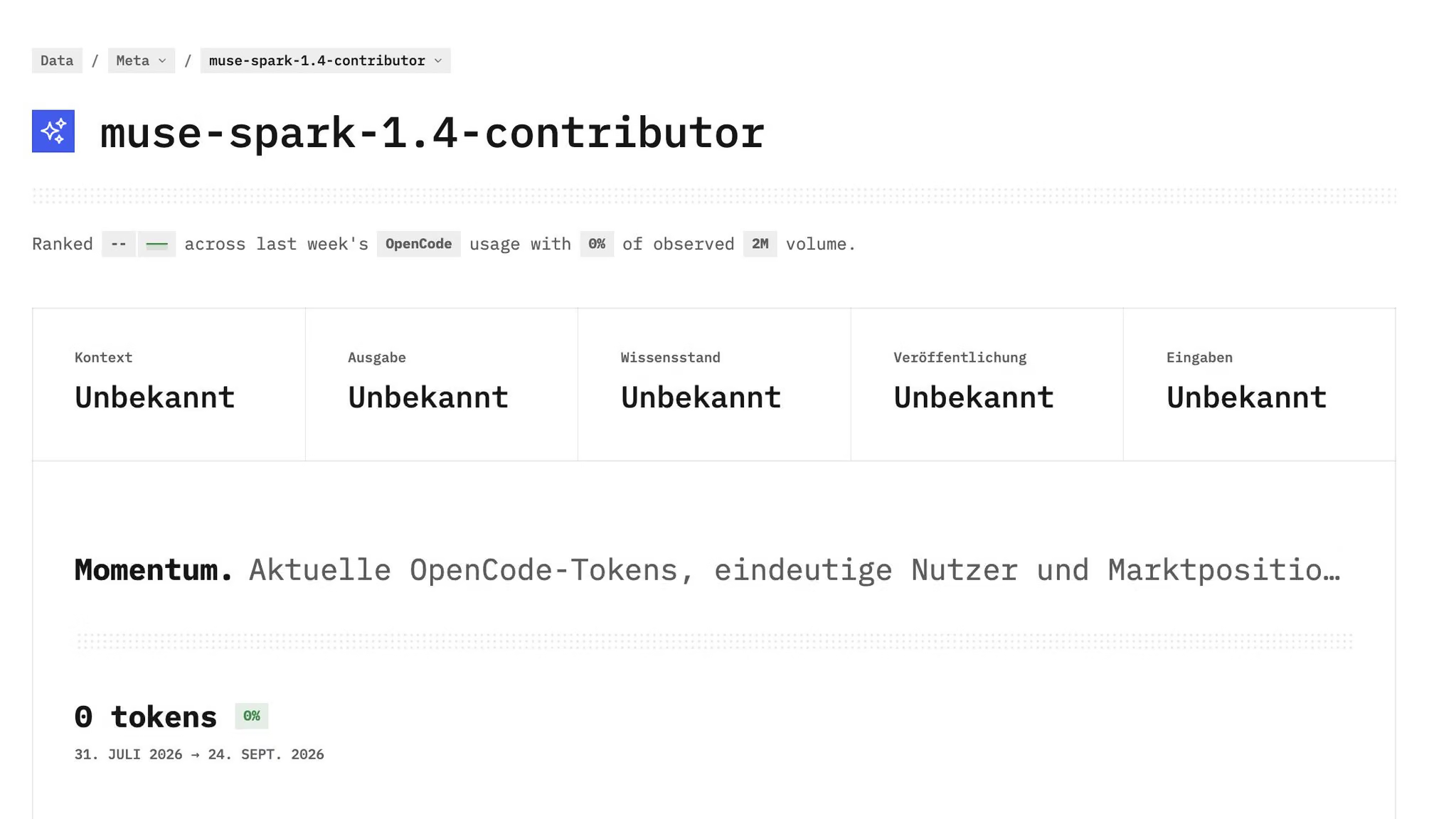
Image credit: @kimmonismus on X
Why the listing does not confirm a release
A directory entry can be an early signal that an identifier is being tracked somewhere in a model-data system. It cannot, on its own, establish the identity of the underlying model or its relationship to a company’s public plans.
The evidence does not explain what “contributor” means, whether the entry refers to a working model or whether OpenCode users can send requests to it. It also does not provide a release date, capability description or evidence of real-world use.
The 0% figure needs the same cautious reading. It could reflect the absence of traffic in the measured data, an inactive entry, a placeholder or another limitation of the directory’s coverage. The page does not establish which explanation applies, how the displayed 2M volume is calculated or what the date range measures.
What readers can conclude for now
The most grounded status is that an OpenCode entry with the identifier “muse-spark-1.4-contributor” is visible, while an X post connects it speculatively with Meta’s teased next major model.
Readers cannot yet conclude from this evidence that:
Meta has officially announced Muse Spark 1.4;
the OpenCode identifier belongs to the model teased at the keynote;
the model is released or publicly usable;
its capabilities, inputs, context length or knowledge cutoff are known; or
a launch is imminent.
Until Meta publishes usable documentation or a direct announcement, the listing is best treated as a data point to watch rather than confirmation of a Muse Spark 1.4 release.


0 comments
No approved comments yet. You can start the conversation.
Leave a comment