
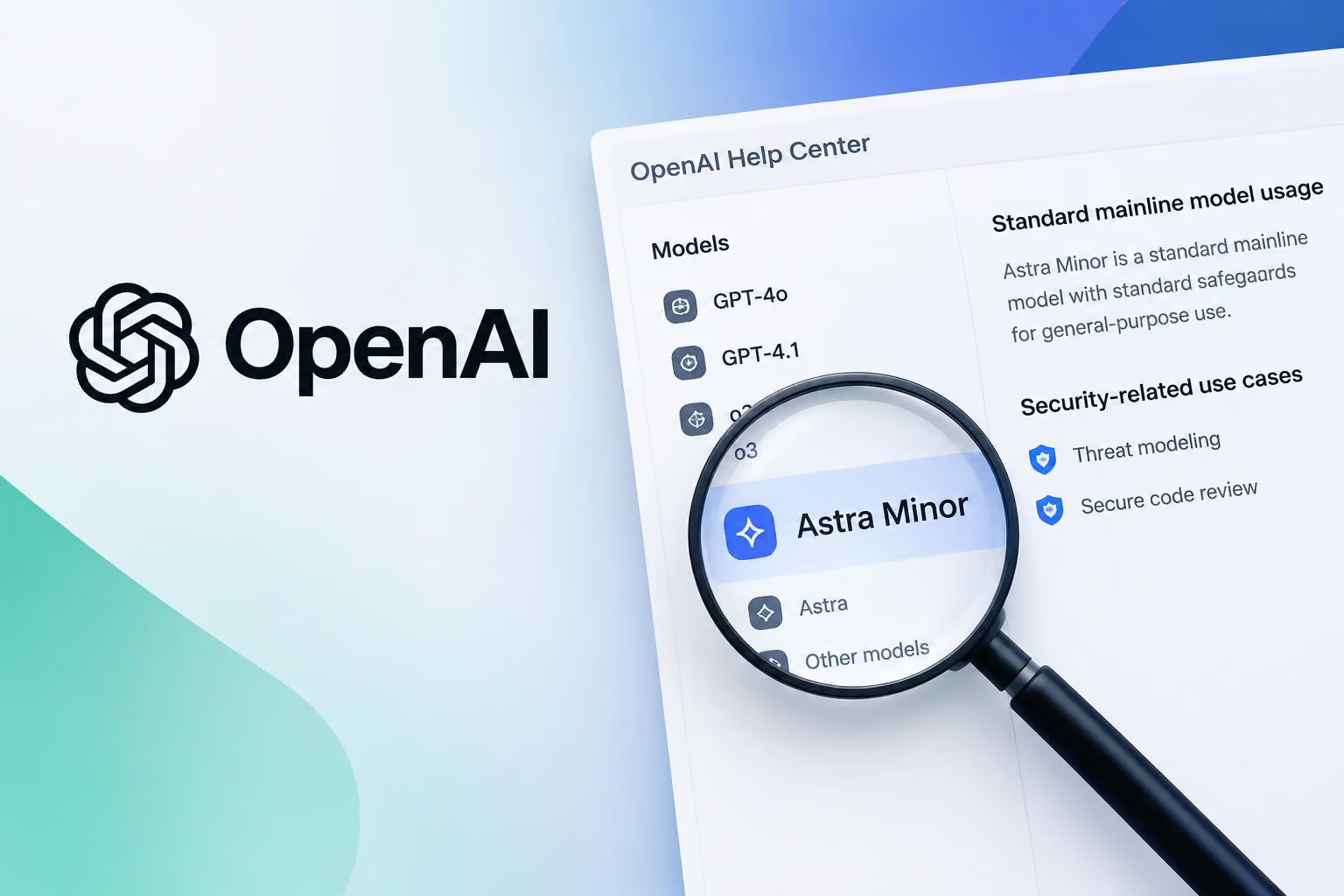
In a post on X, @AiBattle_ says a screenshot from OpenAI Help Center material mentions Astra Minor alongside Astra and other model names. The displayed text places Astra Minor in a “standard mainline model usage” category, describes standard safeguards for general-purpose use, and lists security-related workflows such as threat modeling and secure code review.
The screenshot supports only what its visible text says. It does not establish that Astra Minor has launched, is publicly available, or can be accessed by a particular group. The full Help Center page and its surrounding context are not available in the supplied evidence.
What the screenshot says about safeguards
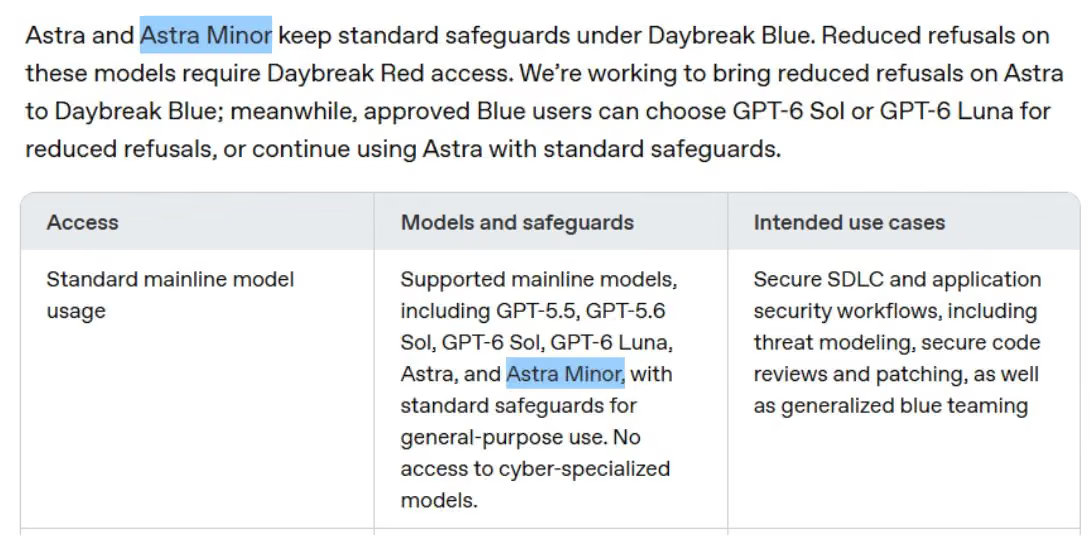
The visible text says that Astra and Astra Minor “keep standard safeguards under Daybreak Blue.” It then says that reduced refusals for those two models require Daybreak Red access.
The screenshot separately says that approved Blue users can choose GPT-6 Sol or GPT-6 Luna for reduced refusals. It also says OpenAI is working to bring reduced refusals on Astra to Daybreak Blue; meanwhile, users can continue using Astra with standard safeguards.
This wording does not explain the exact policy differences between the access categories, who qualifies for them, or how any reduced-refusal behavior is implemented. It also does not say that Astra Minor has reduced-refusal access under Daybreak Blue. The supported conclusion is narrower: the displayed text associates Astra Minor with standard safeguards under Daybreak Blue and describes reduced-refusal access for Astra and Astra Minor separately as requiring Daybreak Red.
The access category shown for Astra Minor
The screenshot labels the access category “Standard mainline model usage.” Under “Models and safeguards,” it lists supported mainline models including GPT-5.5, GPT-5.6 Sol, GPT-6 Sol, GPT-6 Luna, Astra and Astra Minor. It describes those models as having standard safeguards for general-purpose use and says that this category does not provide access to cyber-specialized models.
That wording shows how the displayed Help Center material categorizes Astra Minor. It does not establish who can use the model, whether the category is available to the general public, whether access requires an invitation or subscription, or whether the information is current.
The screenshot also does not explain what Astra Minor is, how it differs from Astra, or whether either name refers to a released model, an access tier, an internal designation or a planned offering.
Security workflows listed as intended uses
The screenshot’s “Intended use cases” column describes secure software-development lifecycle and application-security workflows. It specifically lists:
Threat modeling
Secure code reviews and patching
Generalized blue teaming
Threat modeling means examining a system to identify possible attack paths and security risks. A secure code review looks for vulnerabilities or unsafe implementation choices in software, while patching means changing software to address a known issue. Blue teaming generally refers to defensive security work, such as monitoring, hardening systems and responding to attacks.
These labels describe intended workflows in the displayed text, not measured results. The screenshot provides no benchmarks, examples, security-performance measurements or comparisons with other models.
What remains unconfirmed
The screenshot and X post do not establish:
That Astra Minor has been publicly launched
That the model is broadly available or accessible to a particular user group
The model’s price, access requirements or product interface
Its architecture, training data or relationship to Astra
Its refusal behavior or the meaning of any technical differences between Daybreak Blue and Daybreak Red
Its performance on coding, security or general-purpose tasks
Whether the displayed Help Center text is current or appears in the same form on the full page
The most supportable interpretation is that the screenshot appears to mention Astra Minor as a supported mainline model with standard safeguards and security-oriented intended workflows. It is not enough to establish a launch, public availability or demonstrated capability.



0 comments
No approved comments yet. You can start the conversation.
Leave a comment