
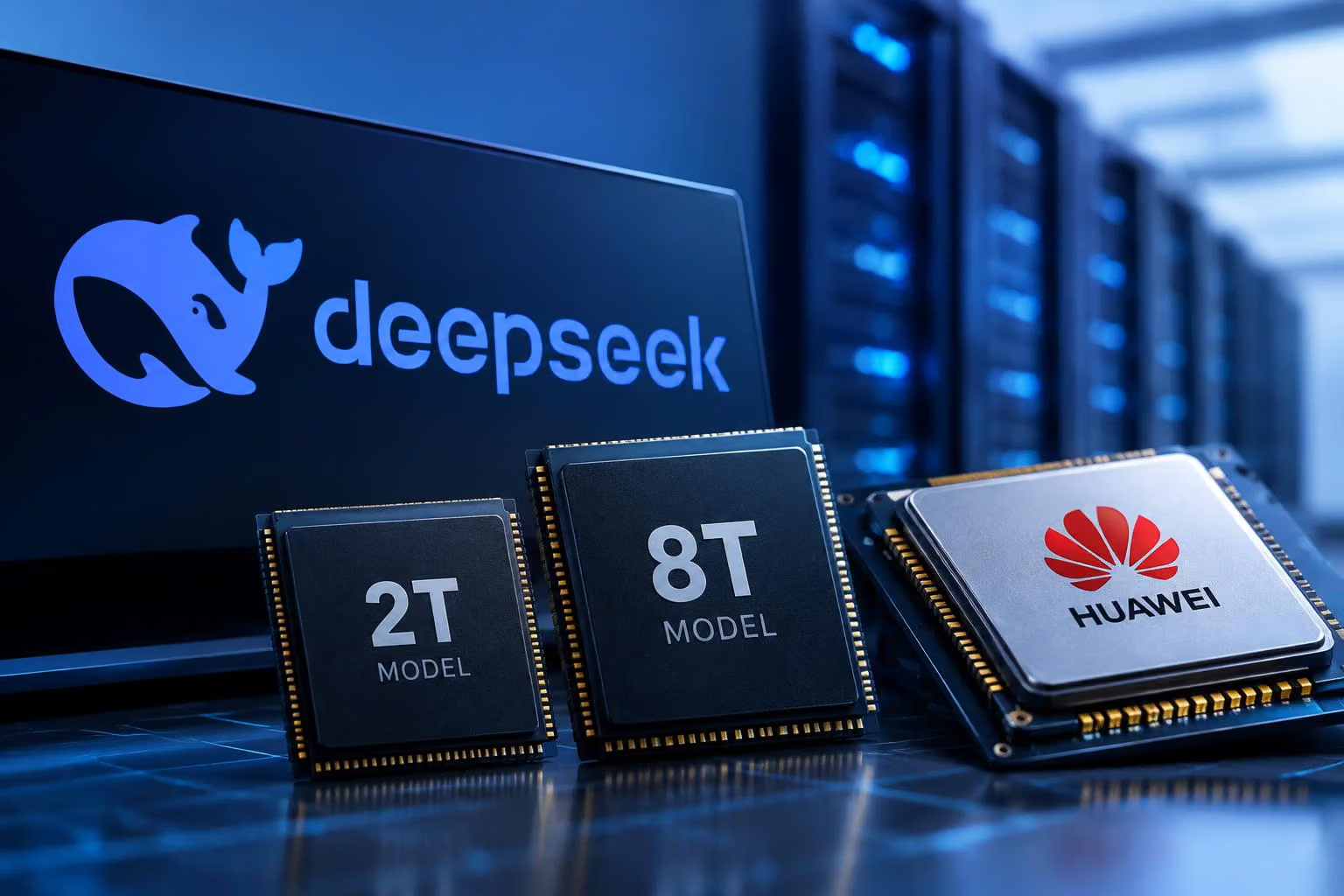
In a post on X, @Hesamation reports that DeepSeek is training a model described as 2T, has another model described as 8T in its plans, and expects new Huawei training chips in the fourth quarter of 2026 or the first quarter of 2027. The post also says DeepSeek CEO Liang Wenfeng told investors that moving model training to domestic chips “has to work.”
The report points to a possible shift toward domestic hardware for building larger models, but it does not establish that either model has completed training, that Huawei chips have been delivered, or that either model has a release date or demonstrated performance.
What DeepSeek is reportedly planning
The post describes two parts of DeepSeek’s reported model pipeline: a 2T model said to be in training and an 8T model said to be planned. It compares those figures with references to a 2.8T Kimi K3 and a 1.6T DeepSeek V4 Pro.
Those are reported size references, not evidence of comparative capability. The available material does not define whether “T” refers to parameter counts or another measure. It also provides no details about the models’ architecture, training data, intended release or benchmark results.
Why Huawei chips matter to the reported plan
The reported strategy is to use more domestic chips for model training. Training is the process of building or adjusting an AI model by processing data and updating its internal parameters. That work differs from inference, the process of running a finished model to produce outputs, because training involves repeated, large-scale computation over an extended process.
Text visible in the supplied screenshot describes training as requiring more powerful chips than running finished models. That is explanatory context from the screenshot, not a measured comparison of Huawei hardware. The available material does not provide Huawei chip specifications, expected quantities, performance measurements or details about how DeepSeek’s software would support them.
The report therefore describes a proposed hardware direction rather than a demonstrated technical outcome. It does not show that DeepSeek has already moved all of its training to Huawei hardware or that the reported models were successfully trained on those chips.
When are Huawei training chips reportedly expected?
The post gives a delivery window in the fourth quarter of 2026 or the first quarter of 2027 for new Huawei training chips. Text visible in the screenshot says Huawei Technologies could begin delivering training chips to DeepSeek as early as the fourth quarter of that year.
Taken together, the two source items describe a reported delivery window beginning in late 2026 and potentially extending into early 2027. They do not establish that deliveries have begun, that the schedule is firm or that the chips will be available in sufficient numbers for the reported model plans.
What Liang Wenfeng reportedly told investors
Text visible in the screenshot says Liang told investors that using more domestic chips to train DeepSeek’s models was a major priority. The post separately reports that he said moving training to domestic chips “has to work.”
The screenshot says the remarks came from a closed-door meeting and were attributed to two people with direct knowledge. It does not include a transcript or recording, so the available material does not independently establish the full context or wording of the meeting. The reported remarks indicate a stated priority and intention, not a completed transition to domestic hardware.
What the report does—and does not—show
Taken together, the source material describes a reported domestic-chip strategy involving a 2T model said to be under training, an 8T model said to be planned and Huawei training chips reportedly expected in a late-2026 or early-2027 window.
It does not establish:
what the 2T and 8T figures specifically measure;
whether either model has completed training;
whether Huawei chips have been delivered to DeepSeek;
the chips’ specifications, performance or quantity;
a release date or benchmark result for either model; or
that the plan has bypassed U.S. export controls.
The screenshot’s headline frames the effort as a way to bypass U.S. export controls, but the available material does not demonstrate that outcome. For now, the report describes a domestic-hardware strategy and the expectations surrounding it, not a verified technical or geopolitical result.


0 comments
No approved comments yet. You can start the conversation.
Leave a comment