
Google's UK AI data centre is a $1 billion facility in Waltham Cross, Hertfordshire. Google announced the investment in January 2024, and the site opened on 16 September 2025. Google says the building adds computing capacity for AI and cloud services used by UK businesses and by Google users in Britain and abroad.
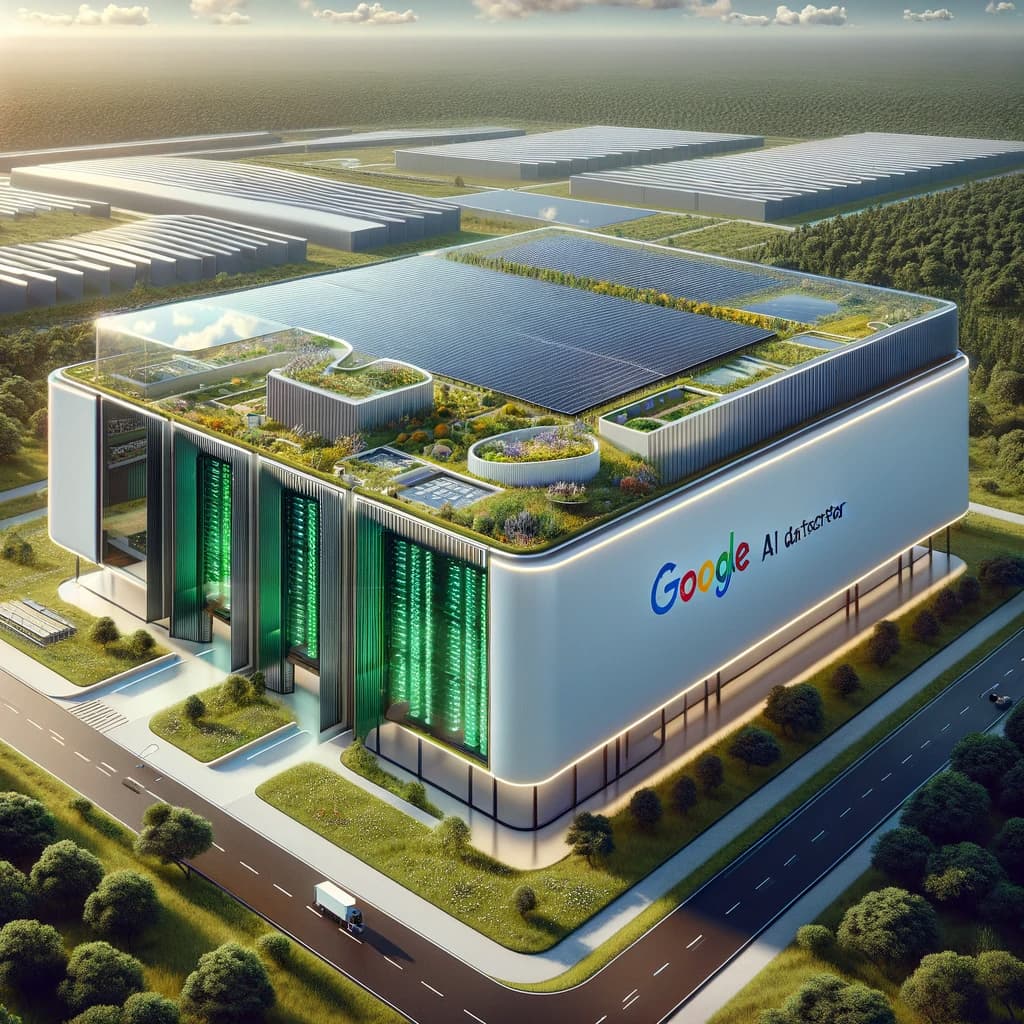
The facility is also part of a two-year, £5 billion UK programme. Much of what is said about it comes from company descriptions or third-party estimates, so the sections below separate what is confirmed from what is not.
What Google's UK AI data centre was announced to do
Google's January 2024 blog post described the Waltham Cross facility as a way to give UK businesses more computing power, support AI work and keep services reliable for Google Cloud customers and users at home and abroad. The 33-acre site was bought by Google in 2020. The investment followed Google's 2022 purchase of a central London office, close to Covent Garden.
Mobile Europe places the plot at Maxwell's Farm, close to the A10 and a short drive from the M25. Distances to central London vary by report: Mobile Europe puts the town about 12 miles north, while Scommerce says 15. Building converted the $1 billion to about £787m, and DC Pulse rounds it to £790m, so the sterling figure shifts slightly by source.
When did the Waltham Cross site open, and what does the £5bn cover?
Google opened the Waltham Cross data centre on 16 September 2025, according to its opening post. That post says Chancellor Rachel Reeves formally opened the site, and Reeves described the investment as a powerful vote of confidence in the UK economy.
The £5 billion is a two-year package covering capital spending, research and development and engineering. The opening post says it also covers DeepMind's work in science and healthcare. New Civil Engineer reports that local firms made up most of the more than 250 companies that built the site.
The distinction matters. The £5 billion is a programme total that reaches well beyond one building, while the $1 billion figure is the one tied to the Waltham Cross facility itself.
How does the Waltham Cross site handle cooling, heat and energy?
On cooling, the Cloud press release credits air-based systems with keeping water consumption to domestic levels, and says the site was designed to minimise its environmental impact.
Heat recovery is a separate matter. Google's 2024 blog post says the facility has provisions to capture heat for nearby homes and businesses. The 2025 release goes further and says that heat can be routed free of charge to warm local homes, schools or businesses, but that describes a capability rather than a running scheme.
Google's opening post also links the site to a deal with Shell. According to the post, Shell will help manage Google's UK clean power arrangements, and batteries will feed surplus renewable output back to the grid when demand peaks. Google's wider 2030 goal, as Building describes it, is hourly carbon-free power at all of its data centres.
Hourly matching is a stricter test than an annual average, so the Shell arrangement and the battery storage are the parts to watch.
What does the 8,250 jobs figure actually measure?
Google's own estimate for the wider programme is 8,250 roles a year across the UK economy, as set out in its opening post. That figure is not a headcount for the building. New Civil Engineer says the estimate is built on supply-chain work, which leaves out the building's own permanent staff. Google has also offered no split between direct, indirect and temporary roles.
The 2024 coverage had the same gap. Electronics Weekly noted that the company had given no indication of how many people the centre would employ.
Construction crews and supply-chain roles are a normal part of a large build, and data centres typically run with comparatively few permanent staff. The useful test is whether Google publishes a direct headcount for the site after its first full year of operation.
Which claims about the site remain unproven?
The most specific capacity figure comes from Data Center Index, which lists the site at 77 MW. The same page cites an Epoch AI reading of 88 MW that may include campus expansions, so the two numbers do not agree.
The tracker also names Google DeepMind as the tenant.
Open questions remain: how many permanent staff the site employs, how much power it draws, whether any nearby user takes its heat, and how much of its capacity serves UK customers compared with Google's global workloads.
Key takeaways
- Google's Waltham Cross data centre is a $1 billion investment, roughly £790 million, not £1 billion, and it opened on 16 September 2025.
- Air cooling is the core of the water claim, which Google says keeps water use to domestic levels; heat recovery is designed in but not shown to be in use.
- The 8,250 jobs figure covers supply-chain roles across a wider programme, not the site's permanent staff.
- The 77 MW capacity figure and the DeepMind tenancy come from a third-party tracker and are not confirmed by Google's releases.
Frequently asked questions
Where is Google's UK AI data centre?
It is in Waltham Cross, Hertfordshire, on a 33-acre site near the A10 and the M25. Reports put it roughly 12 to 15 miles north of central London, with Mobile Europe citing the lower figure.
How much did Google invest, and when did it open?
Google announced a $1 billion investment in January 2024, which Building converted to about £787 million. The site opened on 16 September 2025 as part of a two-year £5 billion UK programme.
Does the data centre use a lot of water?
Google says the site uses air-based cooling and that its water use is limited to domestic levels, as set out in its Cloud press release. No independent water-use figures for the operating site appear in the sources cited here, so that claim rests on the company's own description.
Who uses the capacity?
Google says the site supports AI-powered services including Google Cloud, Search, Workspace and Maps, as its opening post describes, and that capacity serves UK businesses and Google users in Britain and abroad. Beyond that, the company's releases do not name the building's occupants, and a third-party tracker's claim about DeepMind has not been confirmed by Google.
Sources
- Google blog: Our $1 billion investment in a new UK data centre
- Google blog: Our new Waltham Cross data center (opening, 16 September 2025)
- Google Cloud press corner: Google Opens Waltham Cross Data Centre
- Building: Google invests $1bn in new UK data centre
- Mobile Europe: Google to build 33-acre, $1bn data centre
- Scommerce: Google to invest $1 billion in London data centre
- Electronics Weekly: Google plans $1 billion Hertfordshire data centre for AI
- New Civil Engineer: Google opens Waltham Cross data centre as part of £5bn UK investment
- Yahoo Finance: Google opens new data centre amid $6.8bn UK investment drive
- DC Pulse: Google Waltham Cross $1B AI data centre
- Data Center Index: Google Waltham Cross



0 comments
No approved comments yet. You can start the conversation.
Leave a comment