
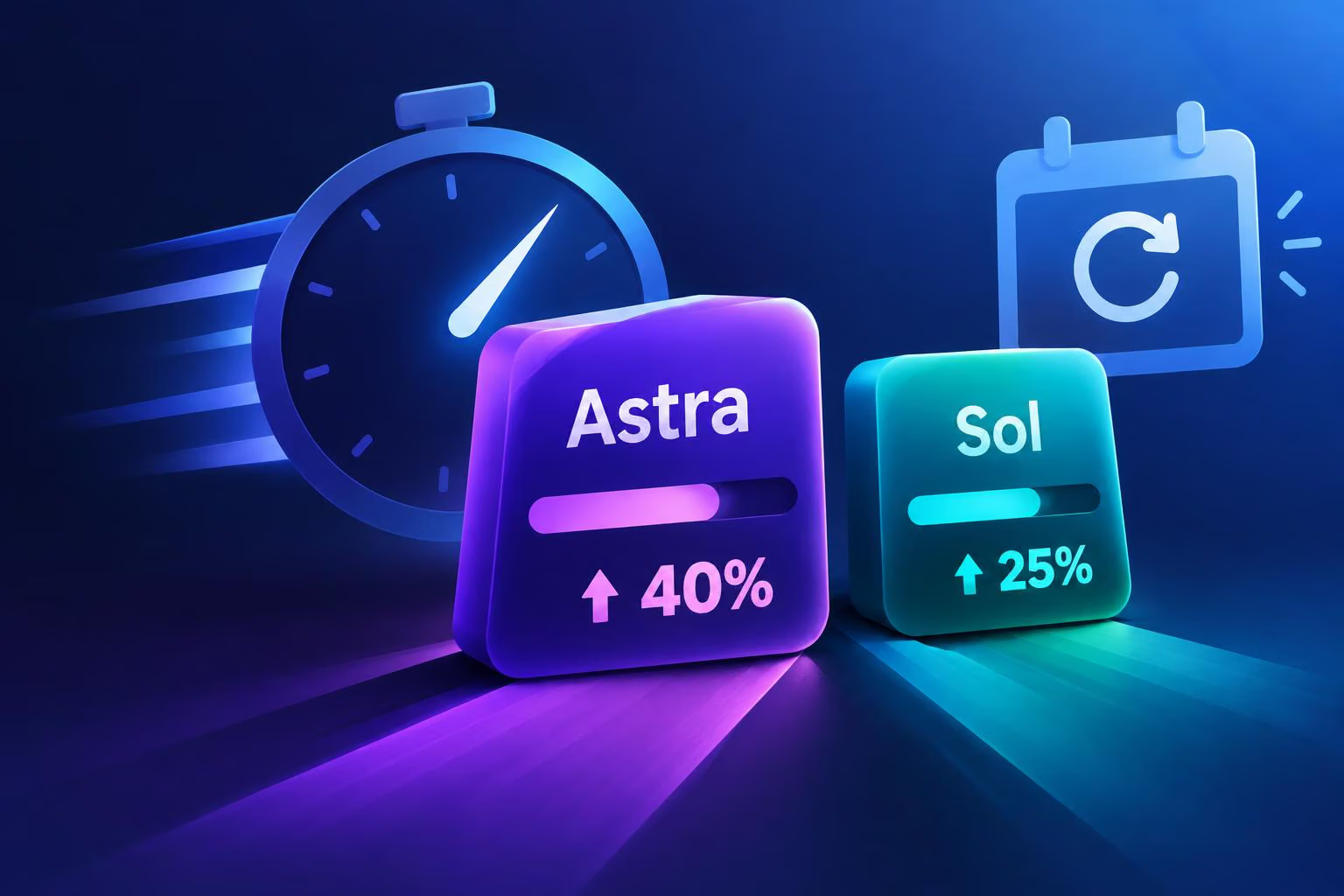
GPT-6.2 usage limits tightened this week. OpenAI's Tibo Sottiaux wrote on X that a billing error at launch meant most users were charged too little for Astra and Sol work. Astra users will now hit their caps 40% sooner than last week, and Sol users 25% sooner.
Nobody gets a bill for the gap on earlier usage, the post adds, and every Go, Plus, Pro and Business account receives one banked reset as an apology.
What OpenAI says went wrong
The account comes from Sottiaux, who works on Codex and ChatGPT at OpenAI, according to RuntimeWire. The models debuted on November 17 across ChatGPT Work, Codex and the API, per ABAB News. Under the correction, identical tasks now eat into a plan's allowance faster. Even so, the post expects GPT-6.2 to stretch a plan further than GPT-6 Astra and GPT-6.1 Sol did, and it says models outside these two are untouched. The post gives no detail on how the error happened, so the mechanism is not explained beyond that label.
Who is affected by the GPT-6.2 usage limits
The correction covers most users of either model, according to the post. Developers billed per token are a separate matter, since RuntimeWire points out that the announcement says nothing about API token rates. A pricing guide puts Astra at $8 per million input tokens and Sol at $2, which makes Astra the costlier pick when cost matters.
Plan allowances are harder to pin down. A third-party guide lists estimated Plus usage of 6 to 50 Astra messages and 17 to 180 Sol messages. It says OpenAI's pricing page presents these only as estimates and tells readers to consult their dashboard for live figures. Heavy users of long cloud tasks should feel the change first, because they hit caps soonest. This is inference from the post's figures; the post itself makes no such claim.
The case for and against the fix
The case for the fix is simple. The company owns the error, waives any back-charge and says both models still beat their predecessors on usage. Correcting a metering slip is also easier to defend than leaving an unintended discount in place.
The case against is about timing and tone. For anyone who built a routine around launch-week limits, a 40% faster burn is a large change to absorb from one post. One reply argued that the change pushes people toward Gemini and Claude. The apology is also thin: a single banked reset, with nothing in the post on when it arrives or how long it lasts.
What to watch next
Three things will show whether this settles. First, when the banked reset arrives and how long it lasts. Second, whether OpenAI publishes plan estimates that reflect the corrected metering. Third, whether higher tiers or larger allowances follow for power users, a question one outlet says remains open.
Key takeaways
- Astra limits now arrive 40% sooner and Sol limits 25% sooner than last week, according to the post.
- Launch-week usage will not be billed retroactively, and Go, Plus, Pro and Business accounts each receive a single reset.
- Plan estimates are not fixed caps, so check your usage dashboard, and for cost-sensitive work, Sol is the cheaper model to try first.
Frequently asked questions
Will I be charged for the extra usage from launch week?
No. The post rules out a charge for the gap on earlier usage.
Does the change affect models other than Astra and Sol?
No. According to the post, only these two are involved.
Does GPT-6.2 still stretch further than earlier models?
Yes, per the post, it still gets more out of a plan than GPT-6 Astra and GPT-6.1 Sol do.



0 comments
No approved comments yet. You can start the conversation.
Leave a comment