
Anthropic has released Claude Haiku 5.5, which it calls the cheapest, fastest and most capable small model it has released, according to a post on X from @claudeai. The company says the model costs around 75% less to run than Claude Haiku 4.5 on average. Anthropic says Haiku 5.5 is available now on the Claude Platform and on Amazon Web Services, Google Cloud and Microsoft Azure.
The benchmark and price figures are Anthropic's own reported numbers. The cost comparisons below are our arithmetic, using Anthropic's list prices.
What's new against Haiku 4.5
Anthropic describes Haiku 5.5 as a significant step up over Haiku 4.5 across coding, computer use and knowledge work. The company's benchmark table compares the model with Haiku 4.5, GPT-6 Luna and, for reference, Sonnet 5.5.
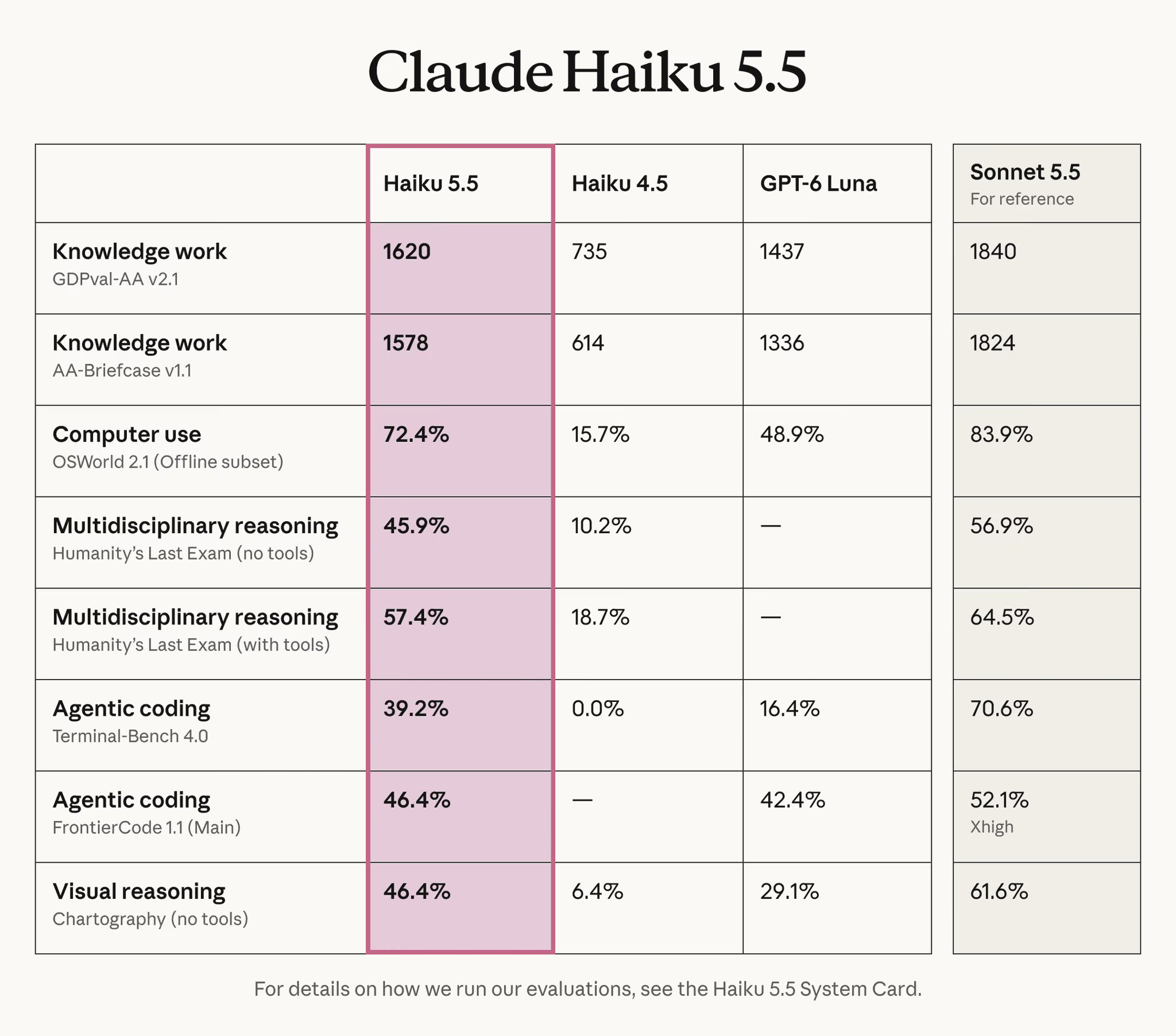
Image credit: @claudeai on X
Benchmark | Haiku 5.5 | Haiku 4.5 | GPT-6 Luna | Sonnet 5.5 (reference) |
|---|---|---|---|---|
GDPval-AA v2.1, knowledge work | 1620 | 735 | 1437 | 1840 |
AA-Briefcase v1.1, knowledge work | 1578 | 614 | 1336 | 1824 |
OSWorld 2.1, offline subset, computer use | 72.4% | 15.7% | 48.9% | 83.9% |
Humanity's Last Exam, no tools | 45.9% | 10.2% | not reported | 56.9% |
Humanity's Last Exam, with tools | 57.4% | 18.7% | not reported | 64.5% |
Terminal-Bench 4.0, agentic coding | 39.2% | 0.0% | 16.4% | 70.6% |
FrontierCode 1.1 Main, agentic coding | 46.4% | not reported | 42.4% | 52.1% (Xhigh) |
Chartography, no tools, visual reasoning | 46.4% | 6.4% | 29.1% | 61.6% |
The benchmarks cover a mix of work. OSWorld 2.1 measures how well agents operate a real computer through long, multi-step tasks, and Terminal-Bench 4.0 measures complex multi-step work in a command-line interface. Among the percentage benchmarks, the widest gap to Sonnet 5.5 is on Terminal-Bench 4.0, at 39.2% against 70.6%.
Asana, whose AI Teammates agent product was tested with Haiku 5.5, reported over a 30% reduction in latency for task completions and up to 2.5x faster inference per agent turn compared with the model it uses today. Aaron Vinh, a staff software engineer at Asana, is quoted on the announcement page. That is one customer's early test rather than a general measure.
Price and access
Anthropic publishes prices per million tokens. The table below sets Haiku 5.5 against Haiku 4.5 and Sonnet 5.5. The Haiku 5.5 prices are split at prompts of 100,000 tokens.
Price per 1 million tokens | Haiku 5.5 (up to 100k / over 100k) | Haiku 4.5 | Sonnet 5.5 |
|---|---|---|---|
Cache reads | $0.01 / $0.05 | $0.10 | $0.10 |
Cache writes | $0.125 / $0.625 | $1.25 | $2.50 |
Input tokens | $0.10 / $0.50 | $1.00 | $2.00 |
Output tokens | $0.50 / $2.50 | $5.00 | $10.00 |
The 75% figure is an average. Anthropic's footnote says Haiku 5.5 is priced 90% below Haiku 4.5 for requests up to 100,000 tokens and 50% below for longer requests. The company says 90% of requests to the previous Haiku model fell in the shorter band. The average also reflects an updated tokenizer, which means Haiku 5.5 uses slightly more tokens to complete a given task.
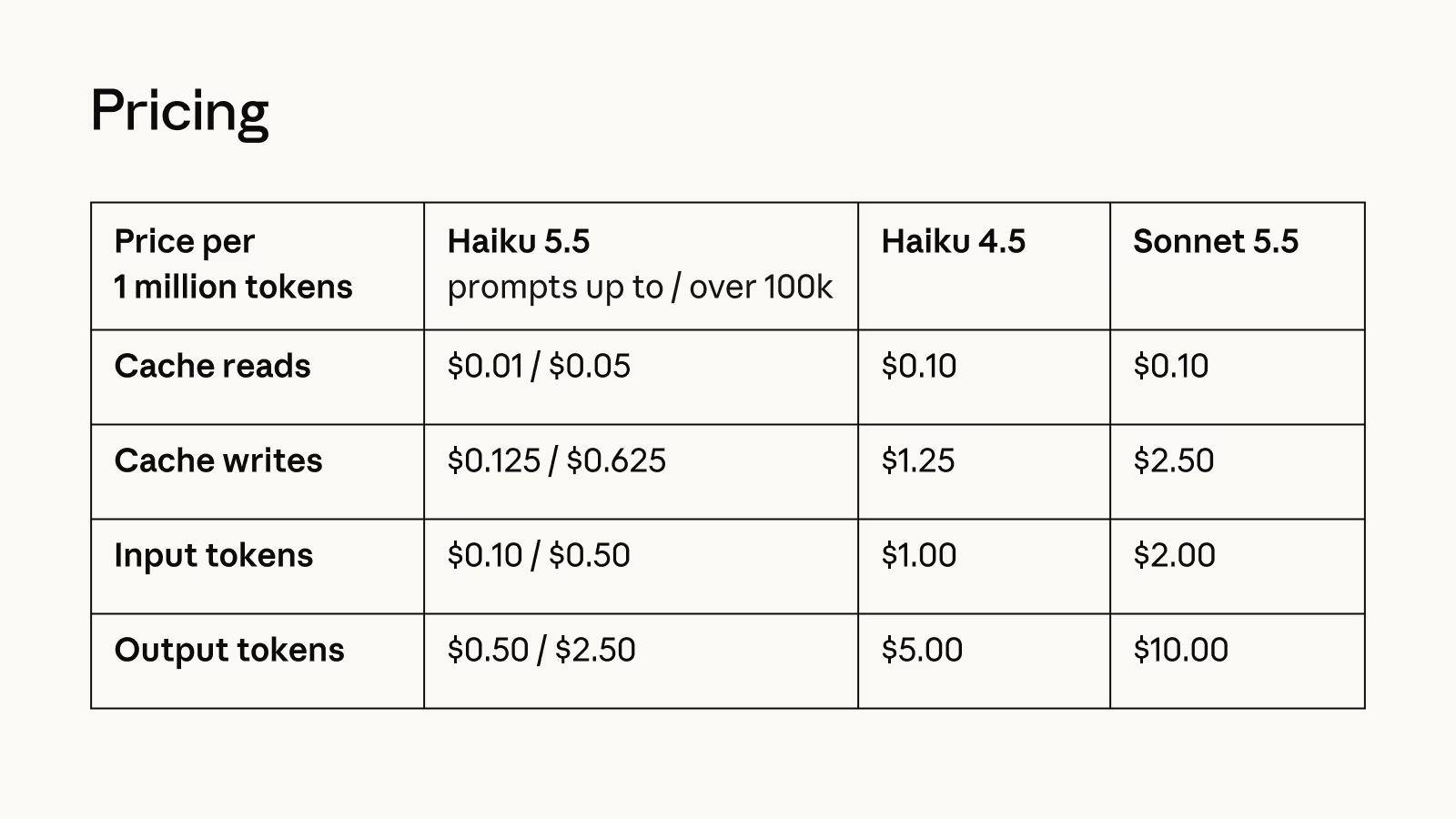
Image credit: @claudeai on X
For a hypothetical workload of 10,000 requests, each with 2,000 input tokens and 500 output tokens, at list prices and without caching, our calculation gives these totals:
Haiku 5.5: 20 million input tokens at $0.10 plus 5 million output tokens at $0.50, for $4.50 in total.
Haiku 4.5: 20 million input tokens at $1.00 plus 5 million output tokens at $5.00, for $45.00 in total.
Sonnet 5.5: 20 million input tokens at $2.00 plus 5 million output tokens at $10.00, for $90.00 in total.
On these assumptions, Haiku 5.5 costs about a tenth of Haiku 4.5 and a twentieth of Sonnet 5.5. The example ignores cache use and the tokenizer change, so a real bill will differ. A workload with longer prompts moves toward the 50% band.
Separately, Anthropic says it will roll out a monthly API credit this week to Max and Team subscribers for use on the Claude Platform. Max 5x users get $100 a month, Max 20x users get $200, and Team subscribers get up to $500, pooled across their users. The credit can be used on any of Anthropic's models.
Anthropic says Haiku 5.5 is available now on all platforms, including Amazon Web Services, Google Cloud and Microsoft Azure. On the Claude Platform, developers can start with the model name claude-haiku-5-5.
The effort setting
Anthropic says Haiku 5.5 is its first Haiku-class model with an adjustable effort setting. As with its other models, users can choose on each task whether to optimise for cost or for intelligence. The charts label the settings Low, Med, High, Xhigh and Max.
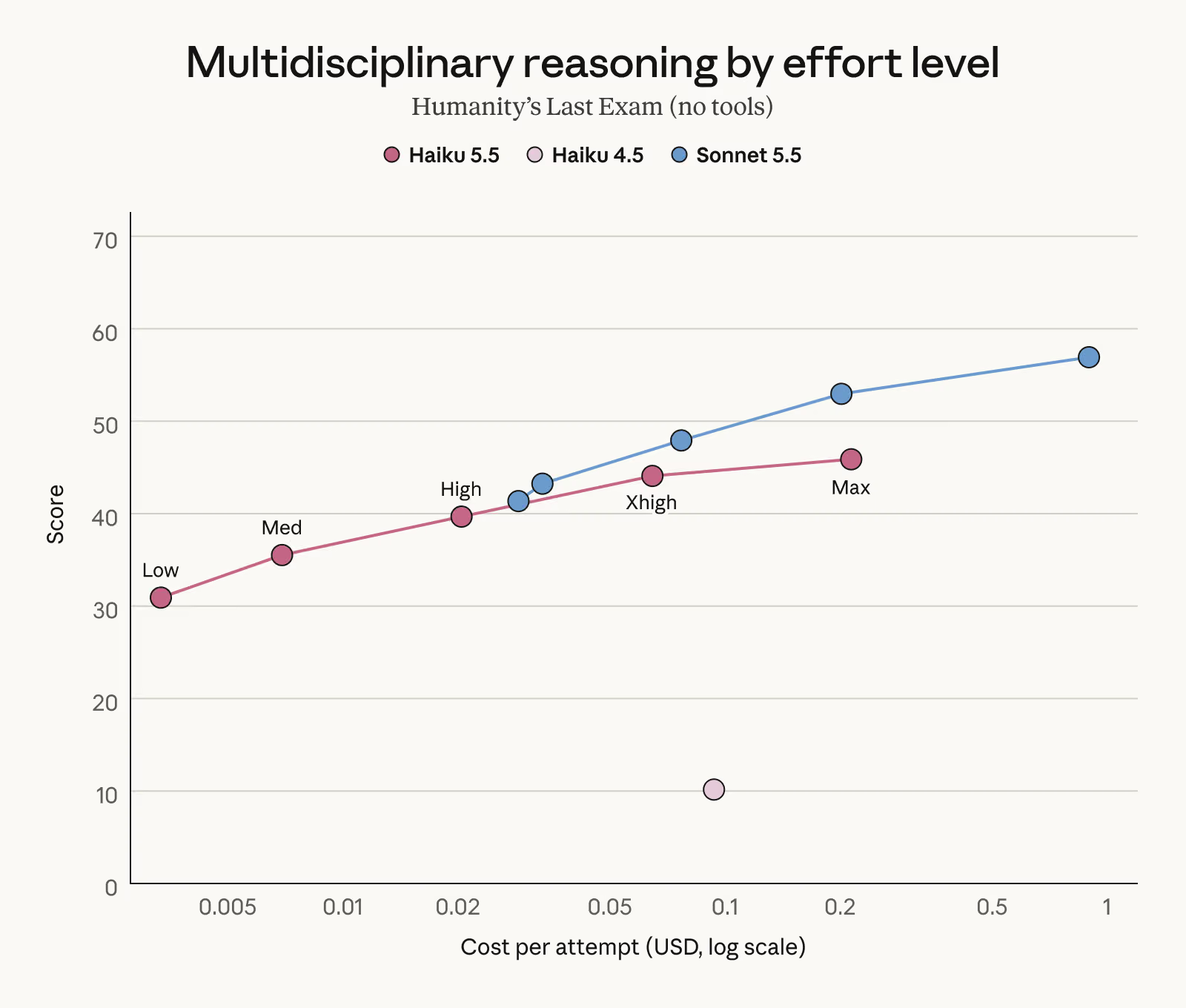
Image credit: @claudeai on X
The OSWorld chart plots partial-credit score against cost per attempt on a log scale. Reading the chart roughly, Haiku 5.5 at Low sits near 42% and at Max near 72%, and Max costs several times more per attempt than Low. For computer-use work, the setting is a trade between accuracy and price per run.
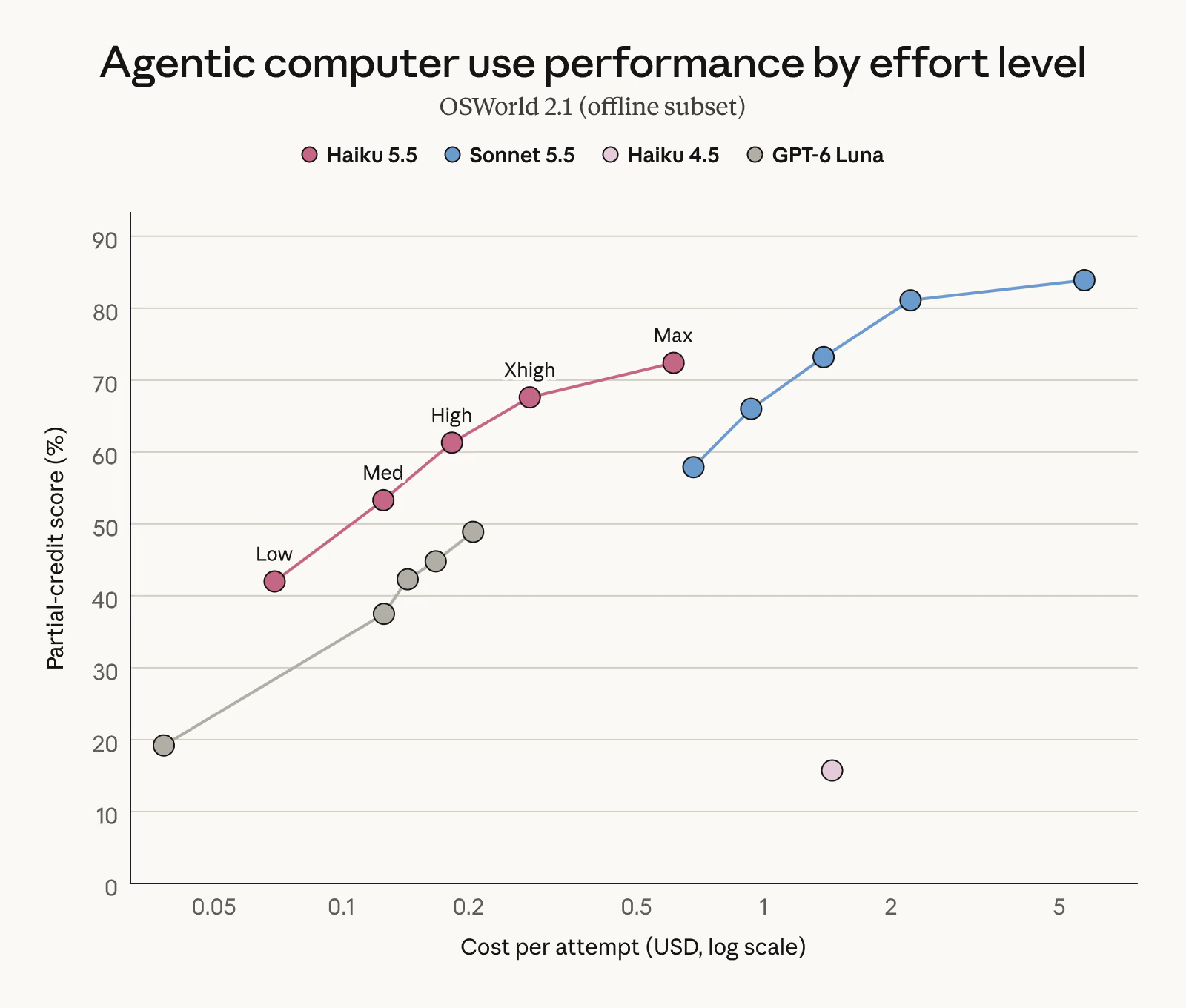
Image credit: @claudeai on X
The GDPval-AA chart shows the same pattern on knowledge tasks, with scores rising across the settings. At its top setting, Haiku 5.5 sits below Sonnet 5.5's top setting in that chart, which costs more per task.
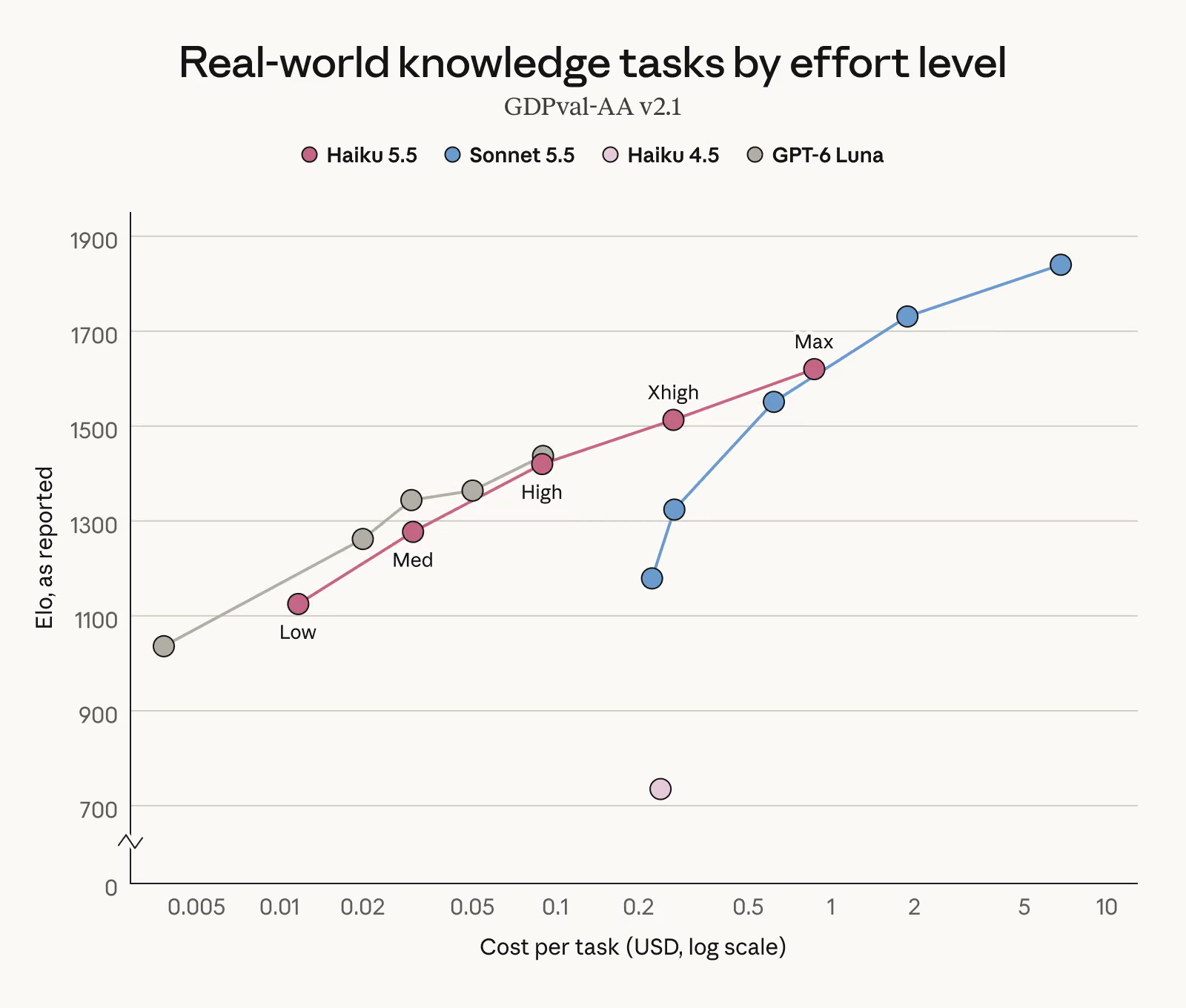
Image credit: @claudeai on X
In practice, the setting works as a per-task dial. Our suggestion is that a high-volume classification step could stay at a low setting while a harder step in the same pipeline gets a higher one. Anthropic does not prescribe that split.
Where Haiku 5.5 fits next to Sonnet 5.5 and Opus 5.5
Anthropic positions Haiku 5.5 for quick, repetitive work such as summaries, compaction, database queries and classification. It also suggests the model can work as a subagent alongside Opus 5.5 and Sonnet 5.5 on coding work, and that its speed suits live customer support and browser use. Anthropic says the model is its fastest at standard speed, though its Opus models run faster in Fast Mode.
The limit is stated plainly. Anthropic says Sonnet 5.5 and Opus 5.5 remain better choices for complex agentic coding tasks like those measured by Terminal-Bench 4.0. Haiku 5.5 is best suited to narrower tasks that may have been too costly to run on earlier versions of Claude, such as compaction, summarisation or subagent work.
Sonnet 5.5 cache-read price cut
The announcement also includes a separate change for Sonnet 5.5. Anthropic says it is halving the price of Sonnet 5.5 cache reads, from $0.20 to $0.10 per million tokens, starting from the launch date. Anthropic estimates this lowers the cost of Sonnet 5.5 on most agentic tasks by around 20%, because cache reads make up a large share of token use. That estimate depends on how much of a workload is cache reads, so teams should check their own token mix. Haiku 5.5's cache reads are priced separately at $0.01 and $0.05 per million tokens.
Safety and safeguards
Anthropic says Haiku 5.5 shows major improvements across almost all of its alignment evaluations relative to Haiku 4.5, with far fewer instances of misaligned behaviour and a lower willingness to cooperate with misuse.
Its cyber safeguards are more restrictive than Haiku 4.5's but less restrictive than those on Sonnet 5.5. They permit a wider range of defensive tasks than the Sonnet 5.5 safeguards, but still block penetration testing and techniques more likely to be used by attackers. Biology safeguards match those on Sonnet 5, Sonnet 5.5 and Opus 5: research biology questions are allowed, while requests judged likely to cause harm are restricted.
Organisations with wider-ranging biology or cyber work can apply to the Life Sciences Verification Program or the Cyber Verification Program. Those programme pages name other models, so check their model lists before assuming coverage for Haiku 5.5. Anthropic refers readers to a system card for how it ran these evaluations.
Who should care
Our view: Teams running large volumes of short, repetitive calls, such as triage, classification or summarisation, have the clearest case for a trial, because the cost gap is large. Model your own token mix before adopting it, since the 75% average and the 90% short-prompt price cut describe different situations.


0 comments
No approved comments yet. You can start the conversation.
Leave a comment