
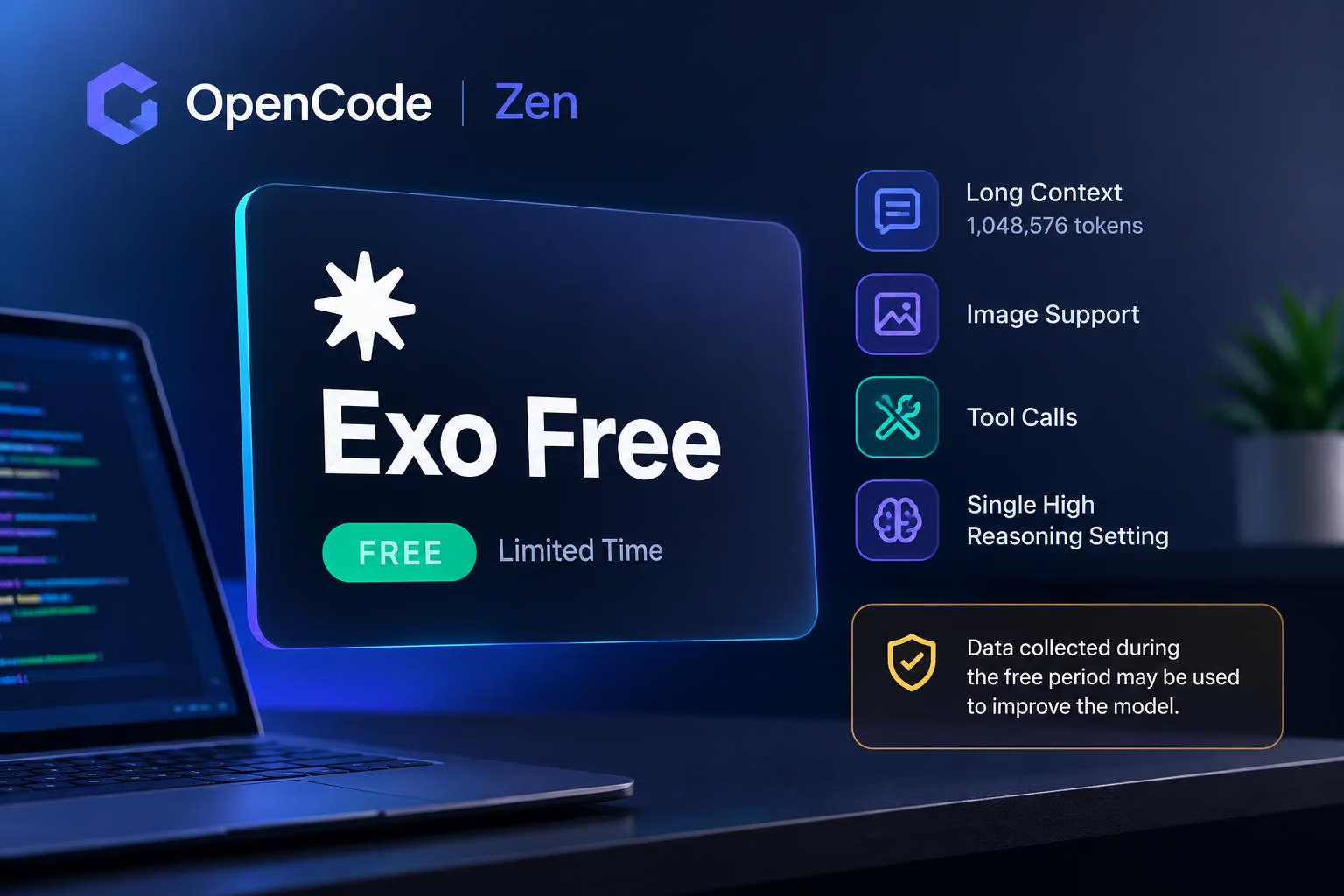
Exo Free is listed in OpenCode Zen as a free model for a limited time. In a post on X, @hakmgpt describes it as a new “stealth” model and reports a 1,048,576-token context window, image and tool-call support, and a single high reasoning setting. OpenCode’s documentation identifies the model as exo-free, lists it in the Zen catalog and warns that data collected during its free period may be used to improve the model.
What OpenCode lists for Exo Free
OpenCode’s Zen documentation identifies the model as Exo Free and gives it the model ID exo-free. It lists the model at the OpenCode Zen chat-completions endpoint. In the pricing section, Exo Free is shown as Free in the input column; the supplied pricing text does not specify an output price for it.
OpenCode describes Zen as an optional provider rather than a requirement for using OpenCode. Its documented access path is to sign in to OpenCode Zen, add billing details, copy an API key, run /connect in the OpenCode terminal interface, select OpenCode Zen and paste the key. Users can then run /models to see the models available to them. This describes the Zen setup flow, not unlimited access or identical availability for every account.
The model appears alongside other free models in OpenCode’s catalog. OpenCode describes Zen as an AI gateway for models that its team tests, configures with providers and benchmarks for coding-agent use. That description applies to the Zen service overall; it does not provide a separate benchmark result or performance assessment for Exo Free.
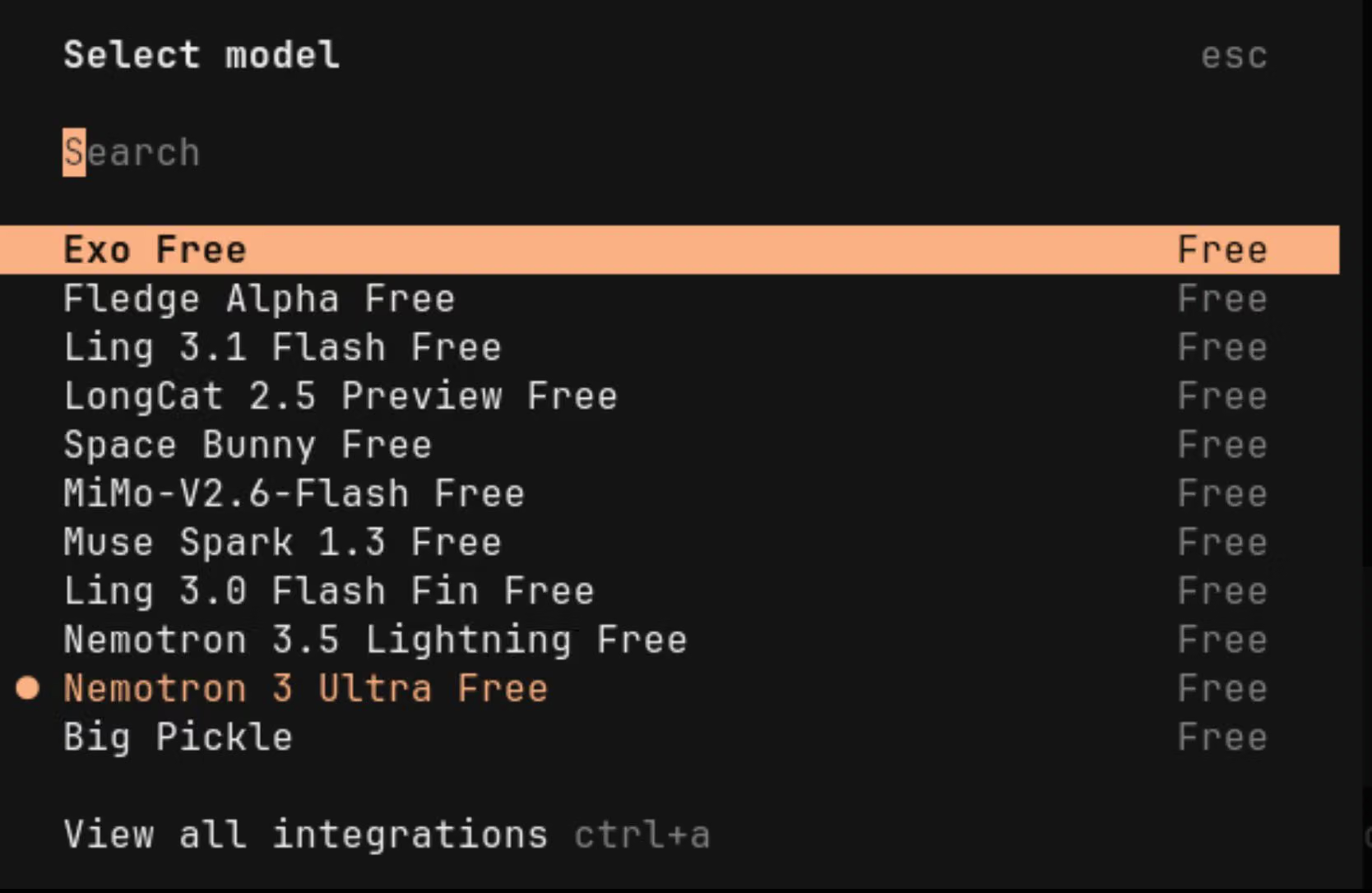
Image credit: @hakmgpt on X
The documentation says model IDs in an OpenCode configuration use the opencode/<model-id> format. For Exo Free, that means opencode/exo-free. The listing establishes how OpenCode identifies and routes the model, but the supplied documentation does not identify its provider, developer, geographic origin or model family.
Reported capabilities include a very large context window
The X post reports these capabilities for Exo Free:
A context window of 1,048,576 tokens
Up to 131,072 output tokens
Text and image inputs
Tool-call support
One reasoning effort level, described as high
A context window is the amount of input and conversation information a model can process in a request. A large reported window could be useful for coding agents working across long files, extensive project context or large tool outputs. Tool-call support is relevant because an agent can use tools to interact with a development environment rather than only return text.
These figures and features come from the supplied X post. The OpenCode documentation does not independently confirm the token limits, image support, tool support or reasoning setting. No benchmark, test result or independent evaluation was supplied, so the available evidence does not support ranking Exo Free against other OpenCode models or concluding that it performs well in practice.
Free access is described as temporary
OpenCode’s documentation says Exo Free is available for a limited time while the team collects feedback and works to improve the model. That wording does not establish an end date, usage cap, rate limit or service-level guarantee, so the current listing should not be treated as a promise of permanent free access.
The important data-use qualification
OpenCode says its providers generally follow a zero-retention policy and do not use user data for model training, but it lists exceptions. Exo Free is one of them: during its free period, collected data may be used to improve the model.
That qualification is more important for developers than the word “free” alone. Prompts, code, tool inputs or completions sent through the service could contain proprietary or personal information. The supplied documentation does not specify Exo Free’s retention duration, deletion process or the exact scope of collected data, so developers should avoid sending confidential material unless their organisation has reviewed and accepted the documented terms.
OpenCode’s documentation also says teams can disable individual models in a workspace, including models that collect data. That provides an administrative control for organisations, but it does not change the data-use qualification for requests sent to Exo Free while it is enabled.
What the available evidence does not establish
The supplied documentation does not identify who provides Exo Free, who developed it, where it was developed or whether it belongs to a particular model family. The X post speculates about its origin, but that speculation is not supported by the OpenCode documentation provided here.
The sources also do not establish a performance ranking, guaranteed availability, unlimited use or permanent free access. The supported description is narrower: Exo Free is listed in OpenCode Zen under the model ID exo-free, OpenCode lists it as free for a limited time, the X post reports a large context window and several input and agent features, and OpenCode warns that free-period data may be used to improve the model.


0 comments
No approved comments yet. You can start the conversation.
Leave a comment