
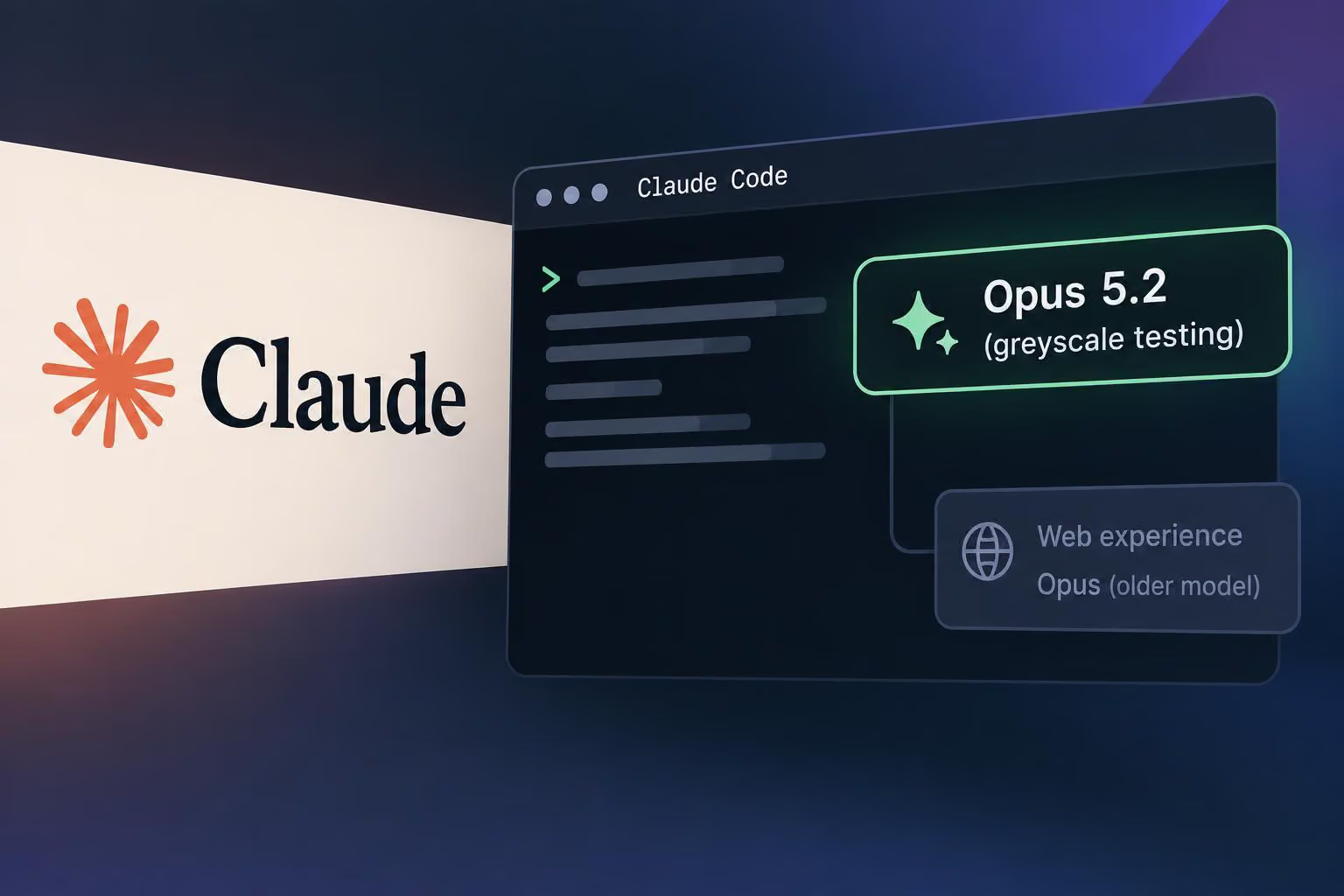
An X post suggests that a model related to Claude Opus 5.2 may be undergoing what the post describes as greyscale testing—a staged release to only some users—in Claude Code under the broader name “Opus 5.” The post also says that Claude’s web experience is still routing Opus requests to an older model.
The report is not an official announcement, and the available source does not confirm that Opus 5.2 is publicly available, that Anthropic is conducting the test, or that any rollout is complete.
What the post reports
In a post on X, @synthwavedd points to recently appearing identifiers that reference “5.2” and suggests that Claude Opus 5.2 may be undergoing greyscale testing in Claude Code while being presented there as “Opus 5.” The post speculates that Anthropic could be moving from Opus 5 directly to 5.2, although it does not establish that version 5.1 is being skipped.
The evidence supplied with the post does not include the alleged identifiers, screenshots showing model routing, access conditions or an official statement from Anthropic. As a result, the version-number interpretation remains unconfirmed.
The reported difference between Claude Code and the web
The post says that requests for Claude Opus through the web still reach an older Opus model, while Claude Code may be using the newer system behind its “Opus 5” label. If accurate, that would mean the product label alone may not reveal the exact model handling a request.
However, the source does not provide model IDs, request logs or a way to reproduce the reported routing. It therefore shows only what the poster observed or inferred, not a verified map of how Claude Code and the web currently select models.
What the comparison shows
The post describes a no-search comparison with “Opus 5” on one side and “Opus 5.2” on the other, alongside the description “Pretty massive difference.” This is an anecdotal comparison, not a benchmark. The source gives no prompt, outputs, scoring method, number of trials or test protocol.
That means the comparison may indicate that the poster saw noticeably different behavior, but it cannot establish a general performance advantage for Opus 5.2. Differences could also depend on the prompt, routing, system instructions or other conditions that are not included in the source.
What remains unconfirmed
The available evidence does not establish:
that Claude Opus 5.2 officially exists as a publicly announced model;
that it is available to Claude Code users;
that Claude Code is routing requests to it under the “Opus 5” name;
that the web experience is consistently using an older Opus model;
that Anthropic is skipping Claude Opus 5.1; or
when a broader release might happen.
For now, the report is best understood as a lead about possible model testing rather than confirmation of a release. Official model documentation, a statement from Anthropic, or reproducible request and response evidence would be needed to establish the model’s identity, availability and performance differences.



0 comments
No approved comments yet. You can start the conversation.
Leave a comment