

Mr_Salio says a model ID, gpt-6-rosalind, appeared in the OpenAI API changelog, with access limited to organizations approved for Rosalind Research. The post includes a screenshot of the entry. A LiteLLM pull request reads the same changelog entry and adds pricing details, so treat the specifics below as reported rather than announced.
What the post and pull request say
The X post names the model ID and says access is restricted to approved organizations. A LiteLLM pull request says the changelog announced gpt-6-rosalind on October 30 and that OpenAI's pricing page lists it under Life sciences models. The pull request quotes the changelog as describing GPT-6 Rosalind as bringing specialized biological reasoning with scientific tool use to complex life sciences research.
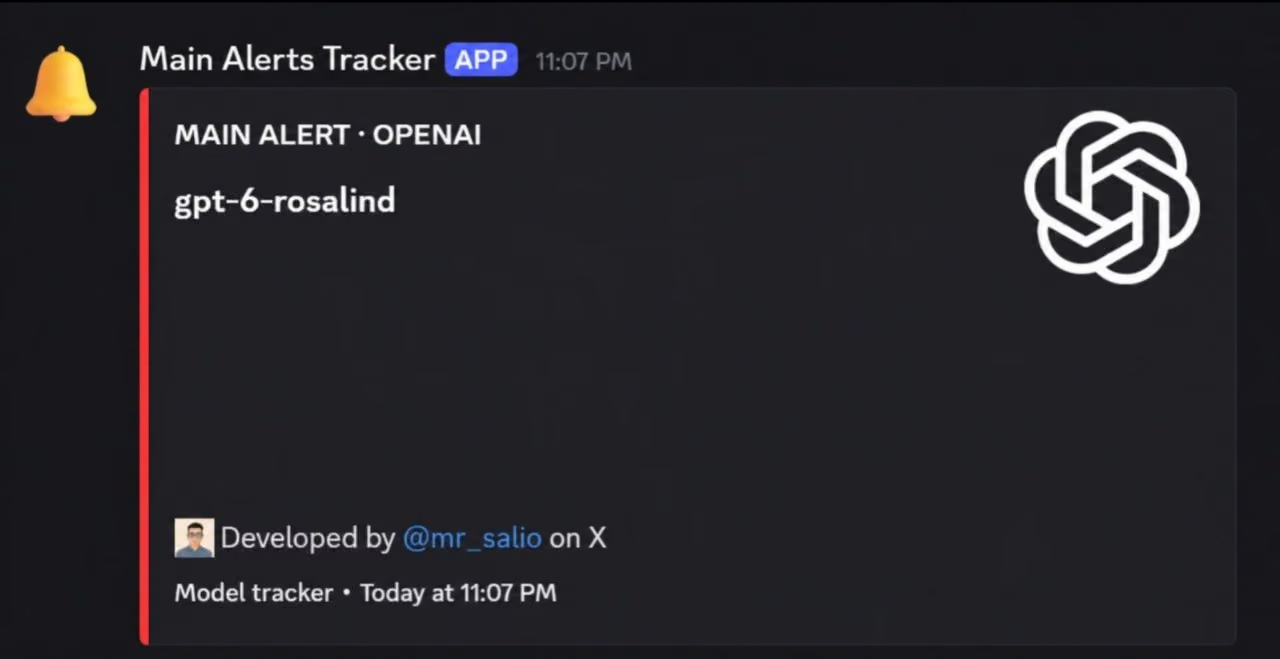
Image credit: @Mr_Salio on X
The pull request also says the model list API does not return gpt-6-rosalind yet, which it links to the trusted-access program. It reports that OpenAI had not published a model page for the model, and that the page returned a 404 when checked.
Reported pricing
According to the pull request's reading of OpenAI's pricing page, the Standard rates are:
| Per 1M tokens | Up to 272k context | Above 272k context |
|---|---|---|
| Input | $15 | $30 |
| Cached input | $1.50 | $3 |
| Output | $75 | $112.50 |
| Cache write, 30 min | $18.75 | $37.50 |
| Cache write, 12 hours | $37.50 | $75 |
The pull request lists Standard pricing only, with no batch, flex, priority or ultrafast rates for Rosalind. The pull request's context limits of 922,000 input tokens and 128,000 output tokens are taken from gpt-6-astra, and it says they are inherited for this model.
For comparison, a third-party report citing OpenAI's changelog puts the earlier GPT-Rosalind at $5 per million input tokens and $25 per million output tokens. On those figures, the reported new rates are three times higher on both input and output.
How it fits the earlier Rosalind line
OpenAI's April 16 announcement introduced GPT-Rosalind for qualified customers through its trusted access program, in ChatGPT, Codex and the API. The OpenAI changelog's September 8 entry describes gpt-rosalind-research as generally available through that program for approved internal life sciences research.
Our read: the reported access rules point to a tier for approved research teams rather than a broad release. For background on the GPT-6 family's earlier launch and pricing, see our GPT-6 Sol and Luna report.
What to watch
- Whether OpenAI publishes a model page, pricing entry or changelog post for gpt-6-rosalind.
- Which organizations qualify for Rosalind Research and how they apply.
- Whether the model reaches ChatGPT or Codex, not only the API.

0 comments
No approved comments yet. You can start the conversation.
Leave a comment