
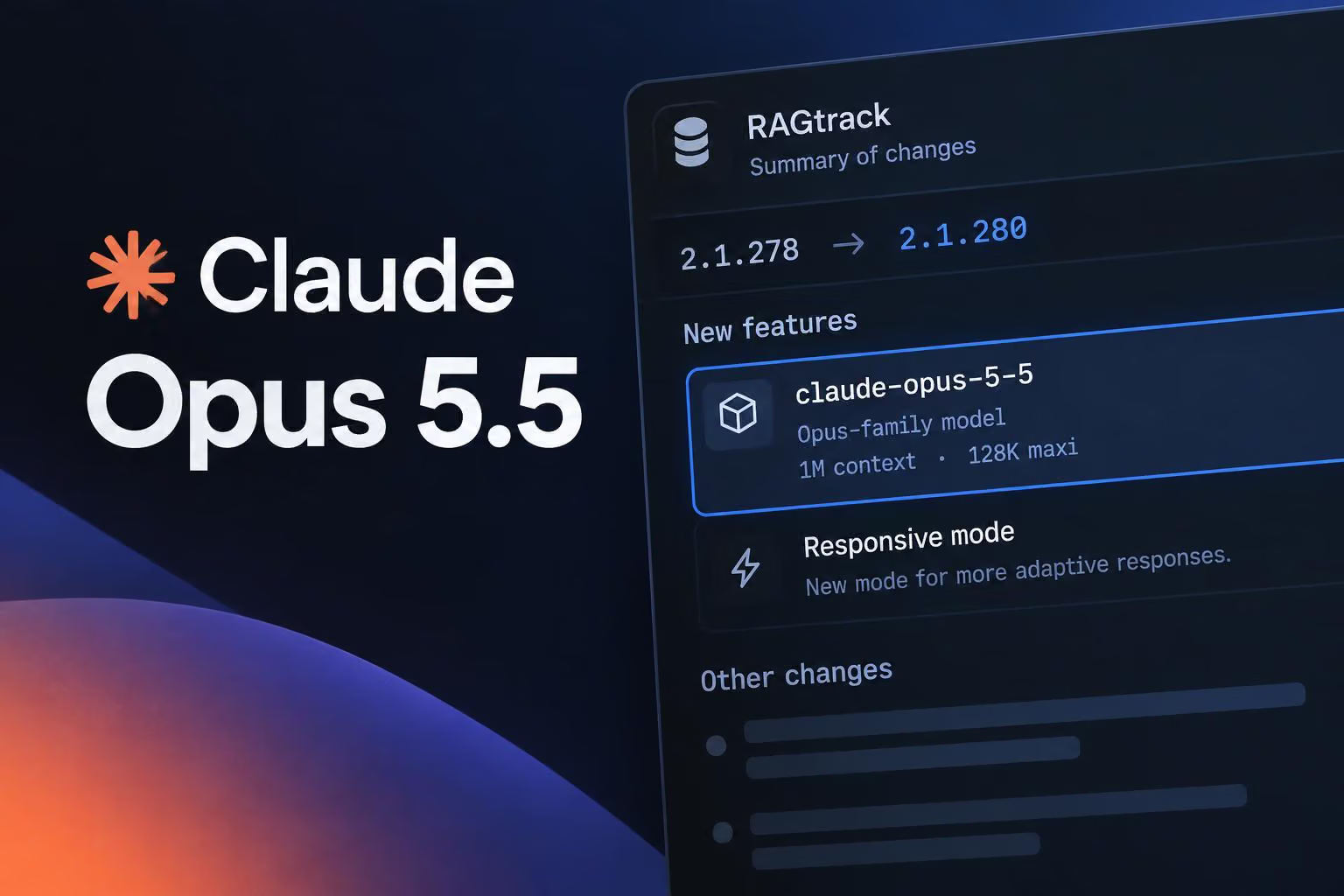
A post on X from @synthwavedd says that claude-opus-5-5 has appeared in the imminent Claude Code v2.1.280. The attached screenshot appears to show a RAGtrack summary of changes between Claude Code versions 2.1.278 and 2.1.280, including a reported Opus 5.5 model entry and a new Responsive mode.
This is a report of an apparent code change, not confirmation that Claude Opus 5.5 has launched or is available to Claude Code users. The supplied material includes no Anthropic announcement or primary documentation confirming the change.
What the screenshot lists for Claude Opus 5.5
The screenshot labels claude-opus-5-5 as an Opus-family model and lists a 1M-token context figure alongside a 128K maximum output figure. It also shows the pricing identifier tier_4_20_cache_read_0_20, a medium default-effort setting, the fallback entry fallback_3p: claude-opus-5, the Bedrock model identifier us.anthropic.claude-opus-5-5, and the Vertex environment variable VERTEX_REGION_CLAUDE_5_5_OPUS.
Those entries appear in the change summary, but their presence does not establish actual user pricing, practical availability of a 1M-token context window, or model performance. The screenshot also lists capability flags and descriptive picker text, including a “best for complex tasks” option and a description referring to long sessions with large codebases. These are presented as configuration or interface details rather than independent evidence of the model’s capabilities.
The summary appears to position Opus 5.5 as the new top Opus model and to describe Opus 5 as a previous version. That wording indicates how the reported change is framed, but it does not confirm a completed public release.
What the reported Responsive mode does
The screenshot describes Responsive mode as a mode in which Claude replies with a sentence before thinking or using tools on every prompt. It also lists the internal-looking tengu_quiet_ember value and a built-in output style described as clear, conversational English.
The supplied evidence does not explain how users would enable Responsive mode, whether it is available outside the reported change, or whether the displayed behavior applies in every Claude Code setup. The mode should therefore be understood as a reported change-summary entry, not as documented usage guidance.
Other changes shown for Claude Code
The same summary lists several changes alongside the model entry and Responsive mode:
Browser handling: New browser-selection items, including
get_chrome_browsers,select_chrome_browser, and paired-browser naming. It also lists a hiddenclaude edit-chrome-settingssubcommand that reads a JSON edit from standard input for the VS Code extension.Sandbox settings: A new
claude edit-sandbox-settingssubcommand is listed.Claude sessions: The summary describes a device re-registration flow for a computer removed from a user’s devices. It also lists identifiers named
target_device_unsupportedandinvalid_target_device_id, plustengu_device_reenroll.Environment variables: The visible portion includes
CLAUDE_CODE_PLUGIN_DIRS,CLAUDE_CODE_INLINE_TOOLS,CLAUDE_CODE_HOST_SCHEDULED_RUN, andCLAUDE_CODE_MAX_MCP_DESCRIPTION_LENGTH.
The attached image ends while the environment-variable section is still visible, so it may not show the full list of changes for the reported version transition.
What remains unconfirmed
The report does not establish that Claude Code v2.1.280 was released, that claude-opus-5-5 can be selected by users, or that Anthropic has announced Claude Opus 5.5. It also does not verify the listed context and output figures, explain the pricing identifier in terms of user billing, or provide benchmark results.
For now, the most supportable description is that an apparent Claude Code change summary includes a claude-opus-5-5 entry and a Responsive mode. Whether those entries represent an imminent release, an internal configuration, or a feature that users can access remains unresolved by the supplied evidence.



0 comments
No approved comments yet. You can start the conversation.
Leave a comment