
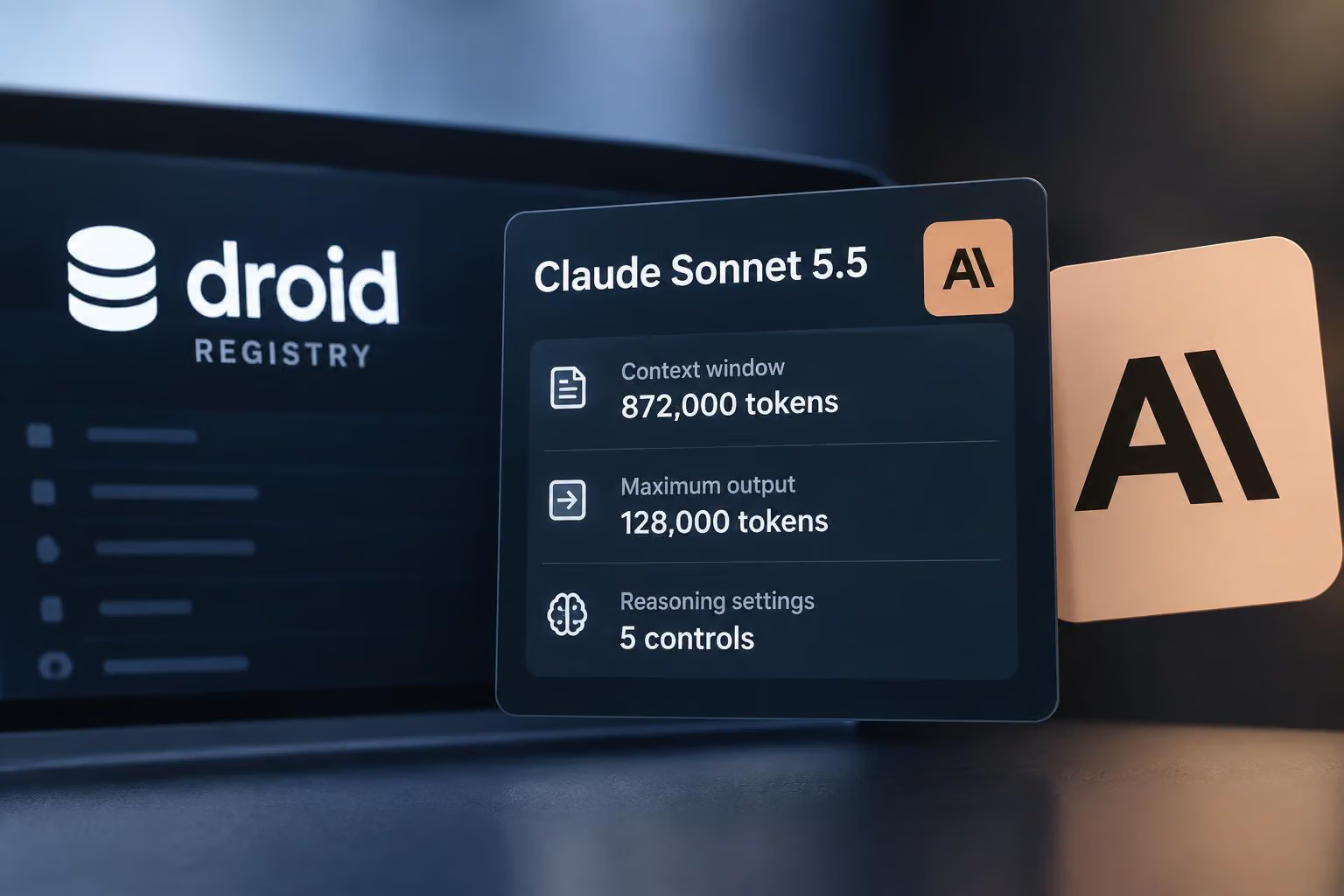
A Droid registry entry labelled “Sonnet 5.5” reportedly lists an 872,000-token context window, a 128,000-token maximum output and five reasoning settings. In a post on X, @LuminaBench shared the entry and warned readers not to interpret its credits as official pricing.
The report comes from Droid’s code rather than an Anthropic announcement or product documentation. The registry entry therefore shows how Droid has represented a model with that name, but does not confirm that Anthropic has officially announced Claude Sonnet 5.5 or that the listed values are final public specifications.
What the Droid registry reportedly lists
A context window is the amount of tokenized input and surrounding information a model can process in a request. The reported entry lists a context window of 872,000 tokens and a maxTokens value of 128000, which appears to represent a maximum output of 128,000 tokens. These are reported registry values, not confirmed Anthropic specifications.
The screenshot also shows the internal model identifier claude-sonnet-5-5 and the display name “Sonnet 5.5.” Other fields include the anthropic-messages wire format and a claude_sonnet_5_5 feature flag. These are implementation details in Droid’s registry, indicating how the application has represented the entry rather than how Anthropic has publicly documented it.
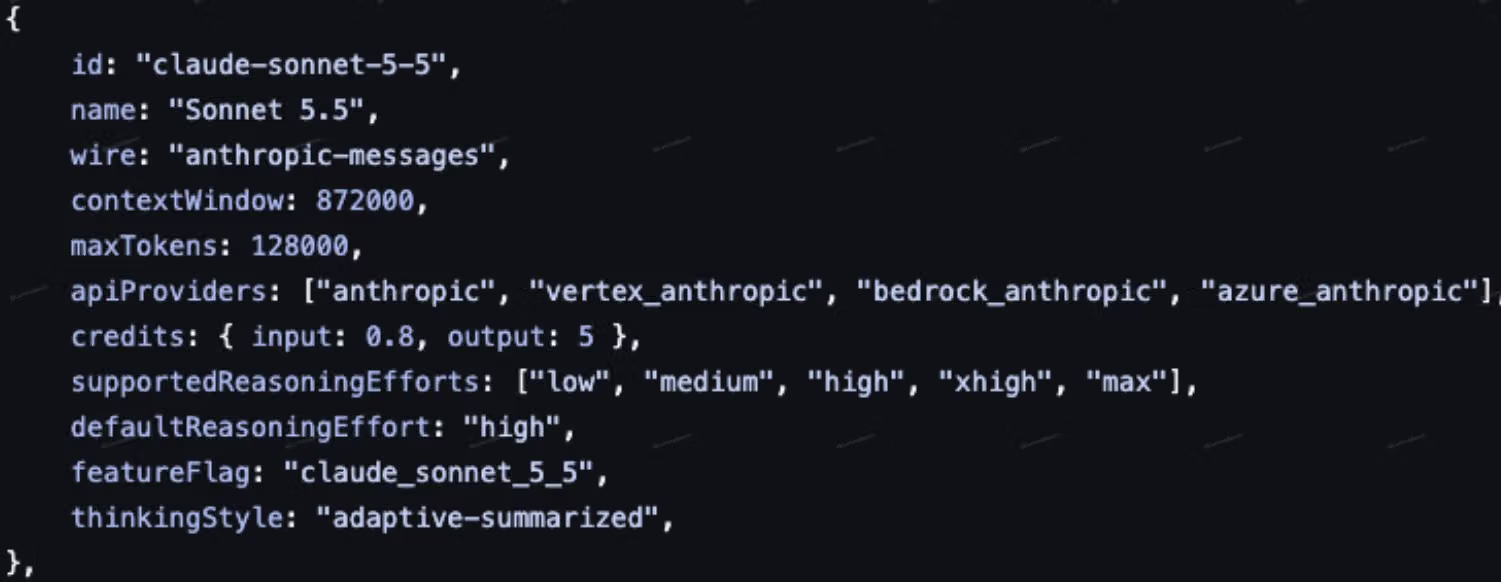
Image credit: @LuminaBench on X
Reported reasoning options and thinking style
The entry lists five reasoning efforts: low, medium, high, xhigh and max. It shows high as the default reasoning effort. The fields appear to give Droid several reasoning settings to select from, but the entry does not explain how each level affects latency, token use, answer quality or cost.
The registry also labels the thinking style as adaptive-summarized. That may describe how Droid expects the model’s reasoning process to be handled, but the entry does not define the implementation or establish that it is a user-visible Anthropic feature.
Which API providers are listed?
The reported apiProviders field names four provider labels:
Anthropic
Vertex Anthropic
Bedrock Anthropic
Azure Anthropic
The labels indicate that the registry includes a direct Anthropic route and hosted-provider variants. They do not establish that Claude Sonnet 5.5 is currently accessible through each provider, that all four routes support the same context or reasoning settings, or that customers can use the model through them.
The credits are not confirmed model pricing
The screenshot shows credits values of 0.8 for input and 5 for output. The post cautions readers not to read those values as pricing and suggests they are credits used by Droid. They should not be treated as official Anthropic rates.
No conversion to dollars, provider billing schedule or public Claude pricing can be established from the registry fields. Readers should not use the displayed credits to estimate the model’s eventual API cost.
What remains unresolved
The registry entry is an early indication of how Droid has configured a model labelled “Sonnet 5.5,” not confirmation of an official Anthropic product release. The report does not establish:
whether Anthropic has officially announced Claude Sonnet 5.5;
when the model might launch or become available;
whether the listed context and output limits are final;
whether the provider labels represent working customer access;
whether the registry values correspond to production behavior; or
whether the model improves on an earlier Claude version.
The reported specifications are therefore best treated as registry data to watch rather than confirmed product documentation. An Anthropic announcement or primary documentation would be needed to establish the model’s official name, capabilities, availability and pricing.
0 comments
No approved comments yet. You can start the conversation.
Leave a comment