
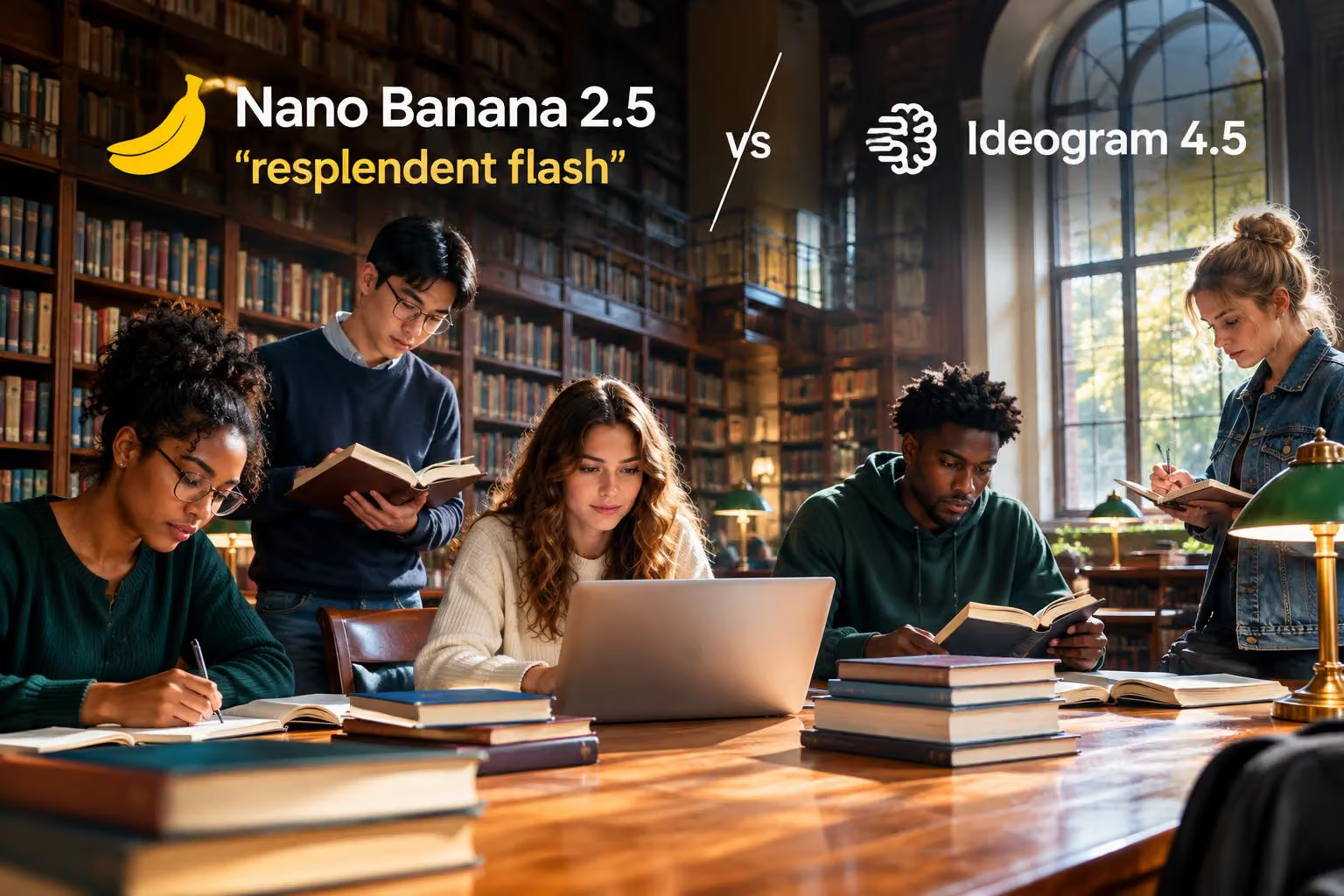
An unverified X post reports that a Nano Banana 2.5 image-generation variant appeared in an arena under the name “resplendent flash.” The post compares its output with an Ideogram 4.5 image using a difficult prompt that combines an exact people count, assigned roles, distinct poses and a complex library interior.

Image credit: @abhinavflac on X
The report does not establish that “resplendent flash” is an official product name, a publicly released model or a stable model variant. It also comes from one social-media comparison rather than an independent benchmark or repeated test.
What the “resplendent flash” report says
In a post on X, @abhinavflac says a “Gemini Nano Banana 2.5” variant was spotted in an arena under the label “resplendent flash.” The post presents the variant as especially strong at image quality and accuracy, but those broader performance statements are the poster’s assessment, not an independently verified result.

Image credit: @abhinavflac on X
The thread does not explain which arena was used, how the model was accessed or whether the label refers to an internal name, a temporary alias or a product that is expected to launch. That makes the label a reported sighting rather than a confirmed release announcement.
Why the library prompt is demanding
The comparison uses a prompt for a massive Victorian library viewed from a high balcony. It asks for exactly 24 people divided into seven groups:
Six people reading at tables
Four people climbing ladders
Three people standing near the fireplace
Five people walking between bookshelves
Two librarians behind the desk
Two people looking through a telescope
Two people sitting on the staircase
The prompt also asks every person to have a unique pose, outfit, hairstyle and position. Beyond the people, it specifies three spiral staircases connecting different levels, hundreds of bookshelves arranged in symmetrical geometric patterns, accurate perspective and consistent architecture.
That combination tests several image-generation tasks at once. The model must follow a numerical instruction, keep people assigned to the requested activities, distribute them through a large scene and maintain a coherent building design. It is more demanding than a prompt that asks only for a library or a group of people without assigning each person a role.
The reported Nano Banana 2.5 result versus Ideogram
The thread says the Nano Banana 2.5 variant handled all seven groups surprisingly well, including the six readers, four ladder climbers, three people near the fireplace, five people walking between shelves, two librarians, two telescope users and two people on the staircase.
It says the Ideogram result generated more than 24 people and mixed up the group roles. The supplied comparison image labels the upper scene “Nano Banana 2.5 As (resplendent flash)” and the lower scene “Ideogram 4.5.”
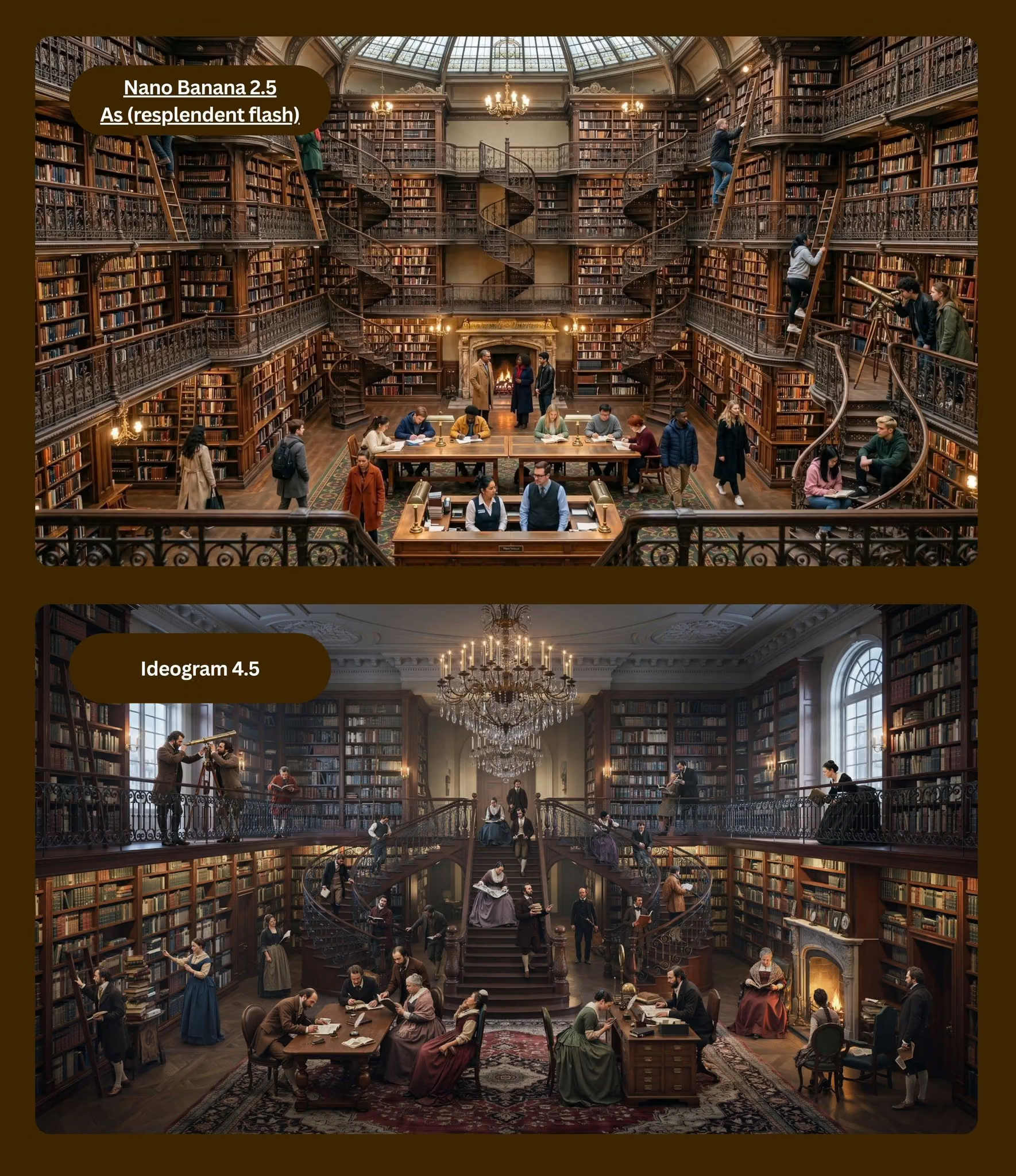
Image credit: @abhinavflac on X
There is also an unresolved counting discrepancy in the thread. The prompt and the main comparison post specify 24 people, while a reply says the image contains 26. The thread does not resolve whether the reported output met the requested count.
What this comparison does—and does not—establish
The example shows the kind of test the poster used to support the reported result: a single detailed scene requiring several groups of people, precise roles and consistent architecture. It may be useful to readers who want to understand why counting and role assignment are difficult image-generation tasks.
It does not establish that Nano Banana 2.5 generally outperforms Ideogram 4.5, or that the reported variant is better than image models overall. The thread gives no generation settings, repeat trials, scoring method, independent evaluator or broader set of prompts. The source also does not document how the models were accessed or whether the displayed images were selected from multiple generations.
The comparison likewise does not independently confirm the people count. The images provide visual context for the reported test, while the numerical and capability conclusions remain attributable to the post.
Open questions about release status and repeatability
The report leaves several important questions unanswered. It does not confirm whether Nano Banana 2.5 is an official publicly available model, whether “resplendent flash” is a permanent name, or how users could access the reported variant. It also does not say whether the same prompt was run more than once or whether the result was selected from multiple generations.
Until those details are available, the report is best understood as an arena sighting and a single comparison with Ideogram 4.5, not as an official release announcement or a general performance ranking.



0 comments
No approved comments yet. You can start the conversation.
Leave a comment