
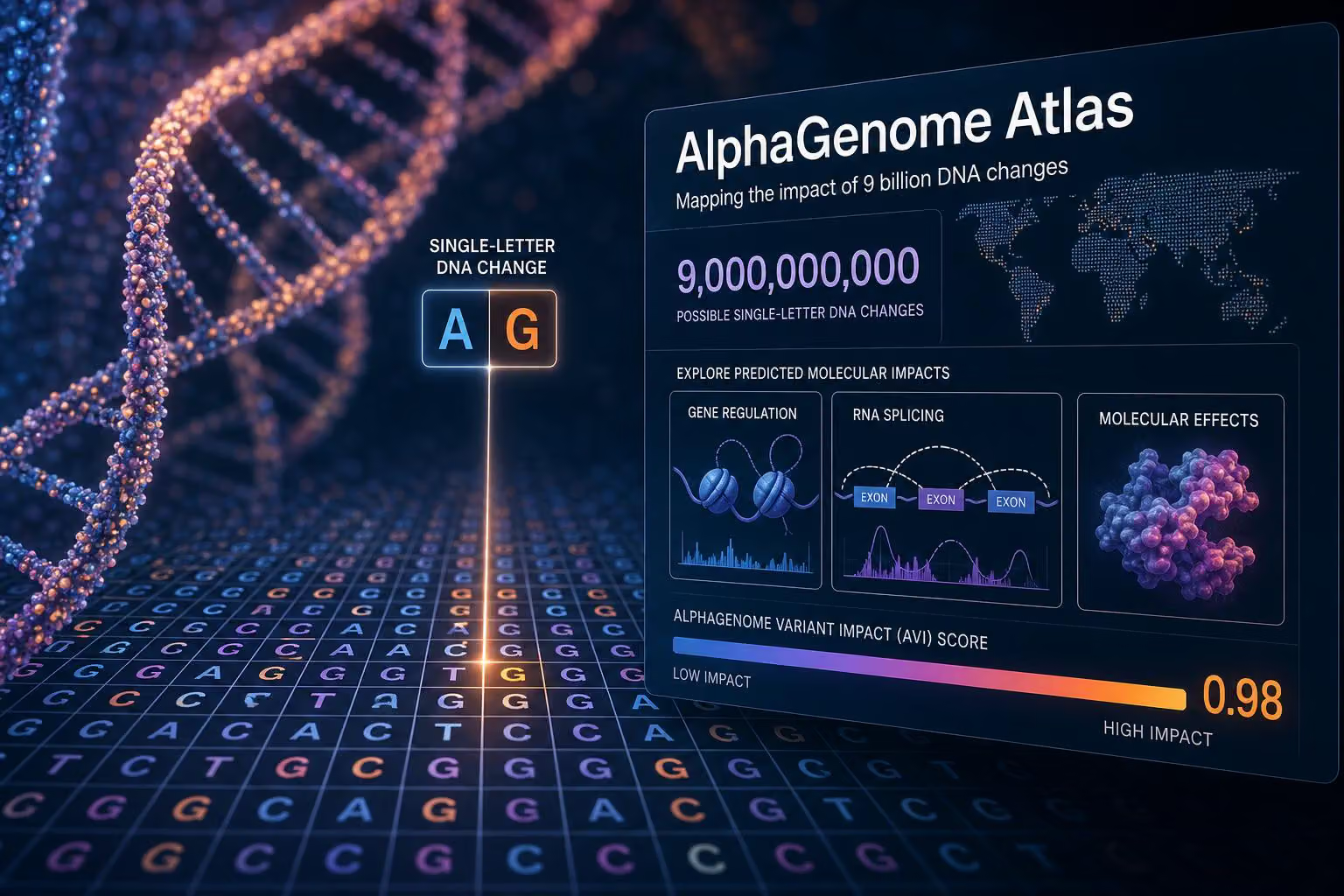
AlphaGenome Atlas is a searchable database designed to map the predicted impact of 9 billion possible single-letter DNA changes. According to @GoogleDeepMind, the resource brings together a large set of biological predictions so researchers can explore how genetic variants may affect molecular processes.
What AlphaGenome Atlas contains
The Atlas is described as a 1-petabyte dataset—more than 30 times larger than the AlphaFold Database. Its purpose is to make that information easier to search and connect, allowing researchers to move from a genetic variant to the molecular mechanisms it may disrupt.
A single-letter DNA change can occur in a gene or in regulatory DNA that helps control when and where genes are active. The announcement presents AlphaGenome Atlas as a way to investigate both kinds of effects rather than treating every variant as an isolated entry.
How the AlphaGenome Variant Impact score works
The database includes an AlphaGenome Variant Impact (AVI) score. The score combines outputs from AlphaGenome, AlphaMissense and other features to rank mutations from lower to higher predicted impact.
That ranking can help researchers prioritise variants for further investigation. The announcement gives examples of molecular effects the system is intended to help reveal, including disrupted gene switches and changes affecting RNA-splicing instructions. In this context, the score is a research aid for comparing predicted effects—not a diagnosis or definitive determination that a variant causes disease.
Access for researchers
The announced resources are available through the AlphaGenome Atlas website, the AlphaGenome API and a skill for Google Antigravity. Access through Google Cloud is described as coming soon. The source does not provide API syntax, usage steps or independent validation results, so the Atlas is best understood here as a newly announced exploration and prioritisation resource rather than a clinical interpretation tool.



0 comments
No approved comments yet. You can start the conversation.
Leave a comment