
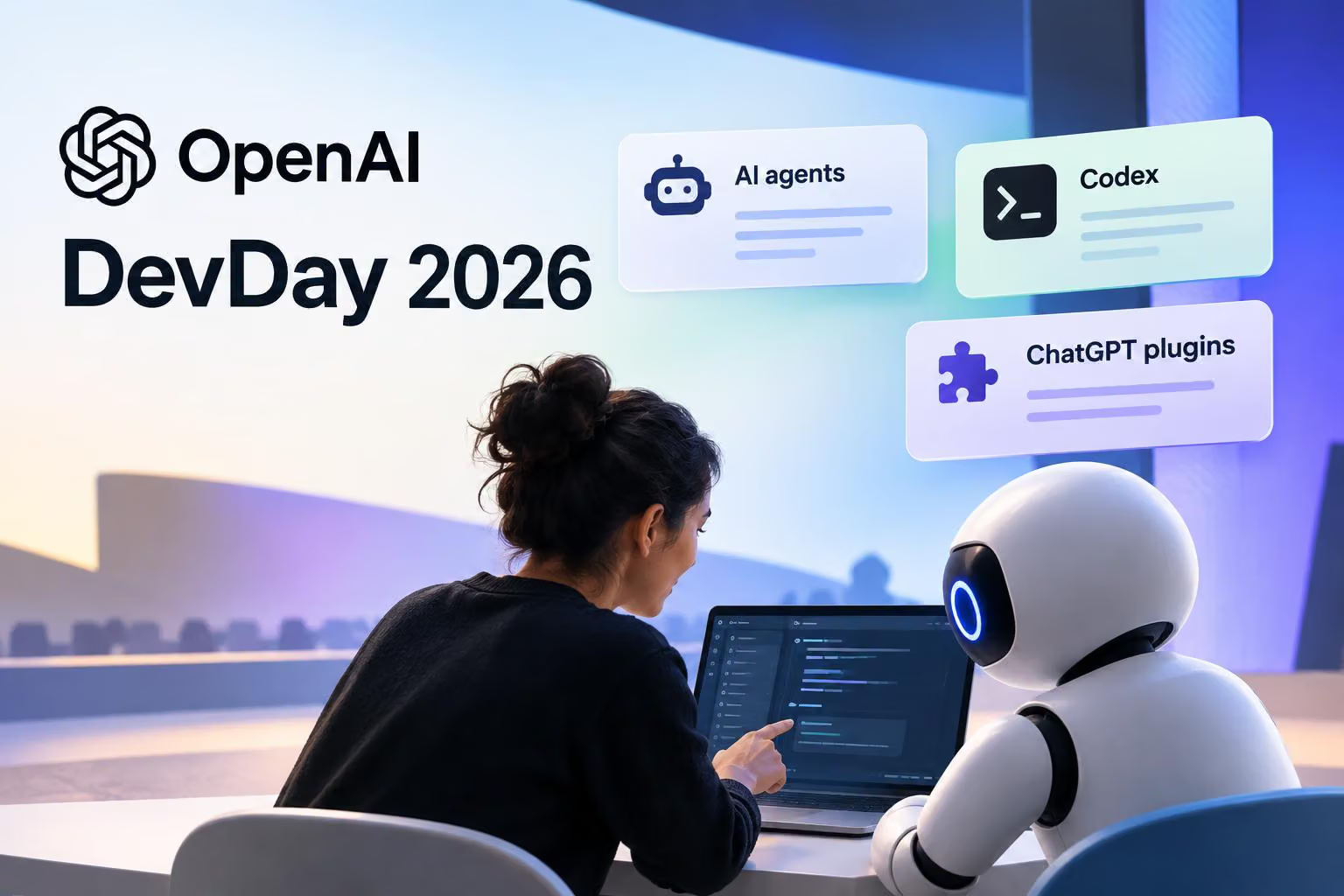
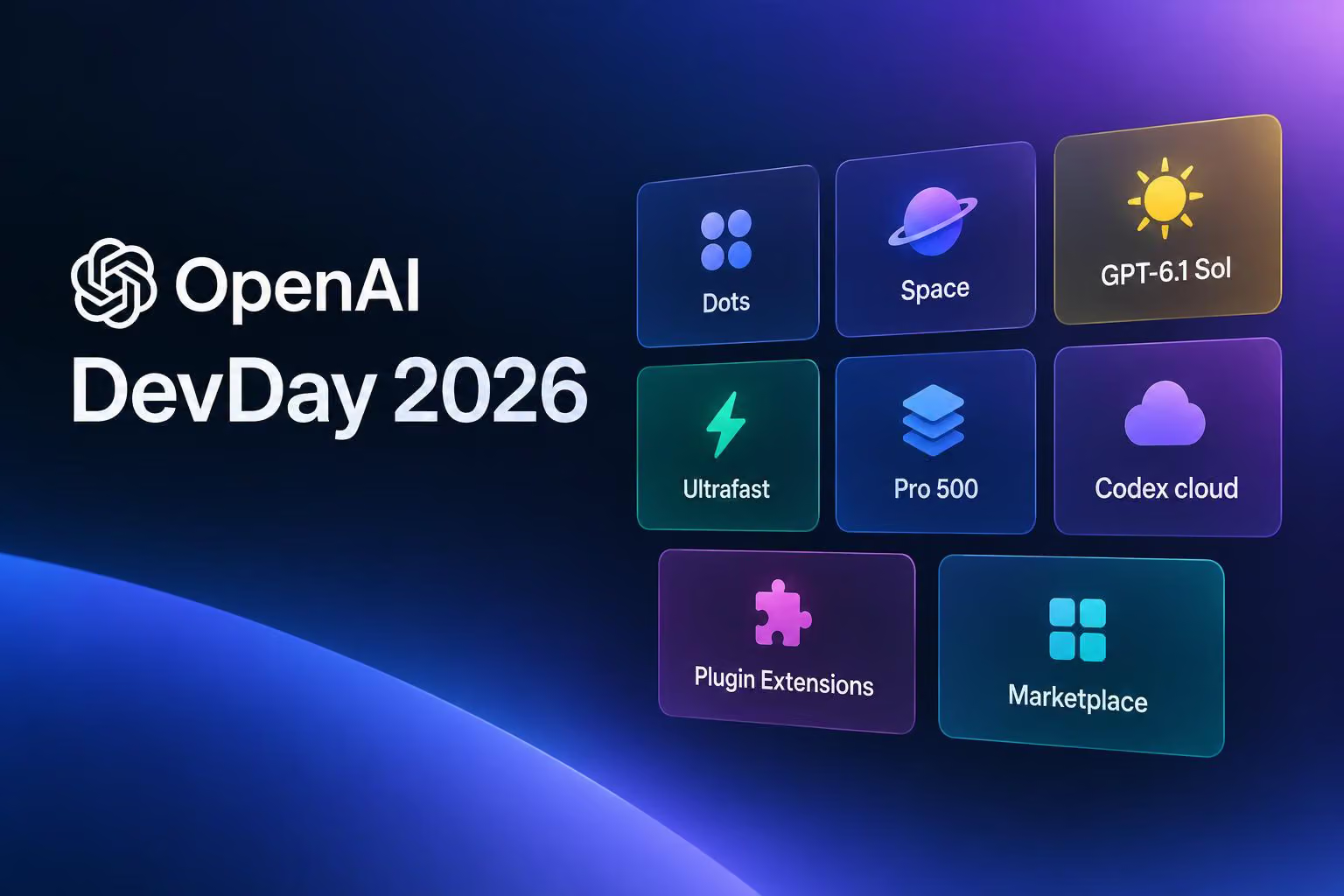
OpenAI says DevDay 2026 included more than 20 major announcements spanning ChatGPT, Codex, its models and new ways of working with AI, according to OpenAI’s DevDay 2026 recap. The company presents the event as a high-level view of where its products are heading, with a focus on AI agents that can take on ongoing responsibilities and shared spaces where people and AI can work together.
What OpenAI says DevDay 2026 was about
OpenAI describes the event as its biggest DevDay yet, with more than 20 announcements across several parts of its ecosystem. The company connects those announcements to a broader view of AI as a tool for creativity and discovery, arguing that it should give people more time and freedom to pursue ideas.
The recap groups the announcements into five themes:
New ways of working with AI
Developer tools in Codex and the API
More customization in ChatGPT through plugins
Collaboration between people and AI
Additional capabilities for ChatGPT subscribers
Those headings establish the areas OpenAI wants readers to notice, but they do not amount to a detailed inventory of every announcement made at the event.
Agents are presented as ongoing collaborators
The clearest product direction in the recap is OpenAI’s introduction of agents that can take on ongoing responsibilities. That suggests a shift away from AI systems designed only to answer one request at a time. In OpenAI’s description, agents are part of a longer-running relationship in which AI can help with work that continues beyond a single exchange.
The recap does not identify the agents or explain what responsibilities they can perform. It therefore does not support conclusions about their autonomy, reliability, supported tasks or availability. What it does establish is OpenAI’s stated intention to develop AI that works with people over time, rather than treating every interaction as an isolated prompt.
For ChatGPT users, that direction could eventually mean more ways to delegate recurring or multi-step work. For developers, it points toward applications that coordinate longer-running tasks. Those are implications of the announced direction, not capabilities confirmed by the recap.
Codex and the API remain central to developers
OpenAI also highlights new developer tools in Codex and the API. Codex is presented in the recap alongside the API as part of the company’s effort to help developers build with its models and create new AI-based experiences.
OpenAI’s recap does not explain which Codex features changed or what API tools were announced. It does not specify endpoints, supported models, pricing, rollout timing or technical requirements. Developers should therefore treat the recap as an overview of the areas covered at DevDay, not as implementation documentation.
The broader message is that OpenAI sees developers as an important part of extending its products. The company’s announced themes connect developer tooling with the larger goal of building new ways for people and AI to work together, but the recap alone is not enough to determine what a developer can use today.
ChatGPT plugins are described as a shared surface
Another major theme is customization in ChatGPT through plugins. According to OpenAI’s DevDay 2026 recap, the company is opening ChatGPT as a shared surface where humans and agents can collaborate and where developers can launch new native experiences.
That framing gives plugins a role beyond simple add-ons. OpenAI presents them as a way to bring developer-created experiences into a space used by people and AI together. The company says this shared surface can reach its collective 1.2 billion weekly users, although the recap does not explain how that figure was calculated or define the relevant user categories.
The recap does not name the plugins, explain how they work, or state who can access them. It also does not establish that every plugin or related experience is already available. The supported conclusion is narrower: OpenAI says ChatGPT will be a more open place for developers to launch native experiences and for people and agents to collaborate.
OpenAI’s broader idea of people and AI working together
The recap repeatedly connects its product themes to collaboration between people and AI. In this view, AI is intended to expand what people can do while leaving people with more time to pursue their own goals. Agents, developer tools and ChatGPT customization are presented as different parts of that same direction.
For users, the emphasis is on AI that can participate in more sustained workflows. For developers, it is on tools and shared surfaces that can turn those workflows into experiences for other people. The recap does not provide measured results showing that these goals have been achieved, so they should be understood as OpenAI’s stated vision and product direction.
What the DevDay recap leaves open
The recap does not establish:
The names or capabilities of individual agents
Specific Codex features or API changes
The models associated with each announcement
Technical specifications or performance results
Pricing, eligibility, release dates or availability
A complete list of the more than 20 announcements
Instructions for building with any newly announced tool
That distinction matters for anyone looking for practical next steps. The recap explains the direction OpenAI says it is taking, but readers need separate product documentation for details about access and implementation. As presented in the source, DevDay 2026 is less a complete catalog of launches than a high-level account of how OpenAI wants agents, developers, ChatGPT users and AI experiences to fit together.
0 comments
No approved comments yet. You can start the conversation.
Leave a comment