
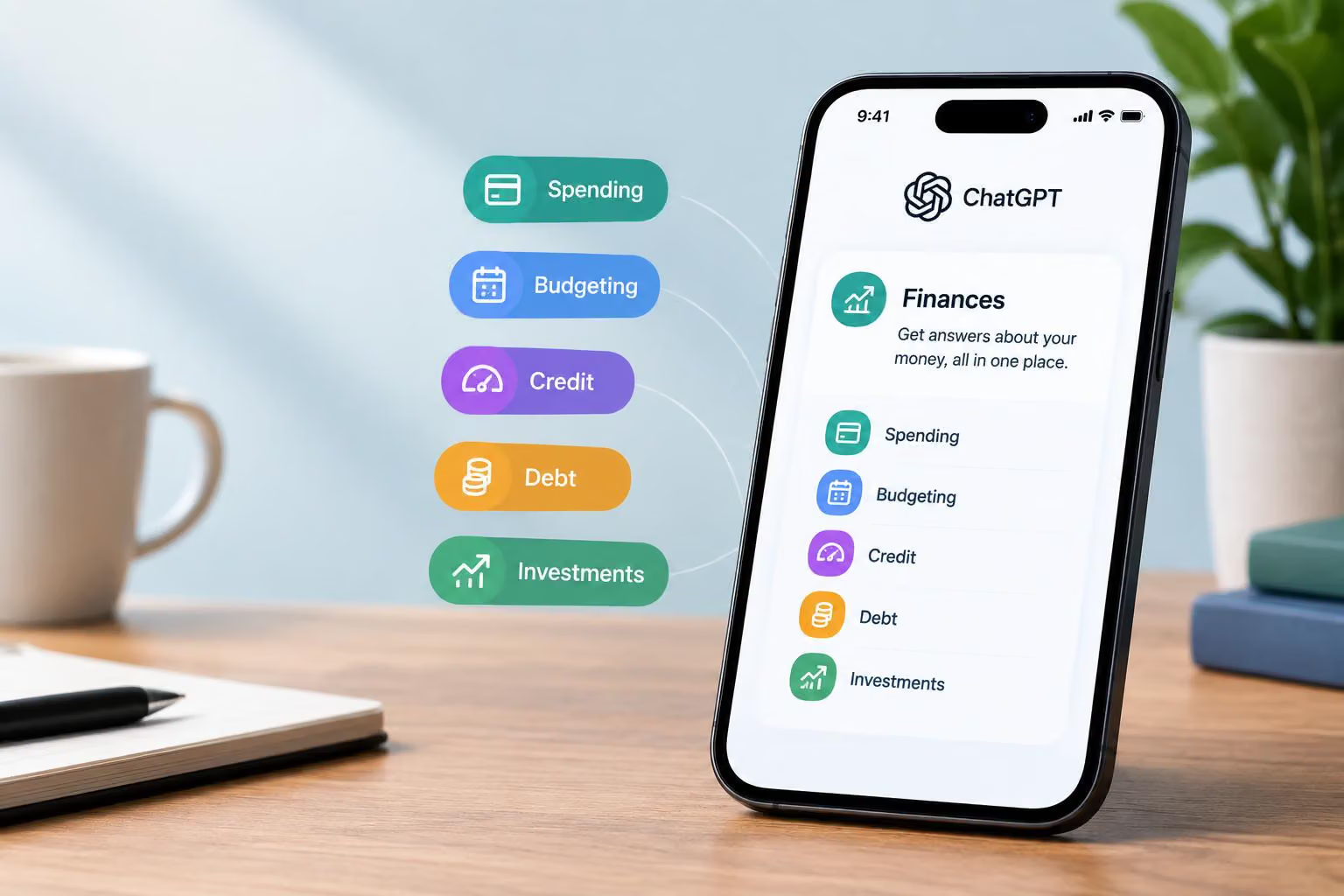
Finances in ChatGPT is rolling out to Free and Go users in the U.S., according to @ChatGPT. The announcement describes a feature that can use connected financial and credit information to answer questions about spending, budgeting, debt, credit and investments. It does not say that every eligible user has access immediately or provide a detailed rollout schedule.
What Finances in ChatGPT is designed to do
The announcement presents Finances in ChatGPT as a way to make sense of a user's own financial information after connecting accounts through Plaid and Experian. The listed examples cover routine spending analysis as well as broader planning questions.
Review spending and recurring charges
The feature is described as helping users find subscriptions they forgot they were paying for, spot unfamiliar charges or possible duplicate payments, and see which recurring bills have increased. These examples focus on finding patterns in transaction information rather than promising that every charge or billing change will be identified correctly.
It can also provide weekly updates about a user's finances and help explain what is driving their spending each month. Together, those uses are presented as ways to monitor changes and understand spending patterns over time.
Build budgets and plan for financial changes
The announcement says the budget can be based on a user's actual spending. The source does not provide financial outcomes, accuracy measurements or individualized advice for any person's situation.
The listed planning examples include exploring a plan to pay down debt, working out how much could go toward an emergency fund, and considering how a large purchase would fit into a budget.
It also says users can talk through what a job change could mean for their finances with Voice. This describes a conversational planning use case; the post does not explain how the feature models income changes, expenses or other assumptions.
Credit scores and investment information
The announcement says Finances in ChatGPT can track a user's credit score and help explain what is affecting it. It does not specify which credit-score providers or account types are supported, nor does it provide evidence that the feature can improve a user's score.
For investments, the listed uses include understanding an investment mix across accounts and seeing where a portfolio is concentrated. These functions are presented as ways to examine the distribution of investments and possible concentration, not as a promise of investment returns or a specific recommendation.
How account connections are described
The post names Plaid and Experian as services users can use to connect accounts. It says users can receive answers based on their own financial information and describes those connections as secure.
The announcement does not list supported banks, brokerages, card issuers or other institutions. It also does not provide details about data retention, privacy, security practices or sharing terms for the connections. Those details would be important to review before deciding whether to connect financial accounts.
Who can use it?
The reported rollout is for Free and Go users in the U.S. That wording identifies the audience described in the announcement, but it does not establish that access is available to every Free or Go user right away. The post does not state whether Finances in ChatGPT is available outside the U.S. or give additional eligibility conditions.
The announcement directs users to chatgpt.com/finances to try it, although it does not say how access is enabled or whether every Free and Go account can use it immediately.
The announcement also does not clarify whether the feature provides regulated financial advice or conversational analysis and planning. It supplies examples of what users can ask about, but no testing, measured results or user evidence showing that it detects charges, improves budgets, reduces debt or changes investment outcomes.

0 comments
No approved comments yet. You can start the conversation.
Leave a comment