
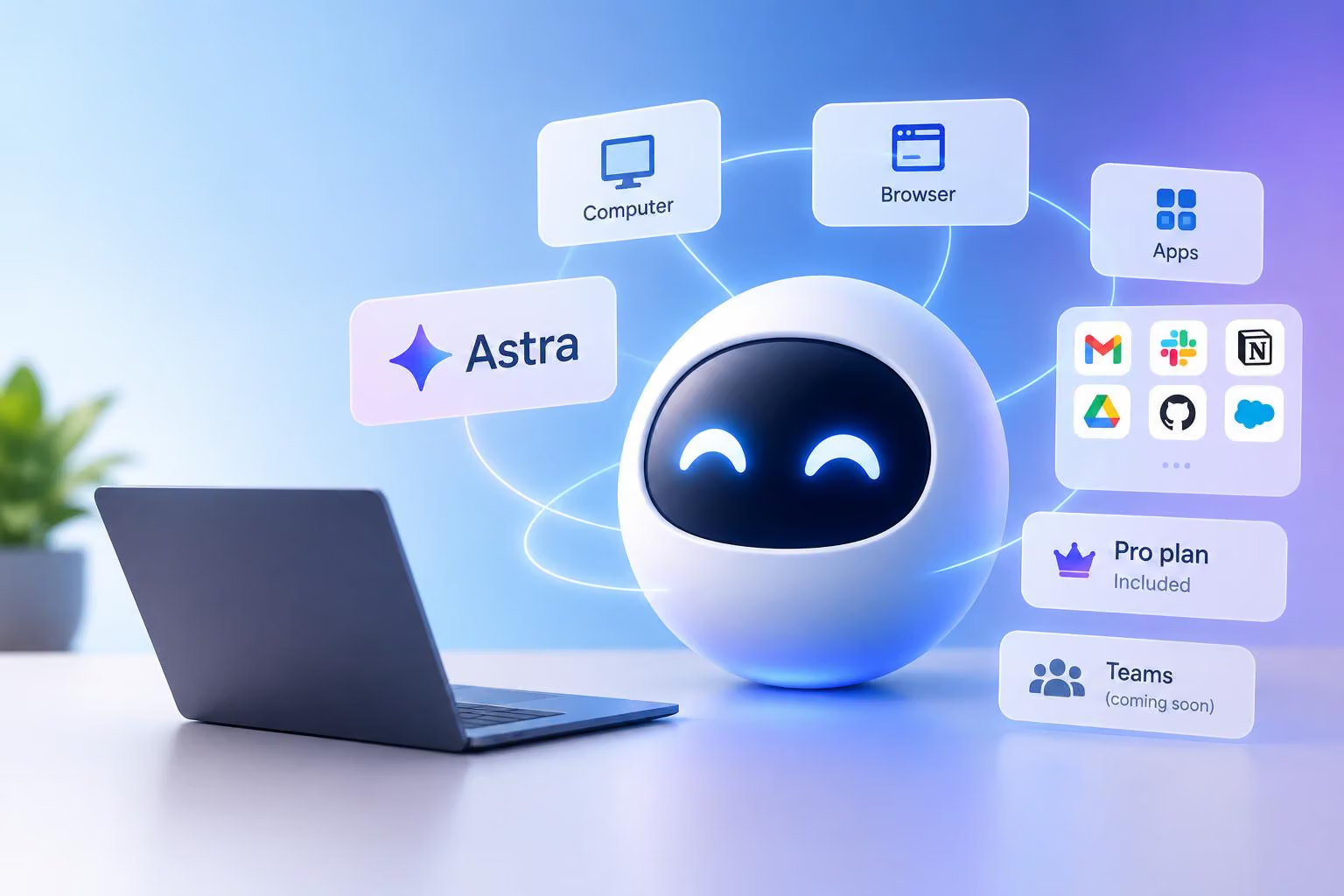
In a post on X, @thsottiaux describes Dots as always-on AI assistants powered by Astra. The announcement says they can work on a user’s behalf around the clock, learn from feedback, use their own computer and browser, and connect to more than 4,000 apps in the service’s ecosystem.
The same announcement says Dots are included in the Pro plan without drawing down on the plan’s normal usage allowance. It also says users are being started with a primary Dot, with the ability to create teams of Dots planned for a later stage. The post indicates that users are being started with a primary Dot today, but it does not provide a calendar date, explain who is eligible, or describe the operational limits of these features.
What Dots are described as doing
The announcement presents a Dot as an assistant that can continue working while the user is away and can be contacted during that work. That is a broader description than a chat assistant that responds only when prompted: the proposed workflow involves assigning work to an agent, allowing it to operate over time, and checking in while it proceeds.
However, the post does not give examples of completed tasks or measured results. It also does not explain how much human oversight a Dot requires, how it handles failures, or what “24/7” operation means in practice. Those details matter for judging whether the assistants can reliably complete long-running work rather than simply remain available continuously.
Computer, browser and app access
The post says each Dot has its own computer and browser and can be connected to more than 4,000 apps in the ecosystem. In principle, those capabilities could let an assistant work across websites and connected services instead of being limited to text exchanged in a chat window.
The announcement does not list the supported apps or explain whether every integration offers the same capabilities. It also does not describe the tasks Dots can perform in those apps, what permissions they need, or what safeguards apply before they take an action. The more-than-4,000 figure should therefore be read as the announced size of the ecosystem, not as evidence that every app supports every kind of automated work.
A related feature is the ability to call a Dot while it is working. That suggests users may be able to interact with an active assistant rather than waiting for a task to finish, but the post does not explain whether this means sending new instructions, reviewing progress, interrupting work, or something else.
How Astra fits in
The announcement says Dots are powered by Astra, described in the post as “our best model yet.” That identifies Astra as the model behind the agents, but it does not provide technical specifications, benchmark results, a model release history, or a comparison with other systems.
Astra’s role should also be distinguished from the rest of the Dots product. A model may provide reasoning or language capabilities, while the agent’s computer, browser, app connections and feedback workflow determine how it can act in external services. The supplied announcement does not explain how those parts are implemented or how they affect performance.
Pro-plan access and planned teams
The post says Dots are included in the Pro plan without drawing down on any of the user’s usage. It does not explain how that usage accounting works or whether any limits apply. This should not be treated as a promise of unlimited work or as a detailed explanation of Pro-plan pricing.
The announcement also says users are being started with a primary Dot. It then points to the planned ability to create entire teams of Dots. A team could eventually allow multiple assistants to divide responsibilities, but the post does not say how many Dots a team may contain, whether they will have different roles, or how coordination between them will work.
What the announcement leaves unanswered
The supplied post provides a high-level product description rather than a technical or hands-on evaluation. It does not specify:
how users set up a Dot or connect an app;
which apps are included in the reported ecosystem figure;
how Dots learn from feedback or whether that learning persists;
what permissions, approval steps and safety controls are available;
how the Pro plan accounts for Dot activity; or
how reliable Dots are during long-running, computer-based tasks.
For now, Dots are best understood as announced AI agents that are intended to operate continuously, use computer and browser tools, connect to a large app ecosystem and remain available for interaction while working. Astra is presented as their underlying model, while Pro inclusion and multi-Dot teams are presented as product and rollout features. The announcement describes those plans and capabilities, but it does not independently establish how they perform in practice.
0 comments
No approved comments yet. You can start the conversation.
Leave a comment