
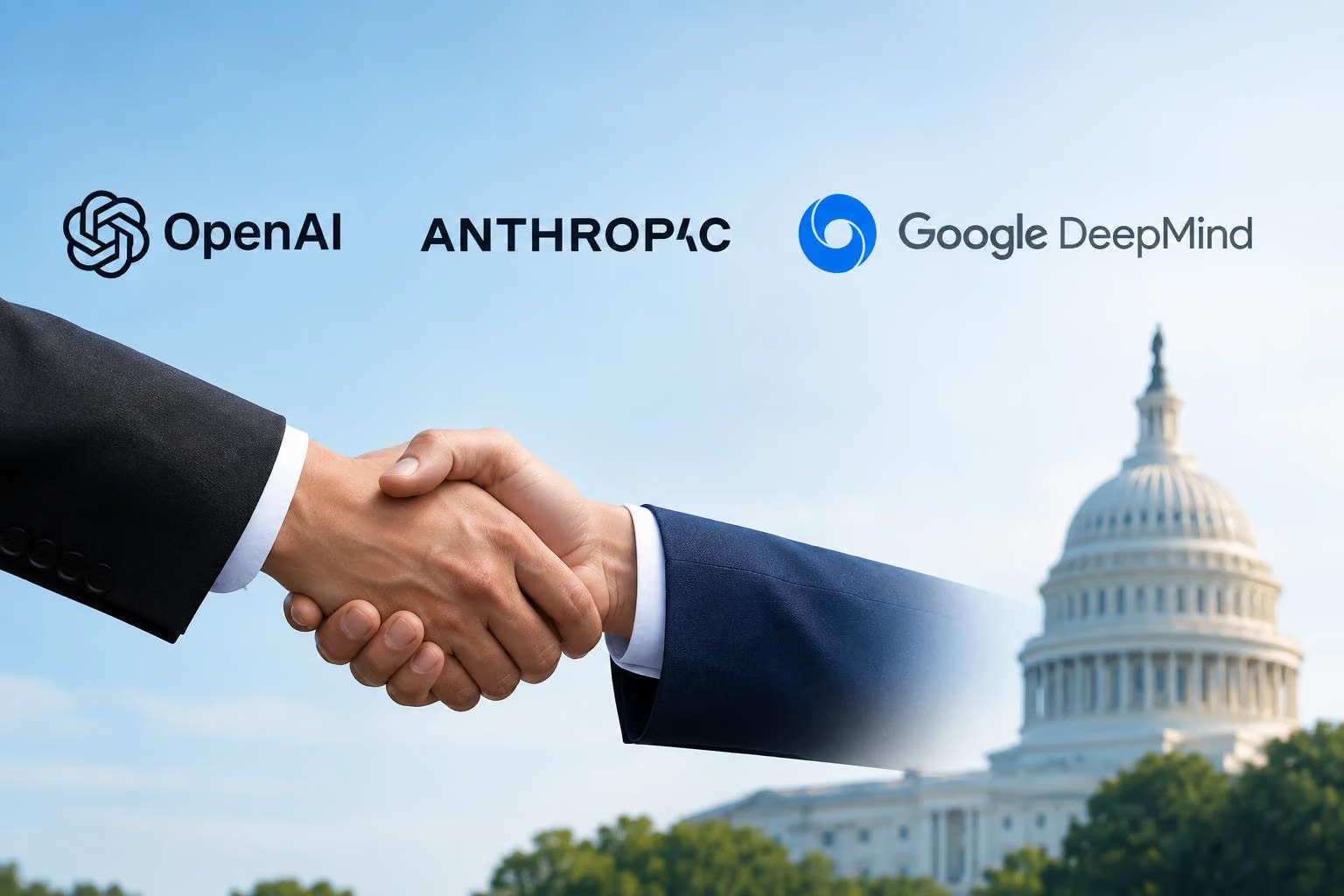
OpenAI has been discussing artificial-intelligence safety with Anthropic and Google DeepMind for several weeks, according to OpenAI global policy chief Chris Lehane. A Claims Journal report credited to “admin” says Lehane also argued that the companies do not need an antitrust waiver—legal permission or an exemption to coordinate without violating competition law—to work together on safety matters. He also described several proposed US policy responses that OpenAI supports.
Source: OpenAI Says It's Working With Anthropic, Google on AI Safety · admin, Claims Journal
The report does not describe a formal alliance, specific safeguards or a completed agreement between the companies. Anthropic and Google DeepMind had not immediately commented, so the reported engagement is attributed to Lehane rather than presented as independently confirmed by all three companies.
What OpenAI says is happening
Lehane said OpenAI had been engaging with Anthropic and Google DeepMind on AI-safety issues for several weeks. He said cooperation was preferable when companies were trying to address potential risks from advanced AI systems.
Lehane compared the discussions with safety coordination in the airline industry, where competing companies can cooperate on safety-related matters. The report does not identify the technical projects, information-sharing procedures or safeguards being discussed.
The timing follows heightened public concern about the risks of advanced AI. The report says Anthropic CEO Dario Amodei had recently called for restraining development of the most advanced systems so researchers could better understand potential threats. OpenAI CEO Sam Altman and SpaceXAI chief Elon Musk were reported to have responded favorably to that position.
Why the discussions raise an antitrust question
Coordination among major competitors can raise competition concerns, particularly when it involves sharing information or jointly shaping industry practices. Lehane said OpenAI did not believe the reported safety engagement required an antitrust waiver.
That is OpenAI’s stated position, not a ruling by regulators or an independent antitrust assessment. The report does not say that the companies received an exemption, that regulators approved their discussions or that the arrangement has been formally reviewed.
A separate proposal from Republican Senator Jim Banks and Democratic Senator Adam Schiff would address some of that concern. The bill would create a narrow antitrust carveout for AI companies sharing information about specific threats, including loss of control over AI systems, cyber or biological risks, and attempts by Chinese companies to exfiltrate data. The report says the proposal had been folded into an annual defense bill, but it does not establish that the provision became law.
The reported coordination and proposed US measures are separate steps
Item | Purpose described in the report | Status described in the report |
|---|---|---|
OpenAI, Anthropic and Google DeepMind discussions | Coordinate on AI-safety matters | Reported by Lehane as underway for several weeks; specific measures are not described |
Obernolte-Trahan framework | Establish a framework for federal AI governance | Supported by OpenAI; not reported as enacted |
Thune-Cruz-Klobuchar Senate proposal | Address potential catastrophic risks from AI | A proposal taking shape; not reported as enacted |
Banks-Schiff bill | Create a narrow antitrust carveout for sharing information about specified AI threats | Reported as folded into an annual defense bill; final enactment is not established |
Which proposals OpenAI supports
Lehane said OpenAI would support bipartisan measures aimed at potential catastrophic risks from AI. He specifically cited a federal AI-governance framework from Republican Representative Jay Obernolte and Democratic Representative Lori Trahan.
He also said the company was open to a Senate proposal led by Majority Leader John Thune, Republican Senator Ted Cruz and Democratic Senator Amy Klobuchar. The report describes that proposal as being developed to address catastrophic risks, but does not provide its full legislative language or procedural details.
OpenAI’s support for those measures does not mean that they have passed or that the company’s reported discussions have produced a government-backed safety framework. They are separate policy proposals being considered by Congress.
Why the effort had not yet become policy
The report said the prospects of passing any of the proposals before the end of the year appeared limited. The House was scheduled to leave Washington and return after the November elections, while the brief post-election session was expected to focus on a plan to increase the Pentagon budget.
The report also said President Donald Trump had opposed efforts to impose AI guardrails. It described Trump as criticizing a push associated with Anthropic and OpenAI to slow work on cutting-edge systems and dismissing concerns about existential AI risks.
Those political obstacles matter because the reported industry discussions and the proposed legislation address different questions. Companies may choose to exchange safety information, while Congress would still need to decide whether to establish governance rules, authorize a narrow competition-law exception or impose other requirements.
What the report says—and what it does not
The practical takeaway is that the report describes three prospective steps rather than a completed policy: ongoing safety discussions among companies, OpenAI’s own view that those discussions need no antitrust waiver, and legislative proposals that had not been enacted.


0 comments
No approved comments yet. You can start the conversation.
Leave a comment