
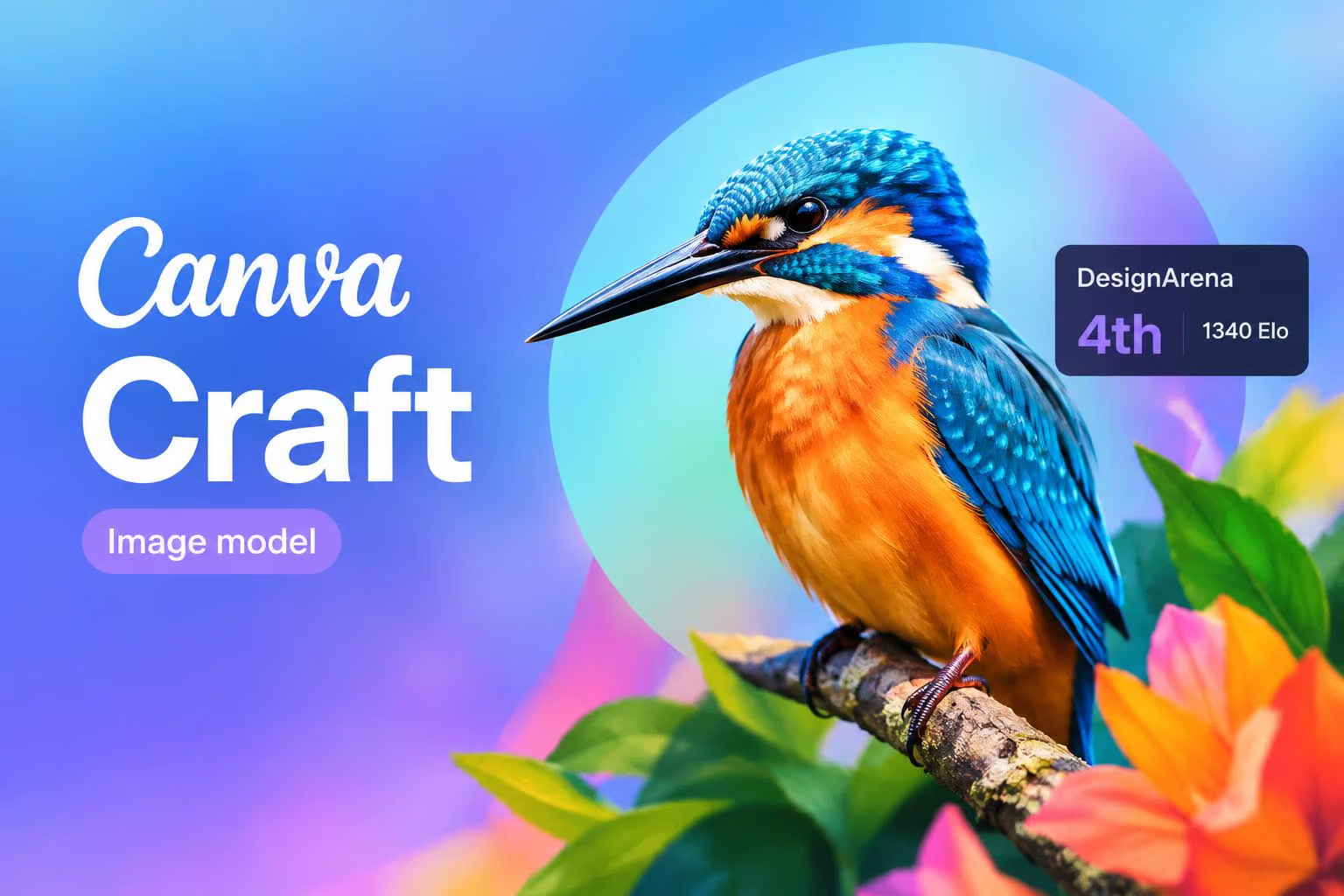
Canva Craft, the company's first image model, is now live for all Canva users and on its public API, Canva says on X (@canva). Canva's chart ranks it fourth on DesignArena's image leaderboard with an Elo score of 1340. The "world's second most advanced AI lab" headline counts labs by their best model, and three OpenAI entries sit above Craft.
You can try it today by opening Dream Lab in Canva's bottom-left panel. Canva's newsroom describes Craft as a foundation model built and trained from scratch by Canva Research, its in-house AI lab.
How the "second most advanced lab" ranking works
Canva says it is the world's second most advanced AI lab for image generation, as measured by DesignArena, which it describes as the largest crowdsourced assessor of AI design. The chart in the post explains the arithmetic. The three entries above Craft (1406, 1382 and 1362) are all OpenAI models: GPT-Image-2.5 Sunburst, GPT-Image-2.5 Flare and GPT Image 2. A lab appears to be ranked by its best model, so Canva is second as a lab while Craft is fourth as a model.
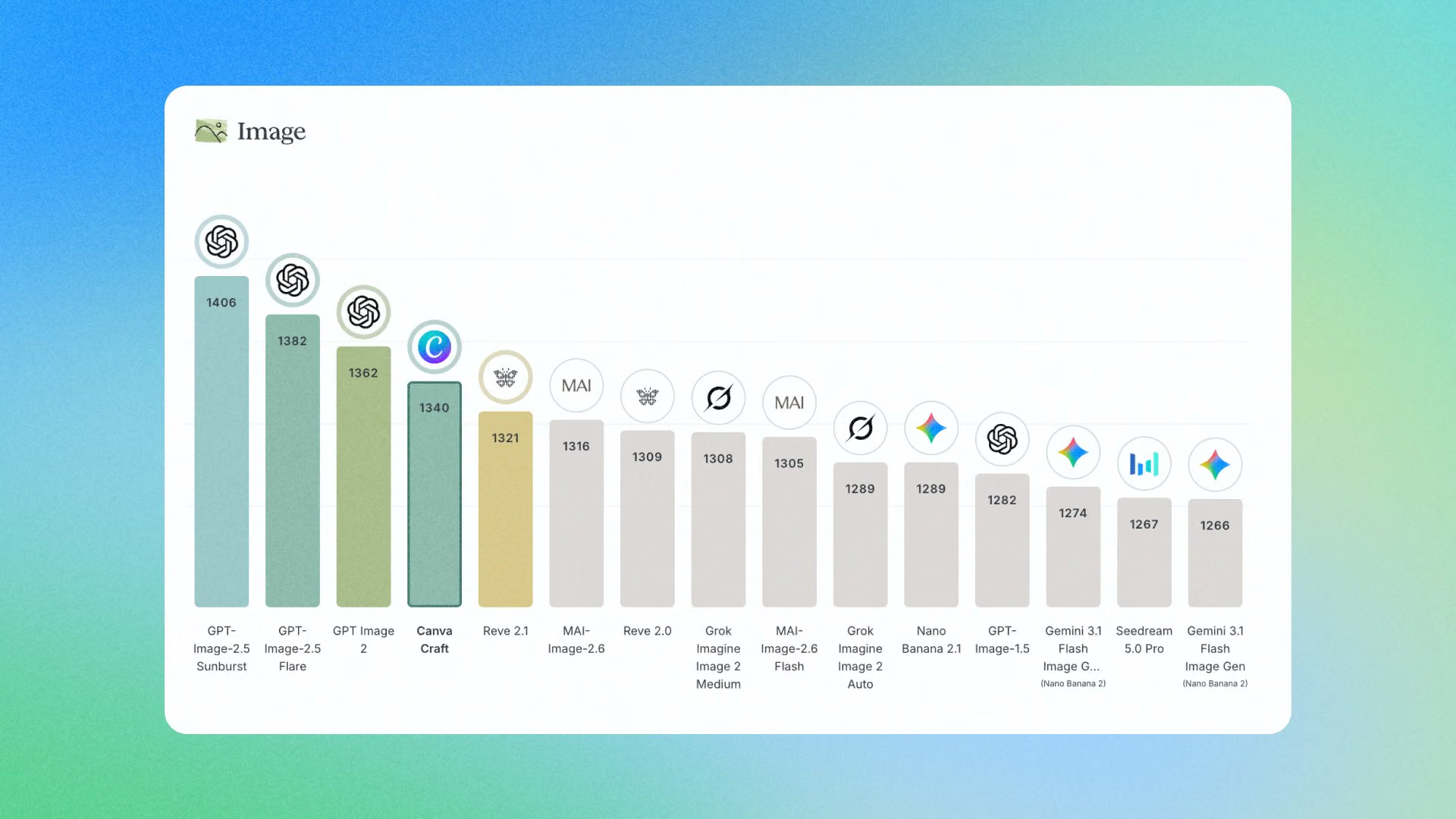
Image credit: @canva on X
Worked from the chart's figures, Craft is 66 Elo points behind the top entry (1406 − 1340) and 22 points behind GPT Image 2 (1362 − 1340). It is 19 points ahead of Reve 2.1 (1340 − 1321), the next entry, and 24 ahead of MAI-Image-2.6 at 1316. Both of those entries sit below Craft on the chart, and neither is an OpenAI model. These numbers come from Canva's screenshot, not from the live leaderboard.
Canva says Craft's "exceptional visual quality and state-of-the-art text rendering" outperform some leading frontier models. The post and newsroom page do not name which ones.
Where Craft ranks by category
Canva's posts lead with the strongest categories: first in People & Portraits (of 87 models), first in Landscapes & Nature (of 85) and second in Abstract & Patterns (of 85). The newsroom page adds fourth in Products.
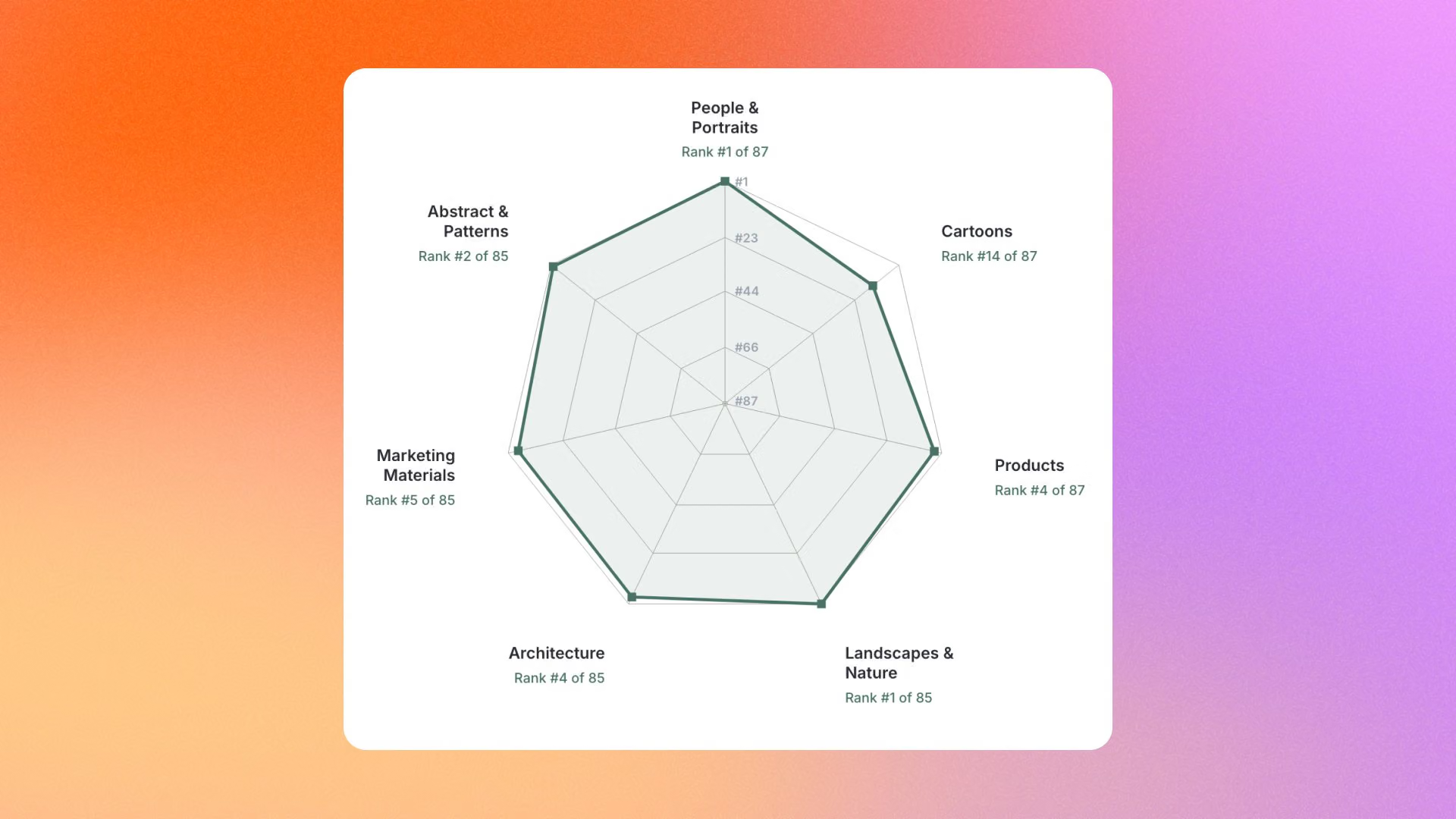
Image credit: @canva on X
The same radar chart shows weaker results that the written post does not mention: Architecture is fourth of 85, Marketing Materials fifth of 85 and Cartoons 14th of 87. Our read: for a model Canva describes as built specifically for design, fifth in Marketing Materials is the category most worth checking against your own prompts. DesignArena rankings come from crowdsourced votes, so a category rank says how voters preferred the outputs, not how a layout will hold up in your brand template.
What's new under the hood
According to Canva's newsroom, Craft uses a two-stage design rather than going straight from prompt to pixels. A planning model first writes out the composition: which elements appear, their spatial relationships, scale, visual hierarchy and any text. A separate rendering model then turns that plan into the image.
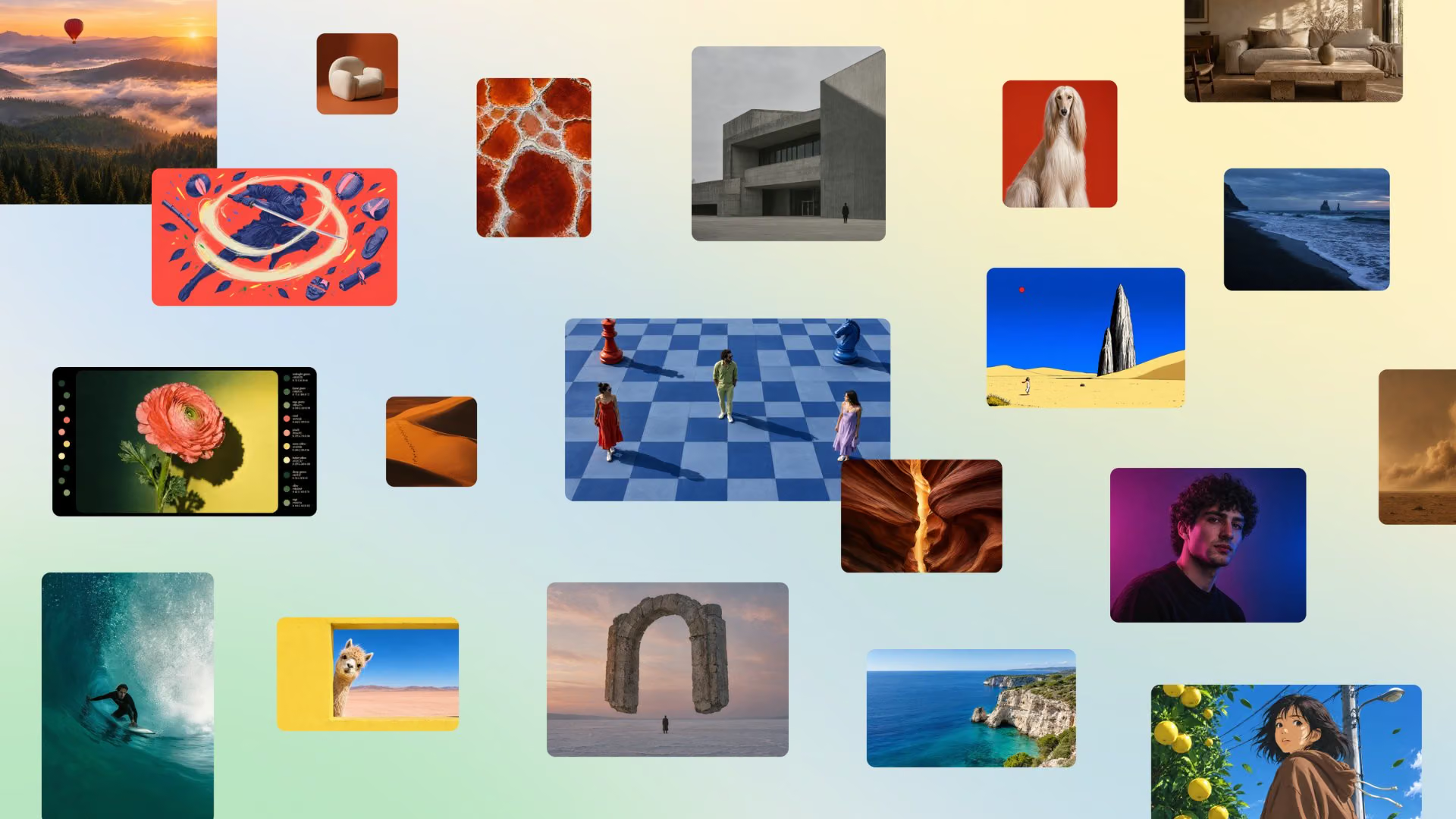
Image credit: @canva on X
Canva lists these specifications:
Output up to 2K resolution
More than 30 aspect ratios, or a custom one
Prompts in any language, with text rendered in 55 languages
Canva says the plan-first structure supports targeted edits that don't change the rest of the image, and suits its Magic Layers tool, which turns generated images into editable design elements. It also says training emphasised design, using millions of human-made templates from Canva's library, with feedback from its professional designers. In Canva's internal evaluations, designers assessed more than 25,000 image pairs against leading models, and Canva says it sided with the designer when automated scores and human judgments differed. That is Canva's own evaluation, not an independent one.
Access and what isn't out yet
Craft is available to all Canva users globally through Dream Lab, and developers can use it through Canva's public API, which Canva positions for marketing platforms, e-commerce sites, ad builders and print services. The newsroom page does not state pricing, usage limits or whether free and paid users get the same access.
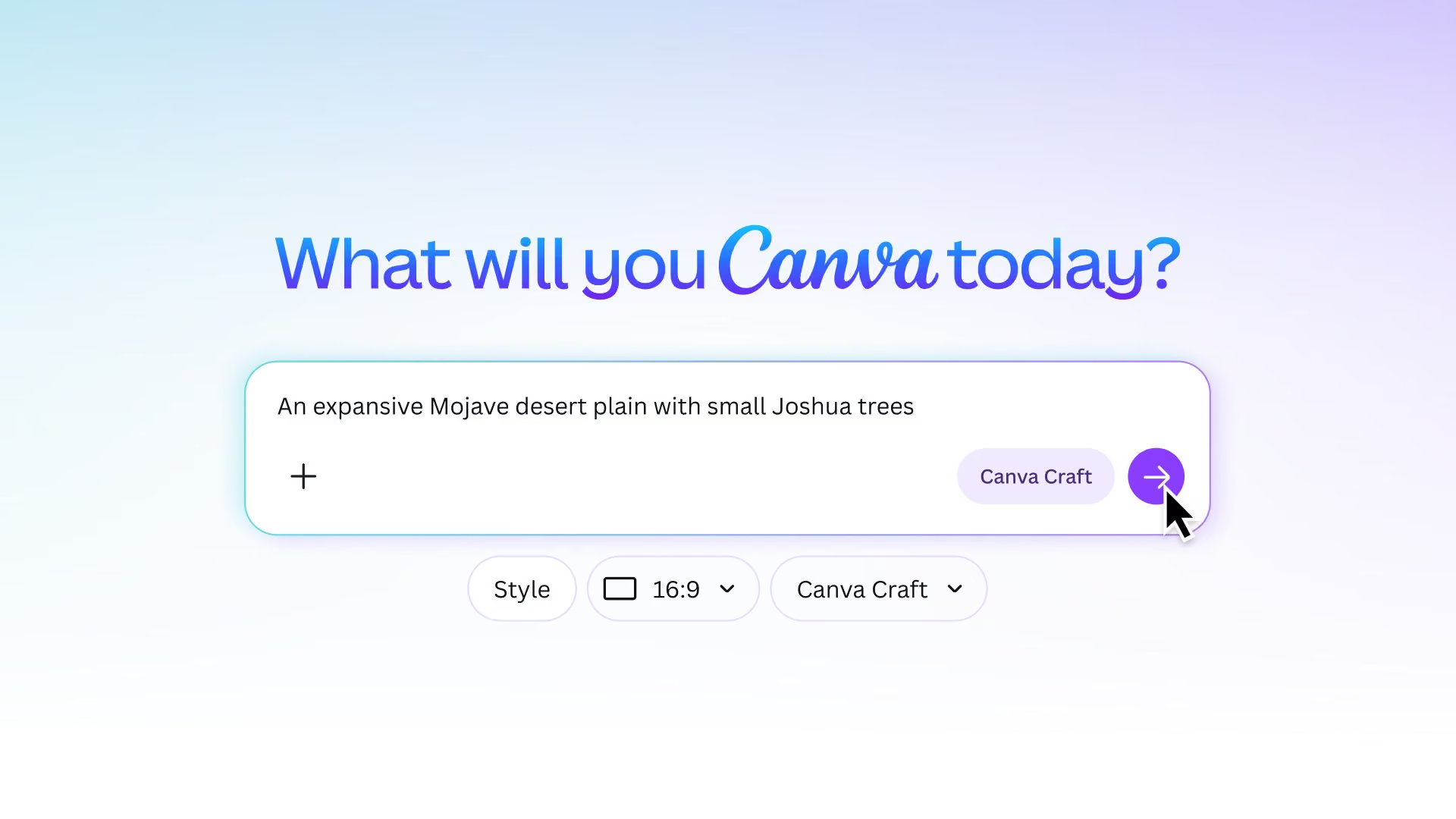
Image credit: @canva on X
Two things are not here yet. The newsroom page labels the Canva MCP connection for AI assistants "Coming Soon", even though an earlier sentence on the same page lists the MCP Server alongside the public API as an access route. The post's wording about developers and AI agents does not make that distinction. Canva also says two faster variants, Craft-fast and Craft-ultrafast, are upcoming, designed to deliver high-quality generation "at a fraction of the cost of leading frontier models". No dates or prices are given.
Who should care
Canva users can try Craft in Dream Lab today. Developers comparing image APIs can test it on their own prompts through the public API, though pricing and limits are not stated.
For background on how other labs are positioning image models, see our coverage of Black Forest Labs' FLUX 3 Image and Qwen-Image-2.1.

0 comments
No approved comments yet. You can start the conversation.
Leave a comment