
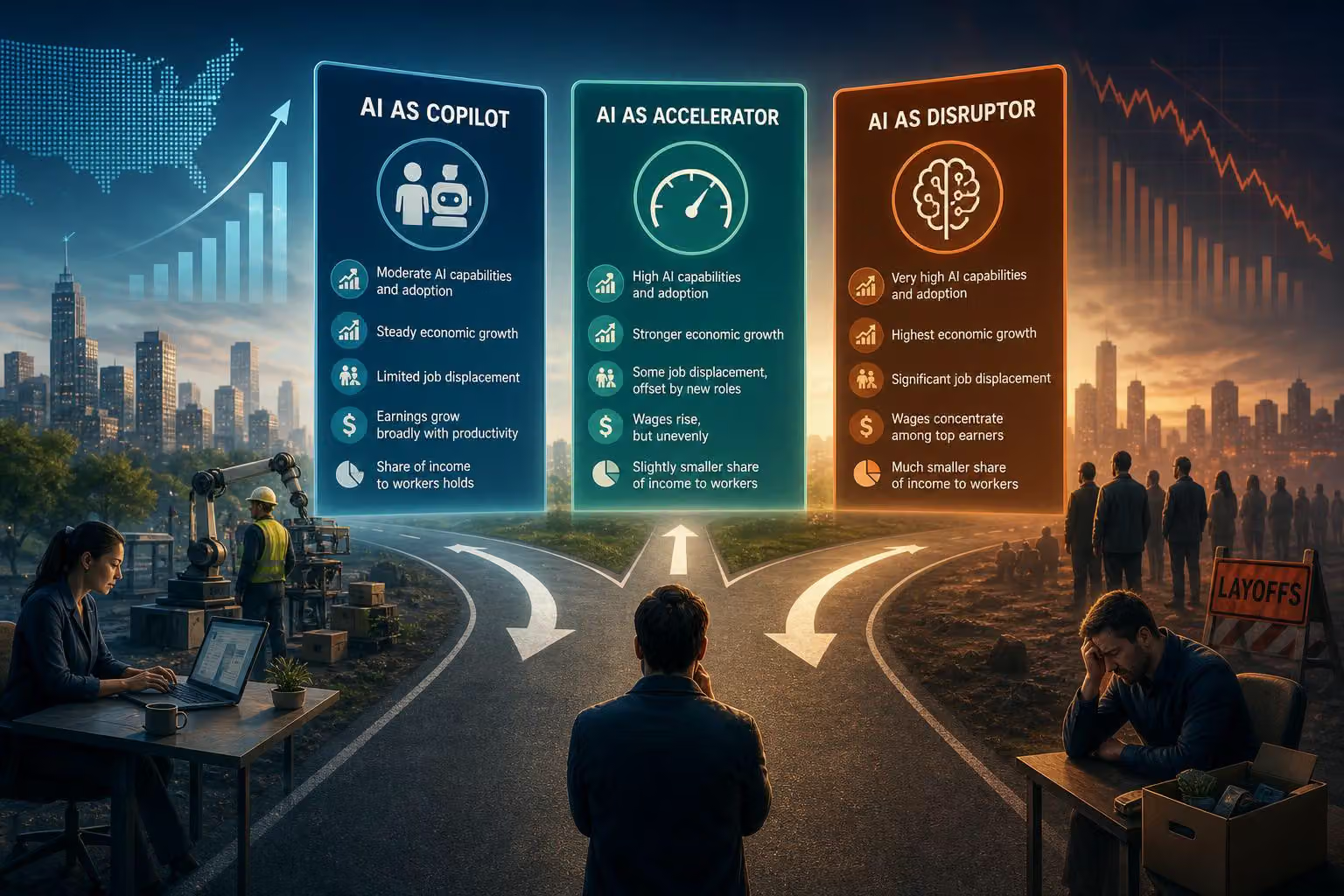
Anthropic’s Economics team has built a scenario explorer showing how different assumptions about AI capabilities and adoption could affect US growth, jobs, wages and income distribution by 2030. All three modeled scenarios produce economic growth, but the most transformative path also brings greater job displacement and a smaller share of income going to workers, according to Anthropic’s scenario explorer, announced by @AnthropicAI.
These are conditional model outputs, not predictions that any one future will occur. They describe what could follow if particular assumptions about AI capabilities, autonomy, productivity, adoption and worker adjustment prove accurate. The GDP comparisons use 2025 price levels and measure each scenario against a corresponding economy without AI.
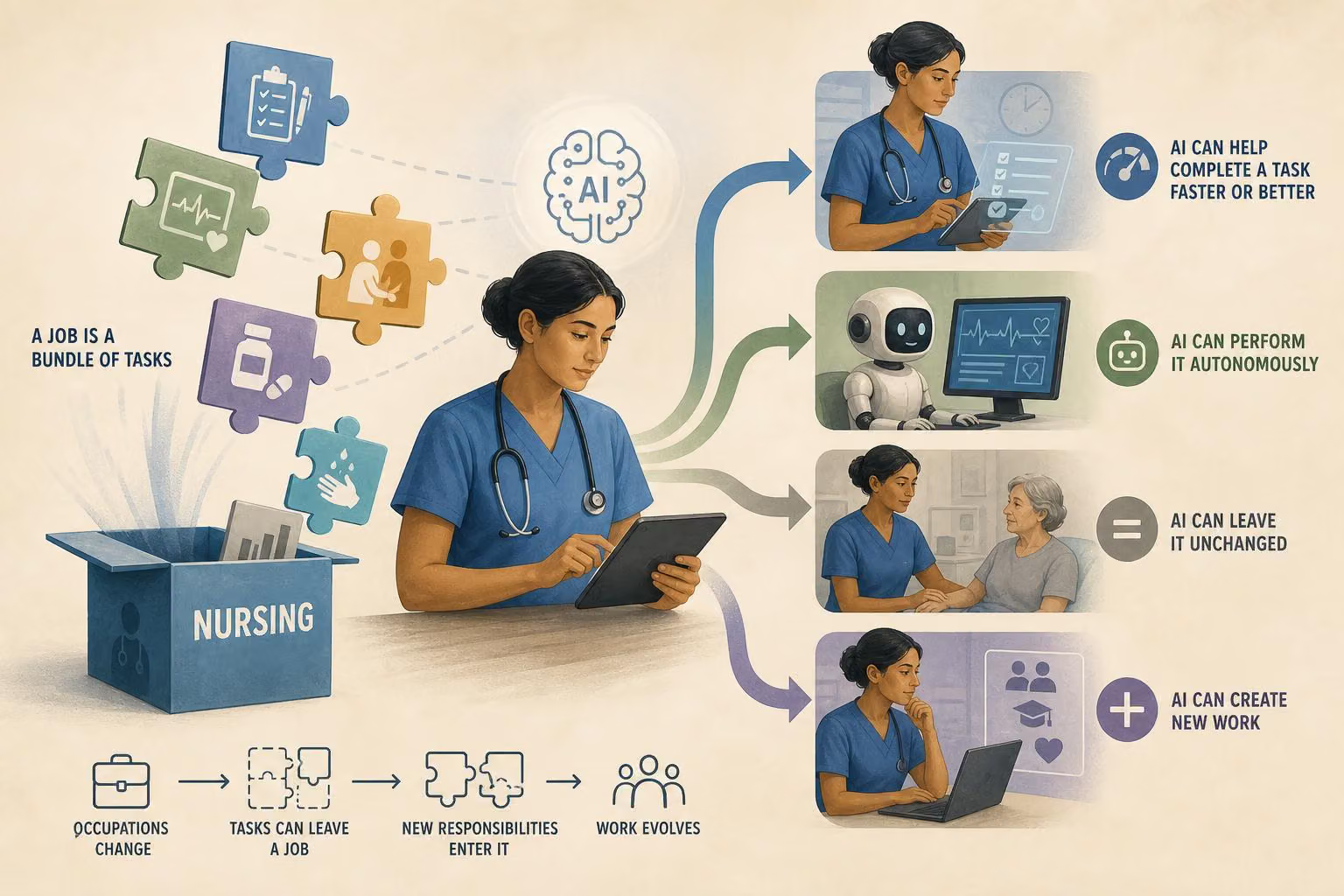
The model treats jobs as bundles of tasks
The explorer does not treat an occupation as something that either survives or disappears. It breaks jobs into tasks and models four possible effects: AI can help a person complete a task faster or better, perform it autonomously, leave it unchanged or create new work.
That approach matters because occupations change as technology and workplace practices change. Tasks can leave a job, while new responsibilities enter it. The task descriptions in Anthropic’s model draw on the US Department of Labor’s O*NET occupational taxonomy.
Anthropic uses nursing to illustrate the mechanism. AI might help a nurse draft discharge instructions, monitor patients remotely or plan a care schedule. It might automate charting or supply orders, while physical patient care remains human-led. New tasks could also appear, such as checking how well an AI system triages patients or reviewing an AI-proposed care plan.
An occupation can therefore change substantially without disappearing. The economy-wide result depends on how many tasks AI affects, whether it augments or automates them, how much productivity improves and how quickly companies and workers adopt the technology.
Three conditional paths for 2030
Anthropic’s three scenarios combine different assumptions about capability, autonomy, productivity, adoption and the creation of new tasks. “Knowledge work” refers here to work centered mainly on information, analysis, communication or other cognitive tasks; it is a model category rather than a universal definition of every job.
Scenario | AI capability and adoption assumption | Modeled 2030 US GDP | Main labor-market implication |
|---|---|---|---|
Modest | An effect roughly comparable to the internet, with gradual gains | $34.1 trillion, 1.6% above the no-AI comparison | Job reallocation and unemployment remain within historically observed ranges |
Substantial | AI can perform half of knowledge work by 2030, mostly autonomously, but adoption remains incomplete | $36.3 trillion, 8.3% above the no-AI comparison | More knowledge-work displacement and occupational switching; other workers see wage gains |
Extreme | AI is more productive than humans at most knowledge-work tasks, performs nearly all of them autonomously, is adopted rapidly and creates essentially no new knowledge-work tasks for people | $44.4 trillion, 32.4% above the no-AI comparison | Unemployment rises beyond typical recessionary levels as many knowledge workers lose jobs or change occupations |
The table shows the model’s outputs under its assumptions, not guaranteed economic outcomes. The extreme path would likely require recursively self-improving AI systems and rapid adoption across knowledge work.
Why economic growth and job security can diverge
Higher output does not necessarily mean that every occupation needs more workers. If AI automates a large number of knowledge-work tasks, companies may produce more while employing fewer people in some occupations.
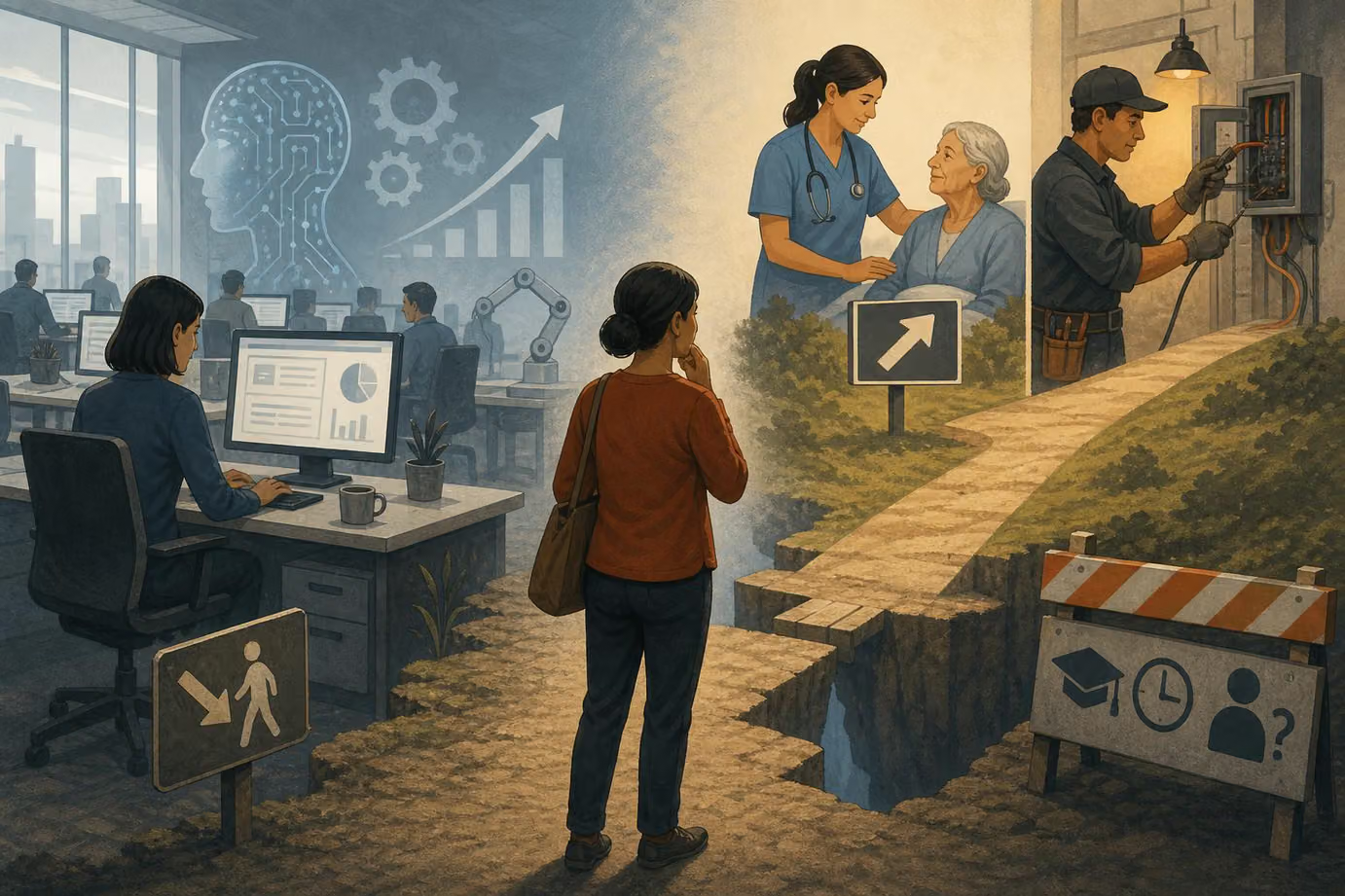
Displaced knowledge workers may need to move into jobs less exposed to AI, such as nursing or electrical work. That transition can be difficult: workers may need new skills, may not want to change occupations or may take time to find an available position. People between occupations count as unemployed during that adjustment period.
This helps explain why the modeled economy can grow while job prospects worsen for some workers. In the substantial and extreme scenarios, more knowledge-work automation requires more occupational switching. The source says that, in the extreme scenario, affected workers may remain unemployed for a prolonged period as large-scale automation proceeds.
Why average wages can rise while some workers lose ground
Anthropic reports that average wages rise relative to the corresponding no-AI economy across the three scenarios, but that increase is concentrated in occupations outside knowledge work. The occupation-level effects differ because AI changes demand for different kinds of labor.
For example, if AI makes design and permitting faster, more physical infrastructure projects could become viable. That could increase demand for construction workers and push their wages higher. By contrast, when AI can perform more knowledge-work tasks, weaker demand for human workers in those occupations puts downward pressure on their pay.
In the substantial scenario, knowledge-worker wages are essentially flat. In the extreme scenario, they fall by more than 10% by 2030 relative to the no-AI comparison. The model therefore separates average wages from individual or occupation-level outcomes: an average increase can coexist with declining pay and unemployment among workers most exposed to automation.
Who receives the gains: labor versus capital
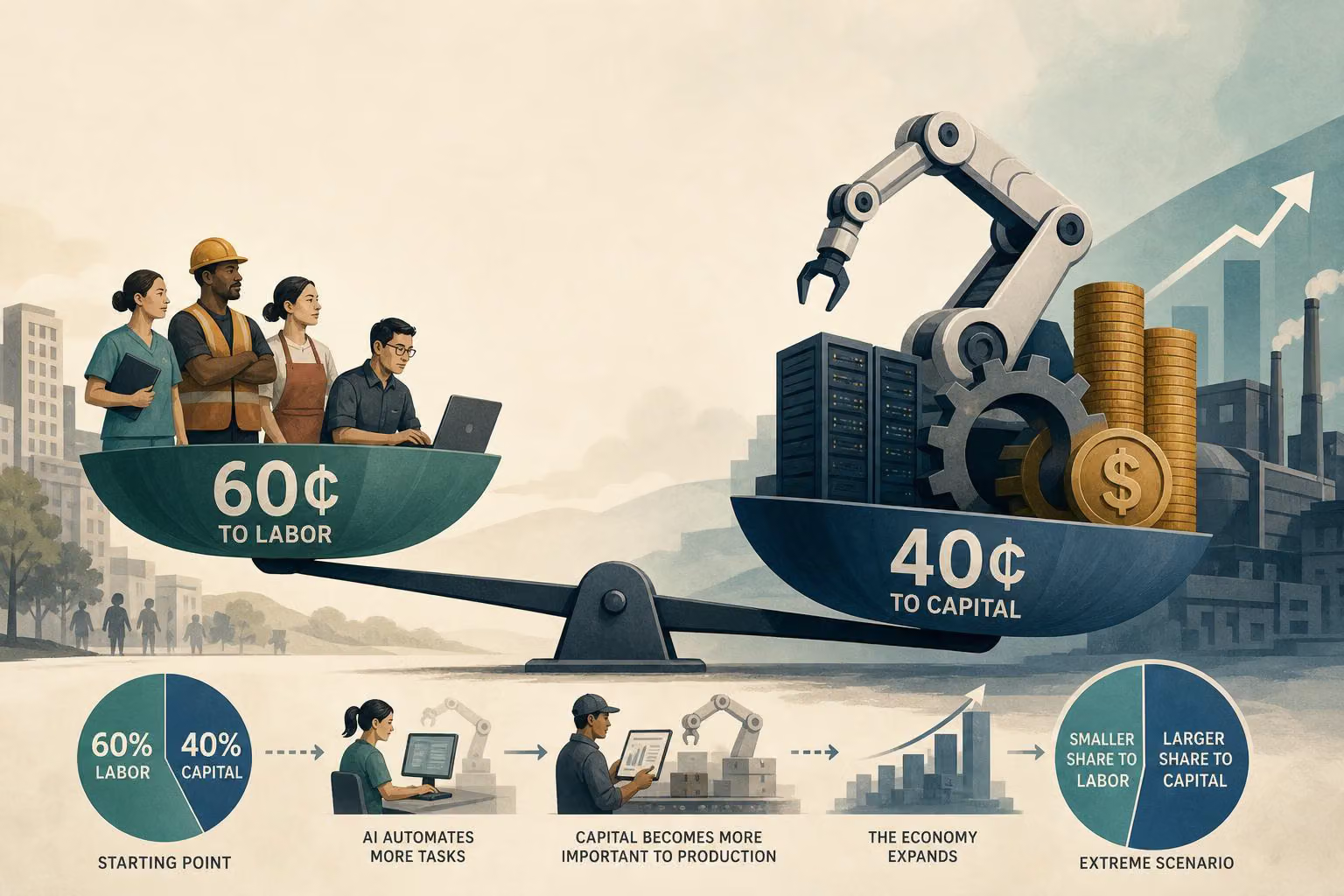
The explorer also tracks the labor share—the portion of economic output paid to workers—and the capital share, which goes to the resources and technology used to produce output. Its starting point is roughly 60 cents of each dollar to labor and 40 cents to capital.
As AI automates more tasks, capital can become more important to production. A larger share of the expanding economy may therefore flow to capital owners, even when wages rise for some workers.
Scenario | Labor share | Capital share | Change in capital share |
|---|---|---|---|
Modest | 59.4% | 40.6% | Up 0.6 percentage points |
Substantial | 56.1% | 43.9% | Up 3.9 percentage points |
Extreme | 45.2% | 54.8% | Up 14.8 percentage points |
The extreme scenario makes the distinction clearest: workers receive a smaller fraction of a much larger economy. Total labor income is barely changed by 2030 in the model, while most knowledge workers face either lower wages or unemployment. Some occupations still see substantial wage gains, so the result is an uneven distribution of benefits and costs rather than an identical outcome for every worker.
How to use the explorer
A reader can use the explorer as a conditional model by changing five assumptions: what tasks AI can perform, how widely it is adopted, how autonomously it operates, how much it raises productivity and how long displaced workers take to find new jobs.
The useful question is not which output is “the” forecast. Instead, vary one assumption at a time and observe which outcomes move. Greater capability, autonomy or adoption can shift more tasks from augmentation toward automation; slower worker adjustment can increase the period of unemployment after displacement. Then compare GDP with employment, wages and labor share rather than treating economic growth as a measure of broad welfare by itself.
Anthropic also reports an August survey of 10,980 Americans. The typical respondent’s answers implied an outcome close to the substantial scenario, including GDP about 10% higher by 2030 than without AI and overall unemployment around 5%. About 10% of respondents held views aligned with the extreme scenario. Those figures describe respondents’ expectations, not evidence that either scenario is becoming more likely.
What the model leaves out
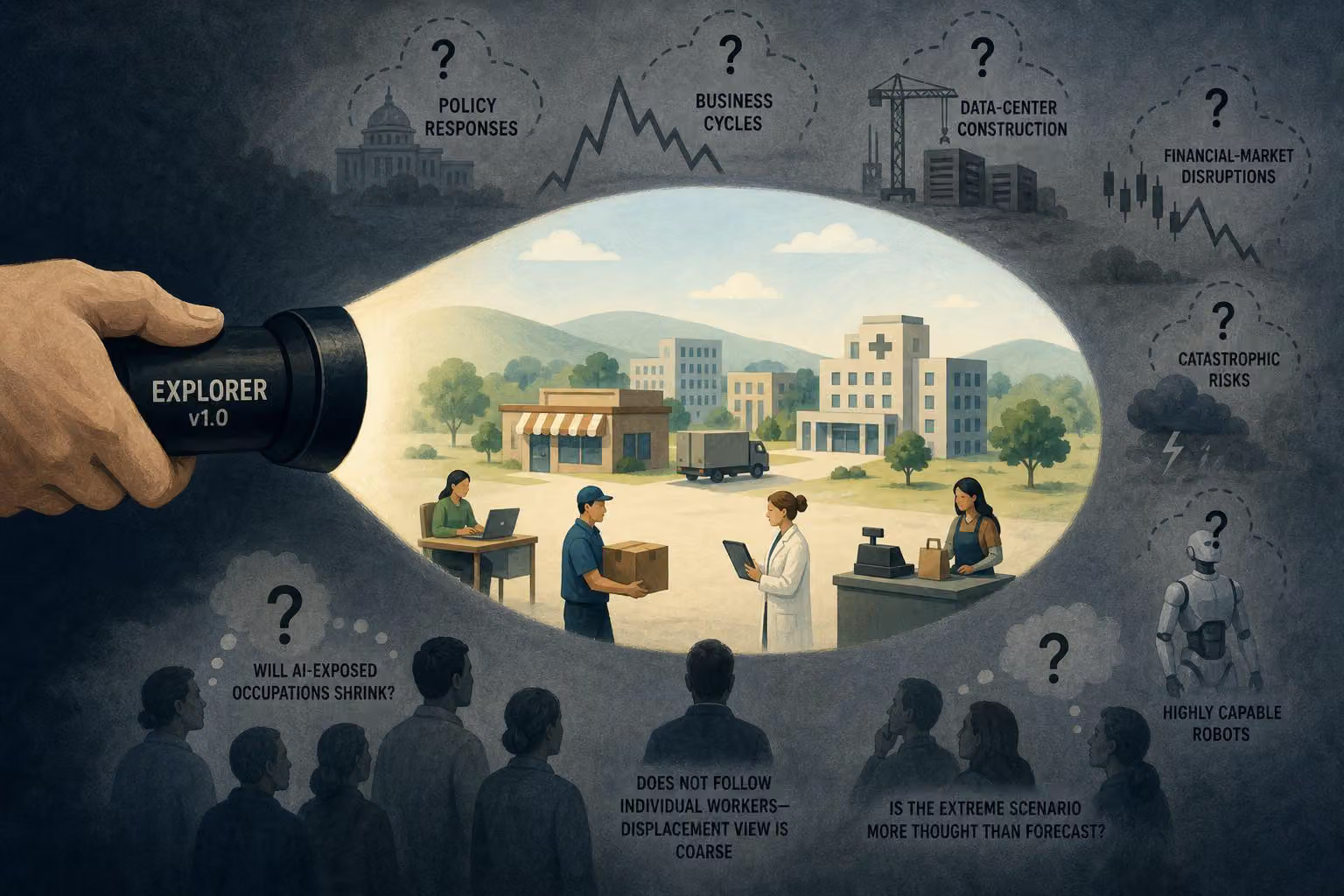
The explorer is version 1.0 and simplifies a complex economy. It does not include policy responses, business cycles, aggregate-demand effects from data-center construction, financial-market disruptions or possible catastrophic risks. It also does not model a future in which humanity develops highly capable robots.
The model does not follow individual workers, so its account of displacement is necessarily coarse. The authors note that some reviewers questioned whether AI-exposed occupations will shrink at all, while others viewed the extreme scenario more as a thought experiment than a central scenario. They also say that actual outcomes could differ materially from all three paths.
The explorer is therefore most useful for connecting assumptions to consequences. It shows how GDP growth, job security, wages and the division of income can move in different directions. A much larger economy could still leave many knowledge workers worse off and send a larger share of its gains to capital, depending on what AI can do, how quickly it is adopted, how workers adjust and how the benefits are shared.



0 comments
No approved comments yet. You can start the conversation.
Leave a comment